
Lieferung heute & morgen

Qualitätsgarantie

Willkommens-Angebote freischalten: KOSTENLOSE Lieferung | Bis zu 80 % RABATT | Kostenlose 30-Tage-JoyPlus-Testphase
App herunterladen
A suitable privacy screen for your balcony or patio should do more than keep prying eyes out. Depending on your location, factors such as sun exposure, wind, rain, the mounting surface and the available space all matter. Many unsuitable purchases are down to unclear product details or a design that doesn’t fit, rather than the price.
A material may be water-repellent or waterproof, while its fixings, seams or frame may be less hard-wearing. Retractable privacy screens in particular need protection in strong winds. The product description for the XINZI side awning specifically recommends retracting it in strong winds, heavy rain or snowfall.
A densely woven balcony privacy screen can limit views in while still letting in daylight and allowing air to circulate. This works well for many balconies, but it won’t replace full sun protection or blackout coverage. The Sunula PVC screen, for example, is described as not being fully lightproof.
For blinds, curtains and side awnings, the width, height, fixing points and direction of opening all need to work together. The number of curtains included also matters: some offers include a single panel, while others come as a pair. Before buying, check the product dimensions and the contents of the package separately.
Outdoor options include PVC, PE, HDPE, polyester and coated fabrics. PVC and PE products are usually easy to care for and can be wiped clean with a cloth. For textiles, check for water-repellent properties, UV protection, fabric density and suitable hanging options.
A weather-resistant privacy screen won’t necessarily provide lasting protection in every kind of weather. Even robust materials can be affected by prolonged damp, frost or wind. Retract or take down fabric screens during storms. Permanently installed options, such as a metal privacy screen, need secure fixings and enough space to stand firmly.
Measure the area you want to cover in several places. For a balcony railing, the railing’s height and length are key; for a window, measure the glass and check the available frame. A screen with a 1 to 2 mm gap between its sections can offer a good balance between privacy and airflow.
For full blackout, denser, multi-layer fabrics or coated materials are a better choice. An outdoor privacy blind with stepless height adjustment lets you control light and visibility as needed. For doors, you could also consider an opaque curtain or a thermal door curtain.
If you’re renting, options that don’t require drilling can be a good choice. These include suction-cup blinds for smooth glass, hook-and-loop or adhesive strips, and cable ties for attaching screens to railings. First, check that the surface is smooth, clean and sturdy. Adhesive and suction-cup systems may not hold as well on uneven, damaged or heavily soiled surfaces.
Permanent installation on a façade or railing may also require permission from your landlord or owners’ association. Homeowners can also consider firmly anchored privacy screens, side awnings or larger outdoor curtains.
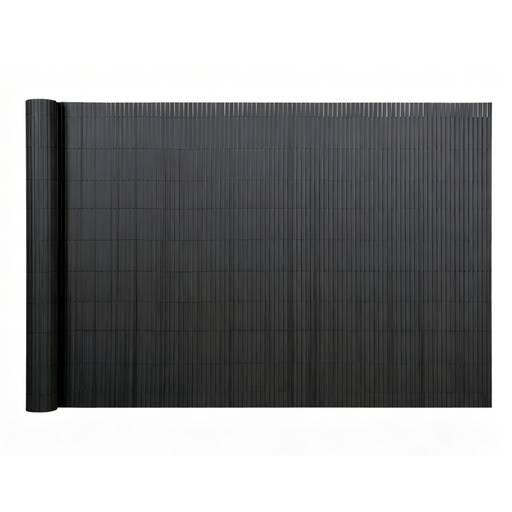
Why it suits this profile: According to the product description, this PVC screen is secured with cable ties and requires no drilling. It’s suitable for balcony railings, gardens and patios.
The product details clearly state that the screen isn’t fully lightproof, making the difference between privacy and blackout coverage easy to understand.
PVC material, 0.8 × 3 m size, anthracite 3D texture, and a surface described as water-, mould- and scratch-resistant.
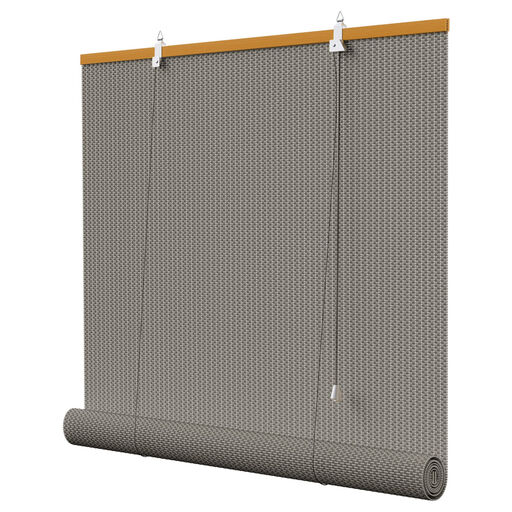
Why it suits this profile: Designed for indoor and outdoor use, this blind has stepless height adjustment. That makes it a good fit for windows, balconies and patios where light levels vary.
The product description distinguishes the bamboo-look PE material from natural bamboo, and lists water resistance, shape retention and mould resistance among its properties.
80 × 160 cm, PE construction, stepless height adjustment, mounting accessories included and an integrated child-safety feature, according to the product description.
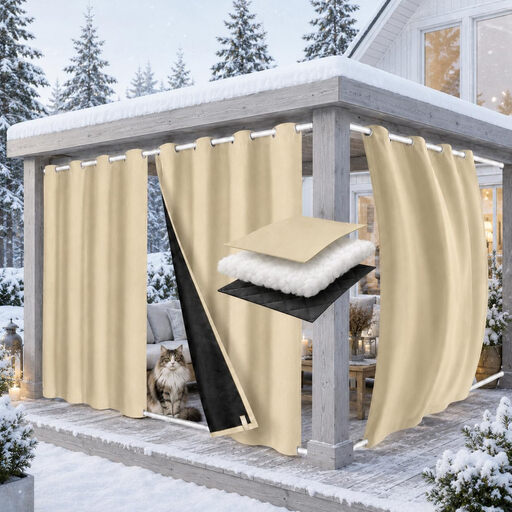
Why it suits this profile: This multi-layer curtain is designed for anyone who needs an opaque curtain for a patio, balcony, gazebo or pergola and prefers flexible hanging options.
It has eyelets, as well as a pocket and loops along the bottom. This means the fabric can be stabilised further with a pole, cord or weight.
405 g/m², three-layer construction, water-repellent outer surface and several hanging options, according to the product description.
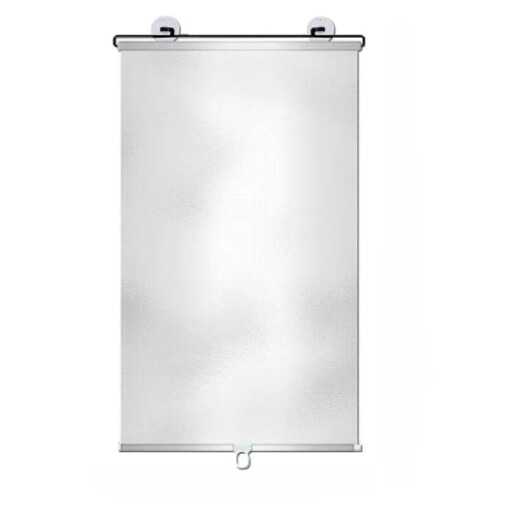
Why it suits this profile: Designed for smooth surfaces such as glass or tiles, this blind can be used on balcony and patio doors, windows or car side windows.
According to the product description, it attaches with suction cups, without drilling or adhesive. Clean the surface and check it’s suitable before fitting.
Three-layer fabric with a titanium and silver coating, extends to 50 × 125 cm and rolls up automatically to save space, according to the product description.
We’ve put together a comprehensive, regularly updated list of products that meet these strict selection criteria and fully comply with the safety regulations in force in the EU.
Suction-cup blinds are an option for smooth window or door surfaces. Screens can be attached to balcony railings with cable ties. Before installation, check the surface is sturdy enough and get your landlord’s permission, particularly if the work will visibly alter the façade or railing.
Its lifespan depends on the material, fixings, sun exposure, damp and wind. PVC and PE products are easy to care for, while fabric options should be retracted or taken down in storms. Regularly checking for tears, loose connections and changes to the material can help you spot damage early.
A balcony sunshade reduces direct sunlight and heat. A privacy screen mainly limits views in. Some products do both, but may not provide full blackout or complete protection from the wind. The material’s structure and the product details are therefore key.