
Lieferung heute & morgen

Qualitätsgarantie

Willkommens-Angebote freischalten: KOSTENLOSE Lieferung | Bis zu 80 % RABATT | Kostenlose 30-Tage-JoyPlus-Testphase
App herunterladen
A damaged iPhone display can lead to significant costs and affect everyday use. The right iPhone screen protector reduces the risk of scratches and wear. However, screen protectors vary considerably in terms of fit, installation, coating and case compatibility.
An iPhone screen protector for the iPhone 15 will not automatically fit a Pro model. Differences in display size, frame, sensors and camera area can cause the glass to extend beyond the edges or leave important areas uncovered. You should therefore check the exact model designation before buying.
The same applies to an iPhone 15 screen protector, an iPhone 16 screen protector and an iPhone 17 Pro screen protector. The product description should explicitly name your model.
For many screen protectors, the designation 9H refers to a stated hardness property. It does not mean that the glass will remain undamaged under every impact. A screen protector can itself break or crack, helping to relieve stress on the surface underneath. If visible cracks appear, it should be replaced for safety and functionality reasons.
A scratch-resistant screen protector should therefore not be equated with a completely shatterproof one. Glass quality, adhesive layer, edge design and correct installation are also important.
A screen protector with particularly wide coverage may protect more of the display, but a close-fitting case can lift it at the edges. An Ultra Wide Fit screen protector should therefore be explicitly described as case-compatible. The combination of screen protector and case should still be checked carefully, as cases from different manufacturers extend over the display edge to varying degrees.
First, check the following:
For an iPhone screen protector, the model designation is more important than a general statement such as “suitable for several iPhones”.
Tempered glass provides a firm surface and is advertised with a hardness rating such as 9H for many products. An oleophobic coating is also relevant. It can make it easier to clean fingerprints and skin oils, but it does not prevent dirt completely.
Clear display quality and retained touch responsiveness are also important for everyday use. Claims such as “100% clarity” or “full touch sensitivity” should be understood as product features stated by the respective manufacturer, not as a guarantee for every usage situation.
Dust beneath the glass, misalignment or air bubbles often occur during installation. Cleaning cloths, dust-removal stickers, alignment frames and a simple adhesive system can make the process easier. Before application, the iPhone should be switched off and the display should be free from dust and grease.
A screen protector is a consumable item. Even without visible damage, replacement may be advisable if the coating begins to peel, the edges lift or operation is affected.
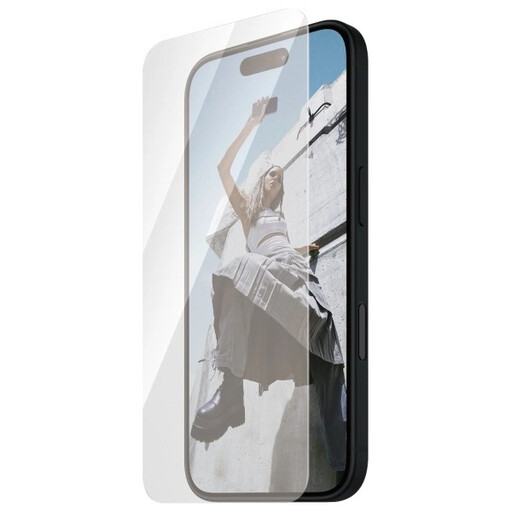
Why this product suits this profile: For iPhone 15 or iPhone 16 users looking for easy installation and wide display coverage.
The stated Ultra Wide Fit version is designed to provide extensive coverage. Installation is supported by cleaning aids and can be completed without bubbles.
Tempered glass, an oleophobic anti-fingerprint coating and stated case compatibility.
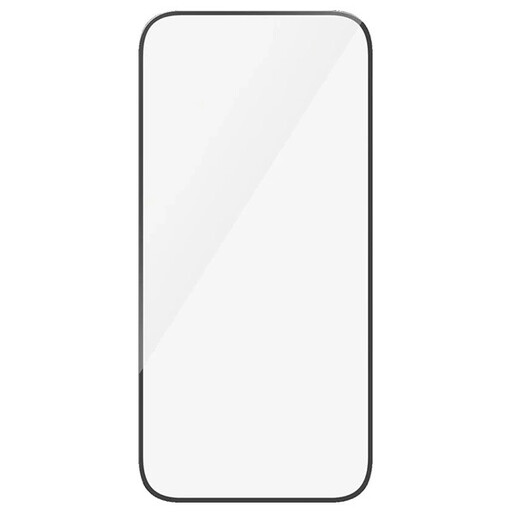
Why this product suits this profile: For people who value clear display quality, touch responsiveness and a defined fit.
The product data specifies tempered glass, an Ultra Wide Fit design and support for bubble-free installation.
Oleophobic anti-fingerprint coating, stated clarity and compatibility with iPhone 15 and iPhone 16 models.
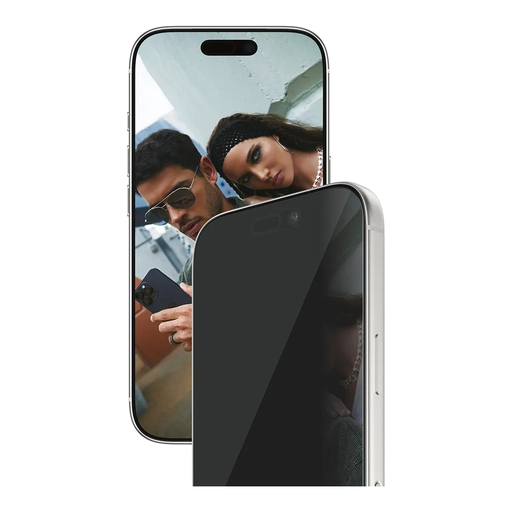
Why this product suits this profile: For iPhone 17 Pro users who need privacy from side views on trains, in cafés or at the office.
The side-view privacy filter addresses viewing from the side. The EasyAligner helps with positioning, while the stated Ultra Wide Fit design takes case use into account.
Side-view privacy, EasyAligner, oleophobic coating and stated thickness of 0.74 mm.
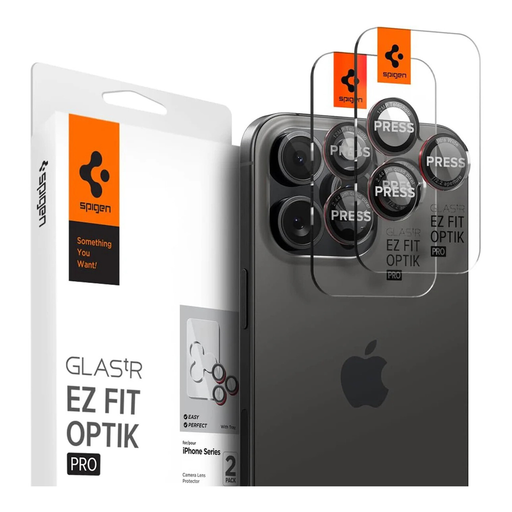
Why this product suits this profile: For owners of an iPhone 14 Pro to iPhone 17 Pro who also want to protect the sensitive camera lenses.
This is an iPhone camera lens protector, not a screen protector. The model list covers the Pro and Pro Max versions from iPhone 14 to iPhone 17.
Two pieces of glass included, stated 9H hardness, oleophobic coating and EZ-Fit alignment frame.
A PanzerGlass screen protector or Spigen EZ Fit screen protector can make positioning easier with the supplied alignment frame. Nevertheless, a dust-free surface remains essential. Damaged glass should be removed carefully and disposed of safely.
We have put together a complete, regularly updated list of products that fully meet these strict selection criteria and the safety regulations applicable in the EU.
The display should be completely clean and free from dust. Align the glass as accurately as possible and allow it to adhere to the surface from the centre outwards. Small air bubbles can often be pushed towards the edge with a soft cloth. If there is dust beneath the adhesive layer, do not repeatedly lift the glass, as this can affect its adhesion and alignment.
It is not possible to give a reliable fixed service life for every product. It depends on daily use, the case, cleaning and impacts. Cracks, chipped edges, areas that are lifting or noticeably reduced smoothness are all signs that it should be replaced.
An iPhone privacy screen protector is designed to limit visibility from side angles. As a result, the display may appear darker or less clear outside the direct viewing angle. If you often share content with others or need an especially wide viewing angle, you should consider this compromise before buying.