
Lieferung heute & morgen

Qualitätsgarantie

Willkommens-Angebote freischalten: KOSTENLOSE Lieferung | Bis zu 80 % RABATT | Kostenlose 30-Tage-JoyPlus-Testphase
App herunterladen
A damaged iPhone display can quickly lead to expensive repair costs. A suitable tempered glass iPhone screen protector protects the surface from scratches, abrasion and certain impacts during everyday use. However, screen protectors vary considerably in terms of fit, coating and installation.
If you focus only on claims such as “9H” or “ultra-clear”, you can easily overlook important details. Three common purchasing and usage pitfalls are particularly relevant:
First, check the exact model name of your iPhone. Suitable versions are available for the iPhone 16 Pro, iPhone 16 Pro Max, iPhone 17 Pro, iPhone 17 Pro Max, iPhone 18 Pro and iPhone 18 Pro Max. Simply stating “iPhone 16” or “iPhone 17” is not always sufficient.
A case-friendly screen protector has a controlled gap between its edges and the edge of the display. With full-coverage protectors, the cut-outs and the shape of the glass should also match the front of the phone. If you use a particularly wide protective case, read the product description carefully to check case compatibility.
The 9H tempered glass iPhone designation refers to a hardness rating from a standardised pencil hardness test. It indicates resistance to certain scratches, but does not by itself show how the glass will perform in every type of fall.
Some models in the selection use toughened safety glass with 9H, while others specify 10H. The material construction, glass thickness and edge finishing can also affect performance in everyday use. For example, Hama Clear Protect is specified as 0.33 mm thick, with electrostatic adhesion and 9H hardness. Hama Extreme Protect and Hama Reflect Protect also use 0.33 mm glass and specify 10H hardness.
An ultra-clear HD screen protector is a sensible choice for anyone who wants to view photos, videos and text with as little alteration as possible. Look for specific information about light transmission. TORRAS Install Master, for example, is specified as allowing more than 92 per cent light transmission.
An anti-fingerprint coating can reduce fingerprints and skin oils, but will not remove them permanently. Hydrophobic and oleophobic surfaces generally make cleaning easier.
For a bubble-free installation, preparation is key: clean the display, remove all dust and align the glass precisely. A supplied alignment frame or applicator helps reduce the risk of fitting the protector crookedly. Once the glass has been applied, dust trapped underneath usually cannot be removed without repositioning it.
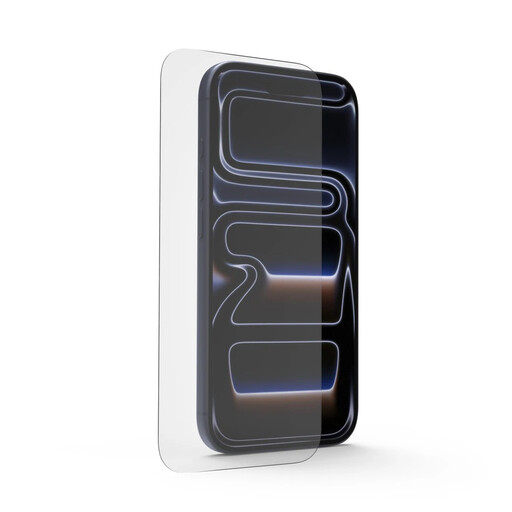
Why this product suits this profile: This transparent screen protector is aimed at users looking for a straightforward standard solution for compatible Pro models. The included EcoFrame applicator helps with alignment.
Compatibility is specifically stated for the iPhone 17 Pro and iPhone 18 Pro. Electrostatic adhesion avoids a conventional adhesive layer and can be removed without leaving residue.
9H safety glass, 0.33 mm thickness, anti-fingerprint coating and EcoFrame applicator.
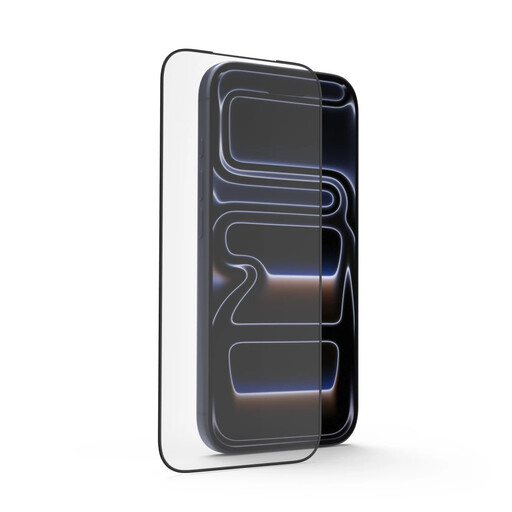
Why this product suits this profile: Suitable for users who value a stated 10H hardness rating and full front coverage, as well as a clear display.
The product data clearly specifies the model, thickness and installation method. According to the product description, its special shape is designed for use with protective cases.
D3O material according to the product information, 10H hardness, electrostatic adhesion, anti-fingerprint coating and EcoFrame.
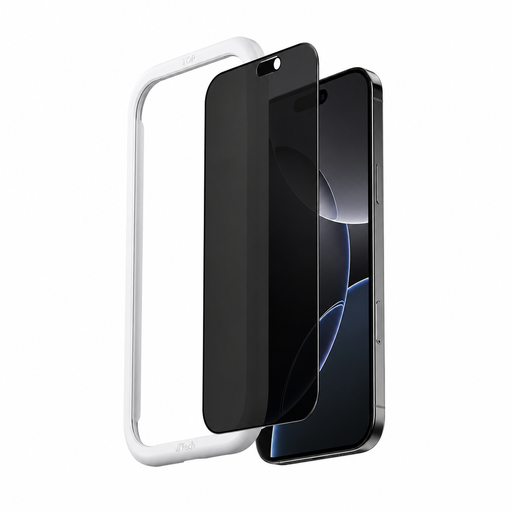
Why this product suits this profile: This privacy screen protector is designed for commuters and professionals who use their smartphone on trains, buses or in the office.
The stated privacy filter dims the display when viewed from an angle. This makes it harder for others to read your screen, but should not be regarded as a complete security guarantee.
9H glass, anti-fingerprint properties and a supplied installation frame; according to the product information, for the iPhone 17 Pro.
We have put together a complete, regularly updated list of products that fully meet these strict selection criteria and the safety regulations applicable in the EU.
Its lifespan depends on usage, drops, friction and the quality of the coating. Replace the glass if you notice cracks, chips, deep scratches or edges starting to lift. Reduced smoothness can also indicate wear to the surface coating.
No. 9H describes a hardness rating; it does not promise that the glass will remain intact after every fall. Its actual resistance also depends on the glass construction, edge shape, installation and angle of impact. A screen protector can reduce the risk of scratches and certain types of damage, but it does not replace careful handling.
An ultra-clear HD screen protector is suitable for users who prefer the display to remain as unchanged as possible. A privacy screen protector is useful in public places, although it deliberately restricts the viewing angle from the side. An anti-glare screen protector can reduce reflections, but should be chosen based on specific information about the AR coating and image quality.