
Lieferung heute & morgen

Qualitätsgarantie

Willkommens-Angebote freischalten: KOSTENLOSE Lieferung | Bis zu 80 % RABATT | Kostenlose 30-Tage-JoyPlus-Testphase
App herunterladen
A damaged iPhone display can lead to expensive repair costs. A suitable iPhone screen protector cannot prevent every type of damage, but it can help reduce everyday scratches, fingerprints and minor mechanical stresses. The key is not to focus solely on terms such as “9H” or “Full Screen”. Fit, adhesive coverage, case compatibility and the included installation accessories can be just as important in everyday use.
The 9H marking describes the hardness of the material under specific test conditions. It indicates scratch resistance, but does not guarantee protection against cracks caused by drops or heavy pressure. Even tempered glass can shatter if it hits the ground at an unfortunate angle.
You should therefore also check:
A full-screen protector can theoretically cover a large area. However, if the cut-out for the speaker or sensors is not manufactured precisely, installation can be more difficult. If the protector extends too close to the edge, there is also a risk that a case will lift the edges.
The description “for iPhone” is therefore not enough. Check the model designation, such as iPhone 16, iPhone 16 Pro, iPhone 17 Pro or iPhone 17 Air. For the iPhone 17 Pro Max, this specific model should be named explicitly.
An iPhone privacy screen protector limits the viewing angle from the side. This can be useful on trains, in cafés or at work. Depending on the design, the screen may appear noticeably darker when viewed from an angle. If you often share content with other people, such as photos or presentations, you should take this compromise into account.
An iPhone tempered glass protector or iPhone screen protector glass is generally made from toughened glass. The 9H rating appears on many products and is often advertised as “iPhone screen protector 9H”. It should be understood as a basis for comparison, not as a promise against every type of damage.
Glass usually provides a firm, smooth surface. Flexible plastic protectors, on the other hand, can be easier to adapt to the edges of certain devices. For users who prefer a glass-like feel, toughened glass is often the obvious choice.
A full-glue screen protector has an adhesive layer across the entire protected surface. This can improve adhesion and reduce air gaps between the display and the glass. During installation, keeping the surface dust-free and aligning the protector precisely are crucial.
Useful features include:
This makes it easier to install a bubble-free screen protector. Small bubbles can often be pushed out towards the edges. Dust trapped beneath the adhesive layer, however, usually cannot be removed without lifting the protector again.
High light transmission helps keep photos and videos looking as intended. An oleophobic coating can reduce the visibility of fingerprints and grease, although its effectiveness may diminish over time.
With a case-compatible screen protector, a small gap is left between the edges and the case. This reduces the risk of the case frame lifting the glass. If you prefer particularly broad coverage, check whether the smartphone frame is explicitly described as case-friendly.
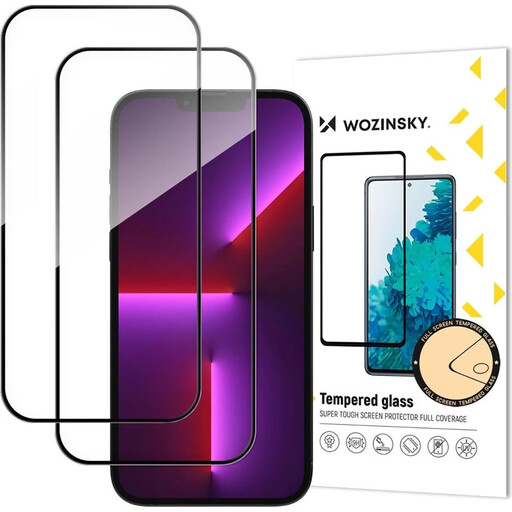
Why this product suits this profile: The two-pack includes a spare protector and is suitable for users looking for a straightforward basic set-up for their iPhone 17 Pro.
The model compatibility is clearly stated. Full-glue adhesion and installation aids address common problems with lifting edges and air bubbles.
9H hardness rating, black frame, transparent surface and two protectors per pack.
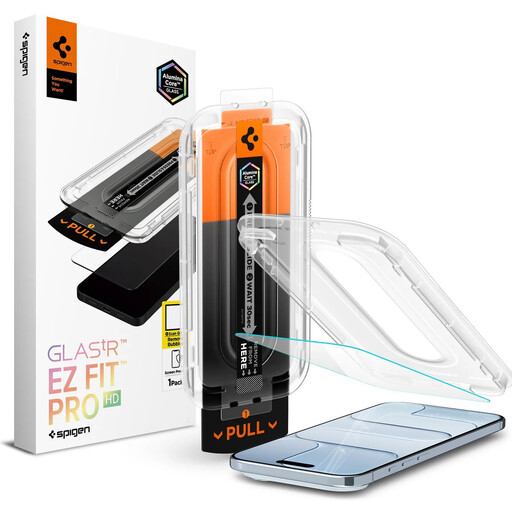
Why this product suits this profile: The EZ-Fit frame supports even alignment and is designed for users who value controlled installation.
The supplied applicator reduces the risk of positioning the protector at an angle. The stated case compatibility helps you choose a suitable case.
Aluminosilicate glass, 9H hardness rating, oleophobic coating and transparent design.
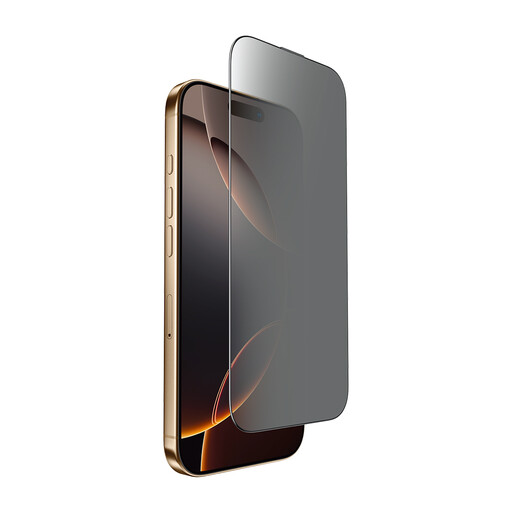
Why this product suits this profile: The privacy design is suitable for commuters and professionals who want to make messages or access details less visible when out and about.
The restricted side view is explicitly taken into account as a product feature. This makes it easier to assess its benefit compared with a clear protector realistically.
2.5D full-screen design with black edge, plus privacy and dust protection according to the product description.
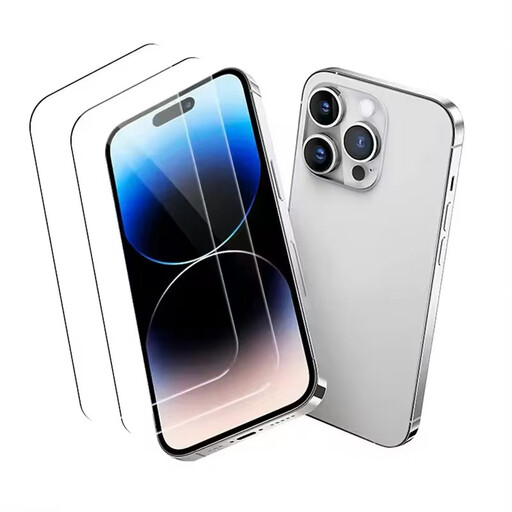
Why this product suits this profile: The combination of specific model compatibility, 9H glass and accessories is aimed at users who regularly use their iPhone in everyday life.
The details explicitly name the iPhone 16 Pro and list an applicator. This makes it easier to check the model and install the protector neatly.
Toughened glass with a 9H hardness rating, high transparency, anti-fingerprint coating and case compatibility.
We have put together a complete, regularly updated list of products that fully meet these strict selection criteria and the safety regulations applicable in the EU.
A damaged or cracked screen protector should be replaced for safety reasons. Sharp edges may be present when removing it; do not use pointed objects that could scratch the display.
Its lifespan depends on usage, the case edge, friction and impacts. Visible cracks, chipped edges or reduced adhesion are clear reasons to replace it. It is not possible to give a reliable fixed timeframe that applies across all models.
That depends on how you plan to use it. Toughened glass provides a firm, smooth surface and is often advertised with a 9H hardness rating. Plastic protectors can be more flexible and may be suitable for certain display edges. Model fit, installation and personal preference are the decisive factors.
Not necessarily. Check whether the glass is described as case-compatible and whether the case frame presses against the edges. With privacy glass, you should also bear in mind that the screen may look darker or be less easy to read from the side.