
Lieferung heute & morgen

Qualitätsgarantie

Willkommens-Angebote freischalten: KOSTENLOSE Lieferung | Bis zu 80 % RABATT | Kostenlose 30-Tage-JoyPlus-Testphase
App herunterladen
An iPhone display can be damaged by keys in your pocket, grains of sand on a table or a drop. The right iPhone screen protector reduces the risk of scratches and scuffs, but it does not replace a protective case or prevent every type of screen damage. Before buying, compatibility, glass construction and careful installation matter more than marketing claims.
“For iPhone 16” does not automatically mean that the protector will also fit an iPhone 16 Pro or iPhone 16 Pro Max. Differences in display size, bezels, camera cut-out and body shape can cause the protector to overhang, leave the edges insufficiently covered or clash with a case.
Before placing your order, check:
The specification 9H tempered glass describes a hardness classification commonly used for screen protectors. It indicates resistance to everyday scratches, but it is not a guarantee against breakage if the phone is dropped. Even a scratch-resistant screen protector can be damaged by a heavy impact.
It is also important to check whether the product is genuinely tempered glass or a flexible plastic film. An iPhone screen protector made of protective glass offers a different feel and rigidity from a thin TPU or PET film.
An iPhone privacy screen protector restricts the viewing angle from the sides. This is useful on trains, in open-plan offices or in cafés, but it can affect the brightness and readability of the display for the person looking at it directly. A privacy screen protector is therefore not automatically suitable for every user.
Look for specific information about the viewing angle, light transmission and touch response. Phrases such as “360° protection” should be understood as a product name or supplier specification, not as complete shielding from every angle.
The model number is the key criterion. For an iPhone 16 Pro Max, you need a protector explicitly designed for that model. An iPhone 16 Pro Max screen protector may also differ from an iPhone 16 screen protector, even if the two devices appear similar in size.
Where the information is provided, compare the dimensions of the protector with those of the device. A narrow edge is useful with many cases, while a protector that is too small leaves the vulnerable display area exposed.
For a glass product, tempered glass, the stated 9H hardness and a smooth surface are relevant specifications. According to the product description, a hydrophobic and oleophobic coating can help reduce the build-up of fingerprints, oil and sweat on the surface. This does not mean that cleaning is unnecessary.
High light transmission is particularly important if you regularly view photos, videos or small text. With a privacy filter, you should also check whether the side darkening provides the level of privacy you need.
A bubble-free installation depends on more than just the adhesive layer. Dust on the display, incorrect positioning or excessive pressure during installation can cause visible inclusions. Applicators, cleaning cloths and clear instructions are practical additions.
Before applying the protector:
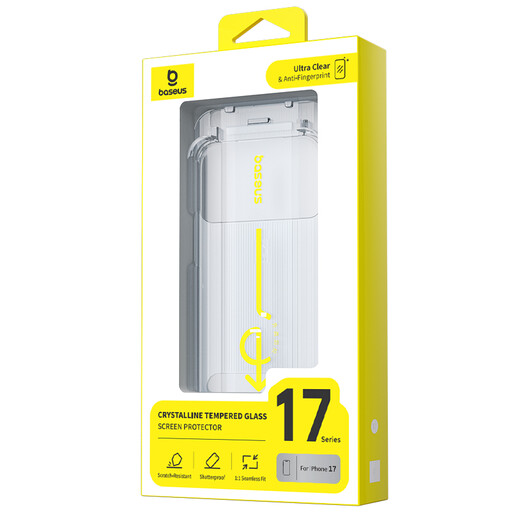
Why this product suits this profile: This option is aimed at iPhone 17 users looking for a clear glass protector with a straightforward selection of accessories.
Compatibility with the iPhone 17 is clearly specified. The included dust-proof installation tray and cleaning kit can make alignment easier.
Clear tempered glass; supplied with an installation tray and cleaning kit.
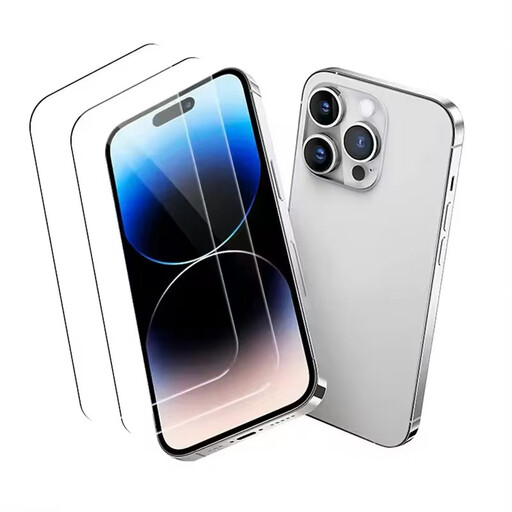
Why this product suits this profile: For iPhone 16 Pro Max users who value 9H glass, high transparency and compatibility with protective cases.
The product details specify 9H tempered glass, an anti-fingerprint coating and a design that can be used with phone cases. The model designation should be checked again before purchase.
Stated 9H hardness; high light transmission and an oleophobic coating according to the product description.
Why this product suits this profile: For commuters, frequent users and anyone who displays sensitive content on an iPhone 17 Pro Max in public places.
According to the product description, the protector combines a side privacy filter with KP installation technology and a stated 9H hardness. The side darkening can help protect privacy on trains and in the office.
Stated privacy filter; applicator and instructions included; designed for bubble-free installation according to the supplier.
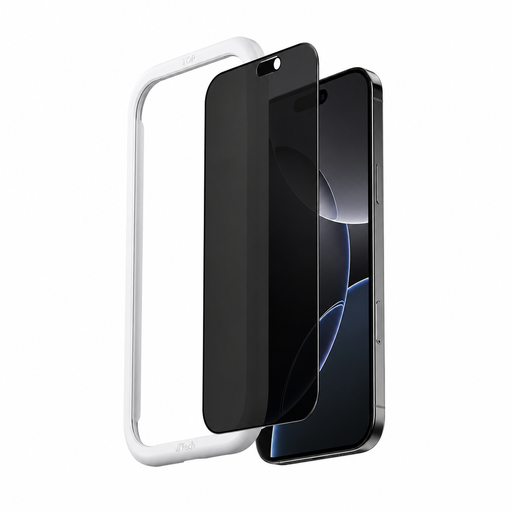
Why this product suits this profile: An option for iPhone 16 Pro Max owners who want to make messages and passwords less visible during their commute or in the office.
The supplier specifies a side darkening effect, 380AB adhesive and a self-adhesive design. This clearly describes both the privacy filter and the installation features.
Stated 9H hardness; coatings to protect against fingerprints and oil; applicator, instructions and certificate of conformity included in the package.
We have put together a complete, regularly updated list of products that fully meet these strict selection criteria and the safety regulations applicable in the EU.
The display must be completely clean, dry and free from dust. Align the protector before peeling off the adhesive layer. Then apply it slowly, starting from one side. Small air bubbles can often be pushed towards the edge. If dust becomes trapped underneath, avoid repeatedly removing the protector, as this can put strain on the adhesive and the display coating.
Its lifespan depends on use, drops, friction and the quality of the coating. Visible scratches, chips, cracks or weakening adhesion are all reasons to replace it. According to the product information, frequent removal and reapplication of privacy protectors should be avoided, as this can affect the display’s oleophobic coating.
It can be useful if you regularly use your device on public transport, in the office or while waiting. If you often share your display with others or need the image to remain as unchanged as possible when viewed from the side, a transparent iPhone screen protector without a privacy filter may be more suitable. Your choice should therefore be based on where you use your phone, the brightness you want and exact compatibility with your iPhone model.