
Lieferung heute & morgen

Qualitätsgarantie

Willkommens-Angebote freischalten: KOSTENLOSE Lieferung | Bis zu 80 % RABATT | Kostenlose 30-Tage-JoyPlus-Testphase
App herunterladen
A new iPhone screen needs everyday protection from scratches, scuffs and minor knocks. But when looking for an iPhone tempered glass screen protector, terms such as “9H”, “HD” and “military-grade protection” aren’t always clear. The glass’s hardness is only part of the story: fit, coating and installation matter too.
Three common pitfalls can lead to the wrong purchase:
First, check your exact iPhone model. Listings such as iPhone 16 screen protector, iPhone 17 screen protector or iPhone 17 Pro Max tempered glass screen protector should match your specific model. Storage capacity and colour usually don’t matter, but the model name does.
A case-friendly screen protector usually stops just short of the edge, so your phone case won’t press against the glass. Ultra-Wide Fit or Full Cover designs can cover more of the screen, but need to be shaped precisely. If the glass sits against the case after installation, its edges may lift.
9H tempered glass is often described as offering greater scratch resistance. In everyday use, it can protect against many marks caused by keys, dust and friction. However, the rating doesn’t guarantee protection against every kind of damage. Drops onto hard edges or heavy impacts can damage 9H glass too.
Also look for:
A scratch-resistant screen protector won’t automatically protect your whole phone, either. The frame, back and camera modules remain exposed.
A clear HD screen protector or transparent tempered glass is a good choice if you want photos, videos and small text to look as they should. An anti-fingerprint coating can help reduce oil and sweat marks on the surface. It won’t prevent all smudges, though, and may wear down if you clean it frequently with unsuitable products.
An iPhone privacy screen protector is particularly useful for commuters, business travellers and anyone who uses their phone on the train, in a café or at work. The side-on filter makes the screen harder to see from certain angles. At the same time, the display may look less bright when viewed at an angle. If colour accuracy matters or you often share your screen with others, a clear option may suit you better.
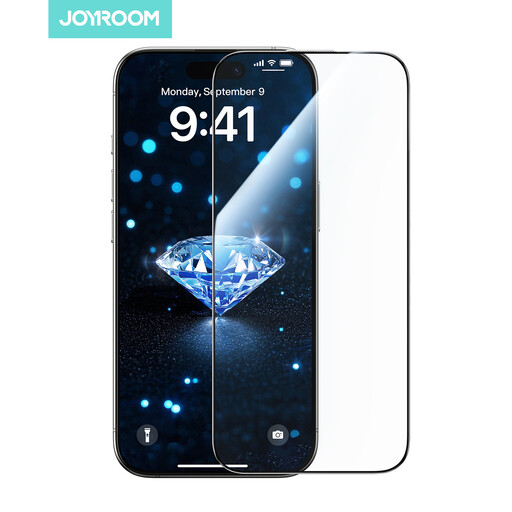
Why it suits this type of user: Its 2.5D design with a black border provides simple, practical everyday coverage. It’s a good option if you want basic protection from scratches and dust, with a discreet look.
Check that it’s compatible with your model before buying. The 2.5D design may also help avoid conflicts with many phone cases.
Tempered glass, a 2.5D full-screen design, plus stated HD clarity and dust protection.
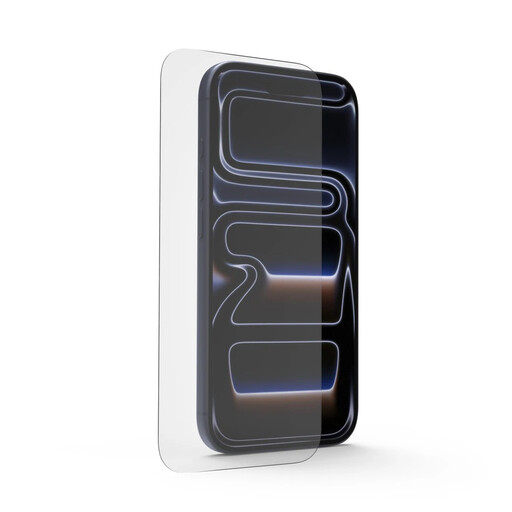
Why it suits this type of user: Its stated 9H hardness, ultra-clear HD finish and supplied EcoFrame installation frame make it a good choice if you value precise application and a clear view of your screen.
The installation accessories reduce the risk of positioning the protector crookedly and help you apply it without bubbles. You’ll still need to check compatibility before buying.
Stated thickness of 0,33 mm, 9H hardness, electrostatic adhesion and an anti-fingerprint coating.
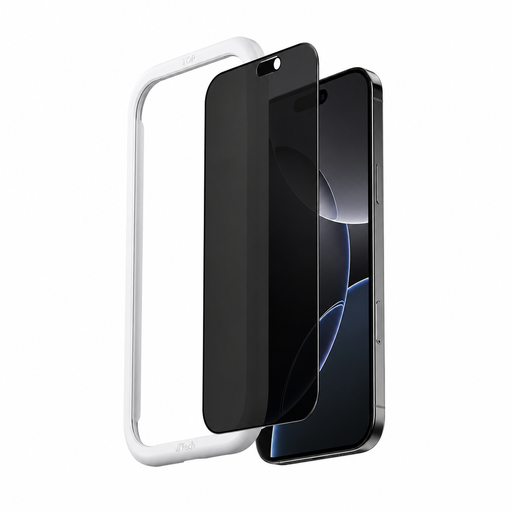
Why it suits this type of user: The privacy design is aimed at commuters and professionals who want to make messages, passwords and work content less visible when they’re out and about.
Its stated side-on privacy filter makes the trade-off compared with a clear protector clear: the screen may look darker when viewed at an angle.
Stated 9H hardness, anti-fingerprint properties, automatic application and privacy from certain viewing angles.
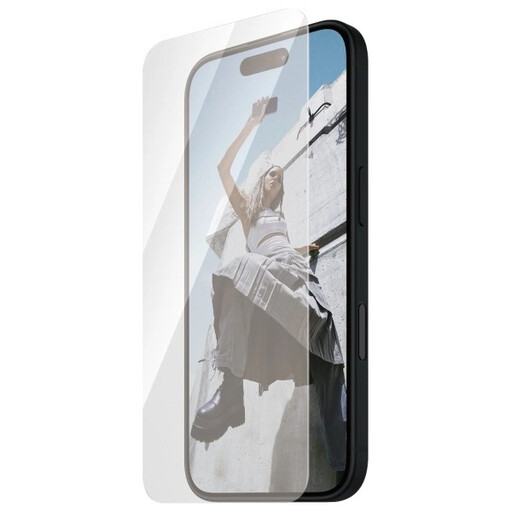
Why it suits this type of user: The Ultra-Wide Fit design is a good option if you want clear viewing and responsive touch control, while still being able to use a protective case.
Its stated case compatibility helps address the risk of a case lifting a screen protector that’s too wide. You’ll still need to make sure it matches your iPhone generation.
Tempered glass, an oleophobic anti-fingerprint coating, Ultra-Wide Fit and stated bubble-free installation.
For the best chance of a bubble-free installation, follow these steps in order:
Replace any damaged or cracked glass. The edges can be sharp when you remove it, so handle it carefully and dispose of it in line with local guidance.
We’ve put together a complete, regularly updated list of products that meet these strict selection criteria and fully comply with the safety regulations in force in the EU.
How long it lasts depends on how much it’s used, how well it fits with your case and how you care for its surface. Visible cracks, chipped corners or weaker adhesion are clear signs that it needs replacing. Without information from the manufacturer, it isn’t possible to give a general estimate of its lifespan.
No. The 9H rating indicates a stated hardness class and relates primarily to scratch resistance. A hard impact against an edge can still damage the screen protector. You should also protect your iPhone with a suitable case.
It depends on where you use your phone. On trains and buses, in open-plan offices or in cafés, a privacy screen protector can make messages and sensitive content harder to see from the side. If you often share photos with others or want the screen to look consistent from different angles, a clear HD option is usually a better choice.