
Lieferung heute & morgen

Qualitätsgarantie

Willkommens-Angebote freischalten: KOSTENLOSE Lieferung | Bis zu 80 % RABATT | Kostenlose 30-Tage-JoyPlus-Testphase
App herunterladen
An iPhone case should protect your phone from scratches, knocks and minor drops in everyday use, without affecting operation, the camera or wireless charging. The choice ranges from a slim protective case to an IPX8 waterproof phone case. What matters is not the marketing description, but whether the material, fit and intended use are right for your iPhone.
A case for the iPhone 16 will not automatically fit an iPhone 16 Pro or iPhone 16 Pro Max. Differences in the camera module, dimensions, button positions and cut-outs can mean that the case does not fit correctly. The same applies to the iPhone 17 Pro, iPhone 17 Pro Max and iPhone 17 Air.
Before buying, check the exact model name in your device settings or on the packaging. Product names such as “iPhone Air” should be checked against the specific manufacturer’s designation.
A shockproof phone case made from TPU can help protect against everyday drops, but it is not necessarily water-resistant. Several Spigen Liquid Air models explicitly state that they are not waterproof. A waterproof phone case, on the other hand, requires a seal that can be closed securely and a clearly stated protection rating.
A raised edge around the display and camera also does not prevent water from getting inside. These features serve different purposes and should not be confused with one another.
A particularly slim case is easy to handle and adds very little to the phone’s overall size. However, its edges, corners or back may offer less substantial protection. When choosing a slim protective case, look for reinforced corners, a raised display edge and a sufficiently protective camera surround.
Transparent models also need to be considered in terms of material ageing. A clear iPhone case with an anti-yellowing claim may preserve its appearance for longer, but it cannot guarantee that discolouration will never occur.
The case should be specifically designed for your model. In particular, check for:
A phone case with a raised screen-protection edge can help reduce direct contact between the screen and a flat surface. It does not replace a screen protector and cannot prevent every type of damage in a fall.
A TPU phone case is flexible, usually easy to fit and can absorb impacts through its softer side sections. Textured TPU surfaces, such as those on the Spigen Liquid Air Case, can also improve grip.
Polycarbonate, or PC for short, is harder and retains its shape more effectively. Hybrid cases often combine a rigid PC back with a flexible TPU frame. The transparent JOYROOM case for the iPhone 17 Pro is specified as using exactly this material combination.
A sustainable silicone case may be worth considering if the material’s origin and certifications are important to you. According to the product information, the Fanhangxinsheng models use recycled silicone and have GRS and RoHS certification. Such claims should be checked directly on the relevant product page.
A MagSafe-compatible case should explicitly state that it supports MagSafe accessories. A basic case may allow wireless charging without providing sufficient magnetic attachment for chargers, mounts or wallets.
Also consider the thickness and material around the charging coil. The Puro Gradient Cover A for the iPhone 17 Pro is described as MagSafe-compatible. According to the product description, the Fanhangxinsheng cases are compatible with wireless charging and MagSafe. Even so, it is advisable to check compatibility with your specific accessories before ordering.
The IPX8 rating describes protection against temporary immersion under conditions specified by the manufacturer. It is not a general guarantee for every depth, duration or activity. The Spigen Aqua Shield A601 and A621 are specified for use down to 30 metres.
Before each use, check the closure, seal and material for cracks, sand or other particles. First, carry out a test using a dry paper towel. After contact with salt water or chlorinated water, rinse the case with clean water and allow it to dry completely. According to the safety information, the products mentioned are not designed without restriction for water sports involving high pressure or rapid movement.
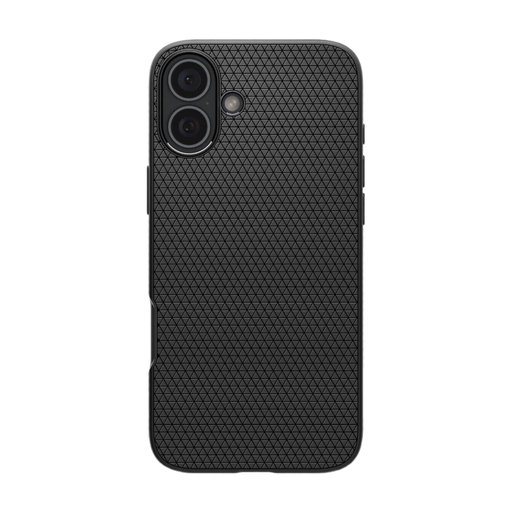
Why this product suits this profile: The flexible TPU construction, textured surface and slim design make it suitable for everyday use with the iPhone 16.
The model is explicitly specified for the iPhone 16. The texture improves grip without suggesting that the case is waterproof.
TPU, Air Cushion technology at the corners, raised edges and low weight according to the product information.
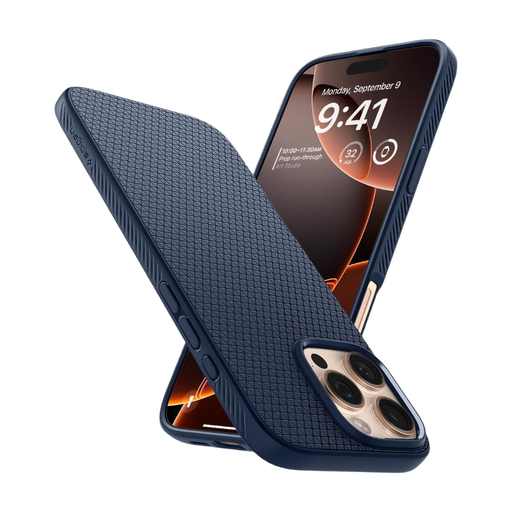
Why this product suits this profile: This model combines a textured TPU surface with specified corner reinforcements for everyday use with the larger iPhone 16 Pro Max.
The product information specifies particular drop heights and numbers of drops. It also clearly states that the case is not waterproof.
TPU material, anti-slip pattern, Air Cushion technology and a stated drop test of up to 1.2 metres.
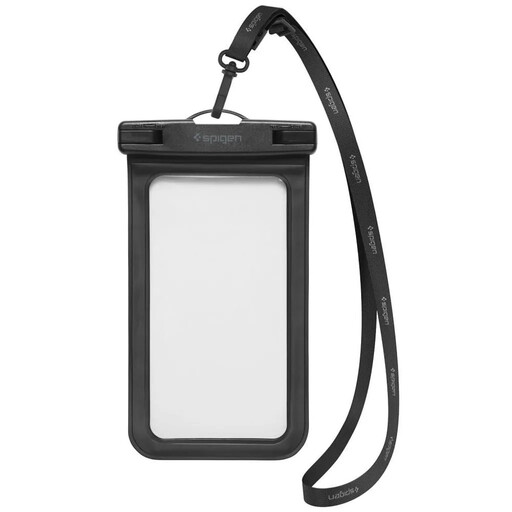
Why this product suits this profile: This case is designed for users who want to protect their smartphone from water while swimming, snorkelling or taking part in outdoor activities.
The IPX8 rating is specified with a maximum depth of 30 metres. Even so, the closure must be checked carefully before immersion.
IPX8 protection, stated dust resistance, EVA construction, plus wrist and shoulder straps.
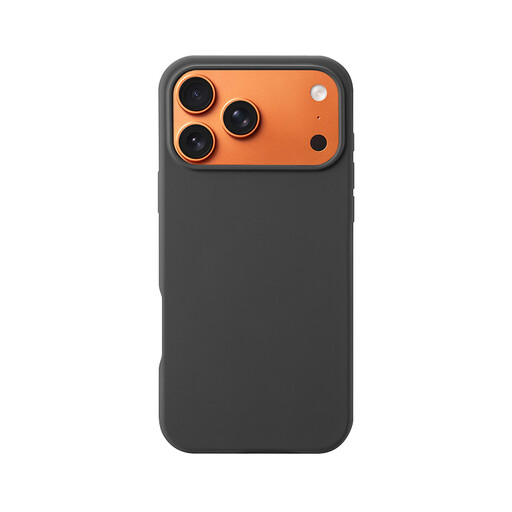
Why this product suits this profile: According to the product information, the case is made from recycled silicone and is available for selected models in the iPhone 17 range.
The material and certification details are stated in the product description. Before buying, select the correct model variant.
Recycled silicone according to the supplier’s information, a matt anti-slip surface, raised camera edge and MagSafe compatibility according to the description.
We have put together a complete, regularly updated list of products that fully meet these strict selection criteria and the safety regulations applicable in the EU.
For water-based activities, you need a case with a secure closure and a clearly stated protection rating, such as IPX8. Always check the depth specified by the supplier and carry out a watertightness test before each use. A standard TPU or silicone case is not automatically waterproof.
Its lifespan depends on the material, usage, UV exposure, heat and impact. Replace the case if you notice cracks, stretched edges, deformation or damaged seals. With waterproof models, the closure and seal should be checked regularly.
The price mainly depends on the material, model fit, MagSafe functionality, corner protection and water resistance. Do not compare the purchase price alone. Also check whether the case supports your specific iPhone model and whether you can continue using your existing charging accessories.