
Lieferung heute & morgen

Qualitätsgarantie

Willkommens-Angebote freischalten: KOSTENLOSE Lieferung | Bis zu 80 % RABATT | Kostenlose 30-Tage-JoyPlus-Testphase
App herunterladen
The search for a meaningful and entertaining gift for children, or a compact pastime for yourself, often leads to logic games. The market is flooded with options designed to boost concentration and logical thinking. However, not every game delivers on its promise. Many buyers only realise after unboxing that they've invested in a product that causes more frustration than fun.
As your Joybuy Product Recommendation Officer, I'm here to help you identify the common pitfalls and make an informed decision. We will focus on the objective features that define a quality brain teaser.
Common Problems When Choosing Logic Games:
To avoid buyer's remorse, you should check three key product features before making a decision. These criteria will help you objectively assess a game's quality and long-term value.
The sheer number of challenges is only half the story. A high-quality logic game for kids and adults is distinguished by the diversity of its challenges. Does the game offer different modes, such as both flat 2D challenges and more demanding 3D brain teaser puzzle variants? The Smart Games IQ-Puzzler PRO, for example, includes 120 challenges spread across three completely different game grids: a flat 2D grid, a diagonal 2D grid, and a 3D pyramid grid. This variety ensures long-lasting motivation.
A game that's meant to be handled often must be durable. Pay attention to the material specifications. High-quality plastic like Polyvinyl Chloride (PVC) or ABS is durable and has a premium feel. For a travel game, a compact design with a securely closing lid is essential. All game pieces and the challenge booklet should fit securely inside the case to prevent anything from getting lost on the go. The game board itself should double as the storage case.
A good brain game for ages 6 and up should offer a gentle learning curve. The challenges should be divided into clearly defined difficulty levels (e.g., Starter, Junior, Expert, Master, Wizard). This allows beginners to build confidence with early successes, while advanced players can jump straight to a tougher challenge. Such a well-thought-out structure makes the game an effective concentration game and a sustainable tool for brain training, growing with the player's abilities.
Based on the criteria above, we have curated a selection of products suitable for different user profiles and requirements.
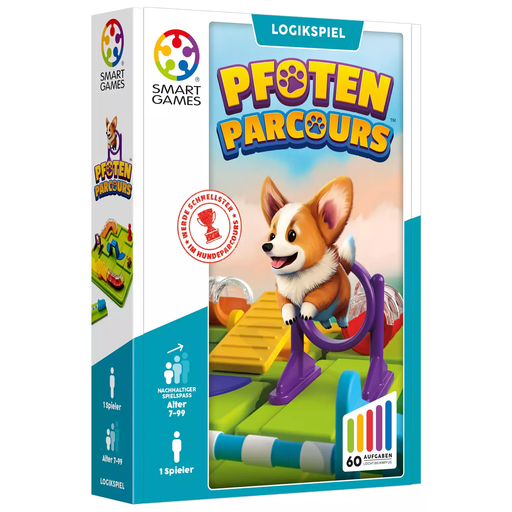
Why This Fits Their Persona: Ideal for preschoolers and young primary school children. The gameplay concept of creating paths for animals is intuitive, and the 60 challenges provide a gentle introduction to the world of logic games without being overwhelming.
With an official age recommendation of 4+ and a clear, understandable objective, it bypasses the frustration pitfall of being too complex for young children.
Specifically promotes spatial awareness and problem-solving skills. The large, chunky pieces are well-suited for small hands.
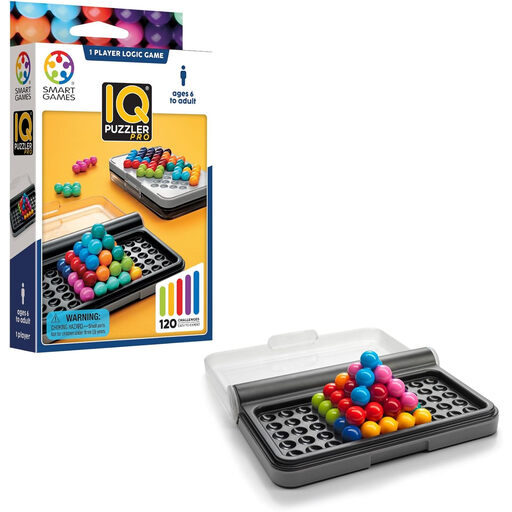
Why This Fits Their Persona: The perfect choice for families or solo players looking for a long-lasting challenge. Suitable for children from age 6 up to adults who want to give their grey cells a workout.
With 120 challenges across three different game modes (2D and 3D), it offers extremely high replay value and prevents boredom from setting in.
Combines multiple game concepts in one compact, travel-friendly case. The difficulty level ranges from very easy to extremely challenging.
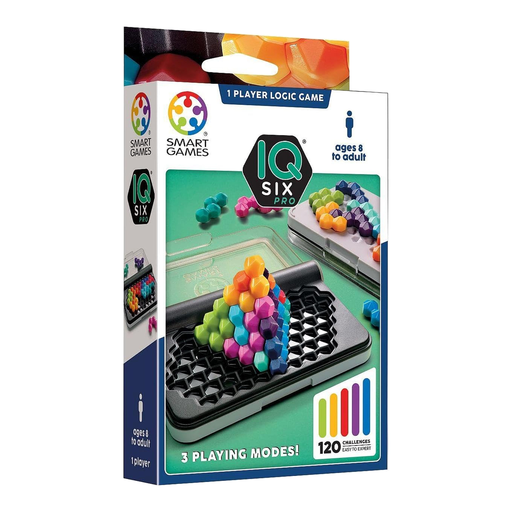
Why This Fits Their Persona: For players aged 8 and up who already have experience with logic puzzles and are looking for a new type of challenge. The hexagonal pieces require a different kind of spatial reasoning compared to the ball-based puzzles.
This game avoids the boredom factor by varying familiar game mechanics and requiring new solving strategies due to the different shape of the pieces.
Also offers three game modes, including a unique 3D pyramid structure that differs from other IQ games. Very compact and travel-friendly.
We have compiled a complete, up-to-date list of products that fully meet these strict selection criteria.
The game pieces and case are made of plastic and can be wiped with a slightly damp cloth if needed. Do not use harsh cleaning agents or solvents, and do not submerge the game in water, to protect the materials.
Yes, absolutely. While the "Starter" and "Junior" levels are ideal for children, the "Expert," "Master," and "Wizard" difficulty levels offer a demanding cognitive challenge for adults and are excellent for brain training.
The two games use different concepts. The IQ-Puzzler PRO uses puzzle pieces made of interconnected spheres. In contrast, the IQ Six Pro uses hexagonal puzzle pieces. This leads to different placement and thinking strategies, especially with the 3D pyramids, which have different structures.