Apron ironers short on storage space
If you only iron a few aprons and need to put the appliance away afterwards, check its actual dimensions and allow space for the cord and ironing surface too.


If you only iron a few aprons and put the iron away afterwards, a single steam iron is a sensible place to start. ETM TESTMAGAZIN describes these irons as lighter and easier to get out than larger set-ups. A dry iron is an option if you’d rather not have built-in steam, while a steam generator iron may suit you better if you regularly iron a stack of aprons and have room for its separate base. Check the care label before ironing, and make sure you have a suitable, stable ironing surface.
If you only iron a few aprons and need to put the appliance away afterwards, check its actual dimensions and allow space for the cord and ironing surface too.
If you want to tackle deeper creases, check the temperature and steam settings. The care label on each apron will tell you what treatment is suitable.
If you iron several aprons in one go, weigh up potential pauses to refill the tank against the space needed for a larger tank or a separate steam generator.
A good fit if: you only occasionally iron a single apron and don’t want to use a water tank.
The trade-off: there’s no built-in steam to help with deeper creases.
A good fit if: you iron small to medium loads and want to put away a single appliance.
The trade-off: you’ll need to fill the tank and care for the iron as instructed in its manual.
A good fit if: you often iron several aprons at a time and have room for the separate base in your laundry area.
The trade-off: you’ll need space not only for the iron, but also for the base and connecting hose.
| Buying consideration | What to check | Who is this important to? |
|---|---|---|
| Storage and space | Compare the appliance’s dimensions with your available storage space, and allow room for a stable ironing surface. | If I only iron a few aprons, I need to be able to put the appliance away afterwards and find somewhere for the ironing surface too. Around 36% of consumers prioritise storage and working in a small space. |
| Removing creases | Compare continuous steam output and temperature control on the exact model. | If my cotton aprons are heavily creased, I want to use heat and, where appropriate, steam to suit the fabric. Around 29% of consumers say removing creases is their main consideration when buying. |
| Ironing several aprons | Weigh up tank size and appliance design against the space they take up. | If I’m ironing several aprons one after another, I want to minimise pauses to refill the tank without taking up too much room in my laundry area. Around 21% of consumers prioritise longer ironing sessions. |
| Details and fabric care | Check the care label and temperature control, and consider the shape of the iron’s tip when ironing seams or pockets. | If aprons have ties, pockets or sections made from different fabrics, I want to treat each part according to its care label. Around 14% of consumers pay particular attention to details and fabric care when buying. |
Even a steam generator iron described as compact has a separate base. That’s a different set-up from a single iron.
Measure your work surface and storage space, and compare the dimensions of the complete appliance.
Steam boost doesn’t tell you how much steam the iron produces continuously throughout an ironing session. Tefal lists these two figures separately for the FV5736.
If you’re ironing several aprons, compare the continuous steam output and tank capacity. Treat steam boost as an additional feature.
The care label tells you the maximum treatment that’s suitable for the specific fabric. This can also matter for aprons with ties, prints or sections made from other materials.
Read the label before ironing and take account of any different materials used in the apron.
The 3000 Series DST3041/80 is a documented steam iron for smaller ironing loads.
The FV5736 is a standalone steam iron, while the SV6211 is a steam generator iron: two different types of set-up.
The TexStyle 5 SI 5256 BL is a steam iron with a precision tip, according to the manufacturer.
The documented models include a dry iron and steam irons with different features.
The Joybuy products below include handheld steam irons and a steam generator iron. Compare tank capacity, steam type and design with the amount you iron and the storage space available.
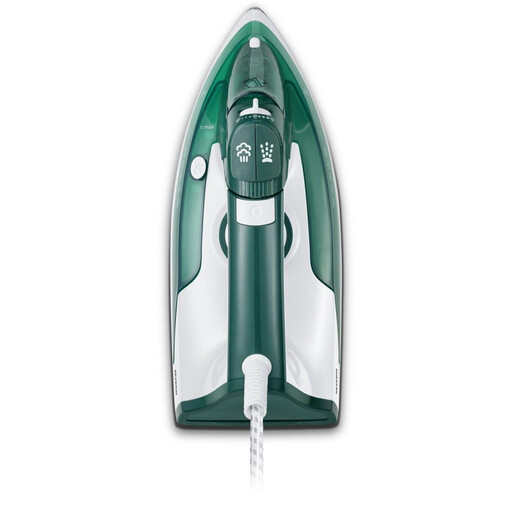 No image available
May suit you if you’re looking for a steam iron with a removable tank and anti-drip function.
2400 W; variable steam output: 30 g/min; steam boost: 85 g/min; removable 175 ml water tank; anti-drip function; stainless steel soleplate.
 No image available
An option if you’re considering a handheld steam iron for individual items of laundry.
2400 W; non-stick soleplate; automatic cleaning function; anti-drip protection.
 No image available
May suit you if you want to compare steam irons with a stated continuous steam output.
2500 W; continuous steam: 40 g/min; steam boost: 160 g/min; Eco function; anti-drip protection.
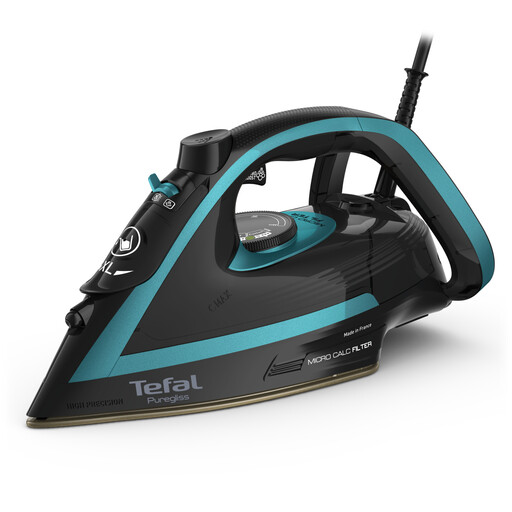 No image available
An option if you’re looking for a steam iron with anti-drip protection and automatic shut-off.
Steam boost: 280 g/min; vertical steam; XL water-filling opening; anti-drip protection; automatic shut-off.
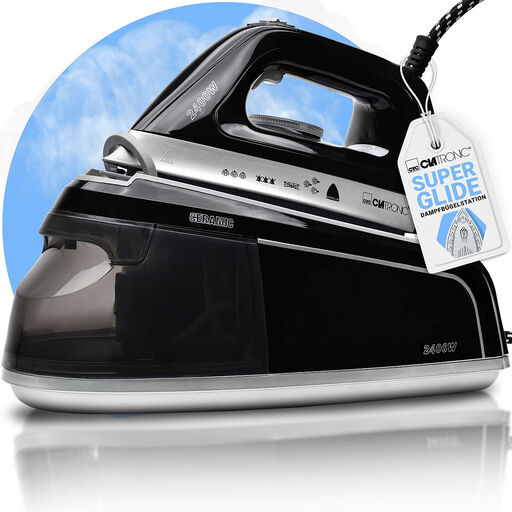 No image available
May suit you if you iron several items in one go and have room for a separate steam generator.
2400 W; 3.5 bar; 1.2 l water tank; up to 80 minutes’ operating time.
No. The fibre type alone doesn’t mean every apron can be treated the same way. GINETEX GERMANY explains that the care label states the maximum treatment permitted for the specific textile. Check it carefully, particularly if the apron contains blended fabrics, ties or prints.
Not necessarily. If you only have a few aprons to iron, a single steam iron may be easier to get out and put away. A steam generator has a different tank and appliance design, but you’ll need space for its base. Compare the dimensions with your work area.
Follow the instructions for your specific model and take your local water hardness into account when choosing water and descaling the iron. Tefal Germany notes that water hardness affects how often cleaning is needed, so one schedule won’t necessarily suit every appliance.
Your statutory rights are against the seller and are separate from any voluntary manufacturer’s guarantee, as Germany’s consumer advice centre explains. If there’s a fault, you can initially ask for the goods to be put right, either through repair or replacement. The circumstances of the purchase determine how the standard two-year legal guarantee period for consumer goods applies.
No. For products covered by the relevant EU harmonisation rules, the manufacturer uses the CE marking to declare conformity; it isn’t a general independent test mark. The European Commission also explains that there’s no central EU body which issues permission to use the CE marking or grants a corresponding certificate.