Ironing cotton dresses
For anyone who wants to smooth dresses after washing and work precisely around seams and edges.


For washed cotton dresses, a steam iron with an easy-to-guide tip and a suitable continuous steam output is a sensible place to start. If you regularly have large loads of washing to get through, a steam generator iron may also be worth considering. Mud needs to be treated before ironing, and the care label on each outdoor layer will tell you whether heat or steam is allowed. A garment steamer is better suited to freshening up clean clothes that are suitable for steaming while hanging, rather than precisely smoothing seams.
For anyone who wants to smooth dresses after washing and work precisely around seams and edges.
For anyone who occasionally needs to clean muddy or potentially heat-sensitive outerwear as well as dresses, and follow the care instructions.
For anyone who irons several clean garments one after another and needs to weigh up ease of use, refilling and how much space the appliance takes up.
A good fit if: you mainly iron clean clothes on the board that the care label says are suitable for ironing.
Things to consider: tank capacity and continuous steam output vary by model; a powerful steam boost is not the same as continuous steam.
A good fit if: you regularly iron lots of suitable garments in one session and have room for a larger appliance.
Things to consider: the larger set-up is not necessarily worth it if you only iron occasionally or in small batches.
A good fit if: you mainly want to freshen up clean clothes that are suitable for steaming while hanging.
Things to consider: an iron is generally better suited to pressing dress seams precisely; steam is no substitute for cleaning mud or following care instructions.
| Priority | What to check when buying | Who will find this most important? |
|---|---|---|
| Creases and precision | Consider continuous steam and the steam boost separately; check the tip and handle on the specific model. | If I’m smoothing seams and narrow areas, an easy-to-guide tip matters more than a high steam output alone. Around 34% of consumers prioritise crease removal and precision. |
| Following care restrictions | Check the care label on each garment; an automatic temperature setting does not override a warning not to iron. | If I need to protect a delicate outdoor layer, I first check whether it can be ironed or steamed at all. Around 33% of consumers put fabric protection first. |
| Mud and stains | Plan cleaning and ironing as separate steps; check the specific model for an anti-drip feature and descaling method. | If there’s mud on a garment, I want to clean it and check for any remaining stains before ironing. Around 25% of consumers prioritise checking for dirt and stains. |
| Larger loads of laundry | Weigh up the model’s tank and descaling method against how much you’ll use it and how much space you have. | If I’m ironing lots of suitable garments one after another, refilling, maintenance and storage space all matter. Around 8% of consumers prioritise ironing volume and maintenance effort. |
An iron won’t remove mud. Persil’s stain advice recommends letting mud dry first, brushing off any loose particles and washing the garment according to its care label.
Clean the garment first, then check the label before deciding whether to iron it.
Philips’s claims about OptimalTEMP technology apply to ironable fabrics. The care instructions on the individual garment still take precedence, even if the appliance selects the temperature automatically.
Check the ironing and steaming instructions for the garment before treating it.
These figures describe different features. You can’t work out how long an iron will last between refills from its tank capacity alone.
Compare continuous steam, a short steam boost, tank capacity and ease of use separately for the specific model.
The FreeStyle 3 series is an option if the handle and precision around seams matter to you. For TexStyle 9 models, check the specifications for the exact variant.
The Azur 8000 DST8030/70 may suit you if its automatic temperature control and model-specific steam and descaling features meet your needs.
You can assess the Ultimate Pure FV9844 by looking at its continuous steam output, tank capacity and descaling features.
The Focus Excel DW5310 is an option if you want to check its manual settings and precision tip.
The Joybuy products below are steam irons for ironing clothes on an ironing board. For outdoor clothing, the care label remains the deciding factor, whatever temperature or steam setting you select.
 No image available
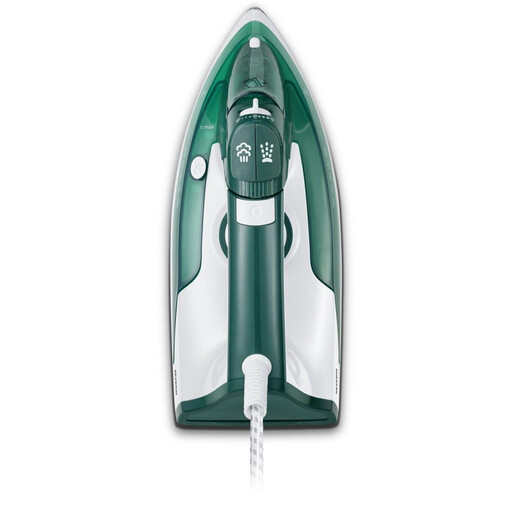
For clothes that can be ironed on a board; you can adjust the variable steam output described.
Stainless steel soleplate; 2,400 W; variable steam output up to 30 g/min; 85 g/min steam boost; removable 175-ml water tank; anti-drip, anti-scale and self-cleaning functions.
 No image available
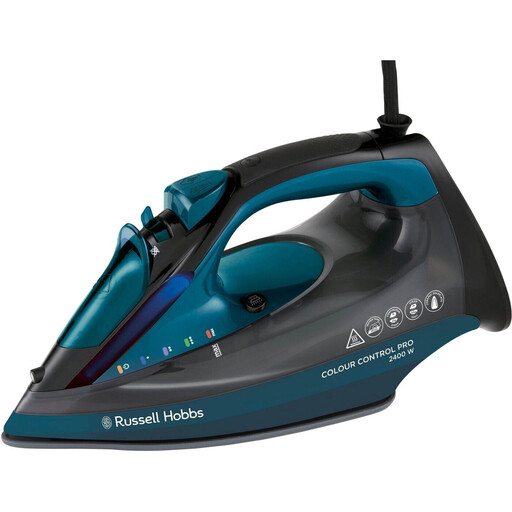
For anyone who switches between different ironable fabrics and wants to take the model’s temperature settings into account.
Ceramic soleplate; continuous steam up to 45 g/min; 380-ml water tank; Colour Control temperature setting; automatic shut-off; anti-drip, anti-scale and self-cleaning functions.
 No image available
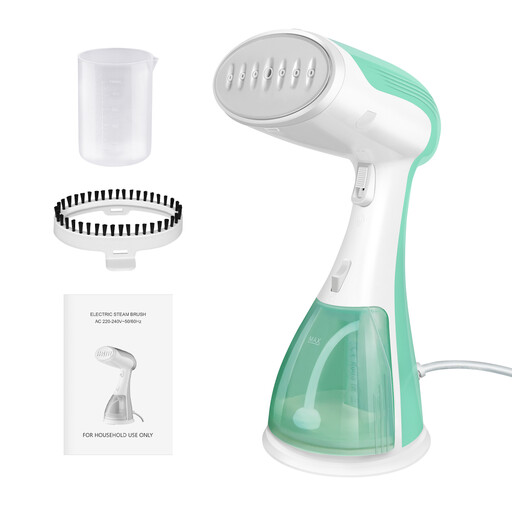
The product description covers both steaming clothes while hanging and ironing them flat; the flat setting is the relevant one for dresses on the board.
Continuous steam 27 g/min; removable water tank; tank capacity listed in the description as 300 ml; vertical and flat use; metal plate.
 No image available
For ironable fabrics where several temperature settings are useful when switching between materials.
Continuous steam up to 50 g/min; five temperature settings; 350-ml water tank; vertical steam; anti-drip and self-cleaning functions.
 No image available
For clothes that can be ironed; the vertical steam function listed offers an additional way to use it.
Stainless steel soleplate; continuous steam up to 40 g/min; 160 g/min steam boost; 250-ml water tank; 1.5 kg; anti-drip and anti-scale functions.
No. Steam won’t remove mud: Persil recommends letting it dry first, brushing off any loose particles and washing the garment according to its care label. The garment’s own care label will tell you whether you can iron or steam it afterwards.
GINETEX lists maximum soleplate temperatures of 200 °C, 150 °C and 110 °C for the iron symbols; the lowest setting shown is explicitly marked “without steam”. Check the symbol for the whole garment, including any delicate parts, rather than relying on the fact that the fabric is cotton.
Before buying, check the descaling method and instructions for the exact model variant. Braun lists a limescale collector for the SI 9682 DB; this does not give you a general maintenance interval or a cost that applies to every appliance.
According to the European Union’s consumer information, you are generally entitled to a legal guarantee from the seller for at least two years from receipt of the goods; an additional commercial manufacturer’s guarantee does not replace it. If a fault is covered, the seller must generally repair or replace the item free of charge in the first instance, subject to the conditions explained there.
The German Federal Network Agency lists the CE marking, an identifiable product, correct manufacturer details and German-language instructions with the required warnings among the points checked during market surveillance. This can help you assess a specific listing, but it does not automatically confirm that a particular appliance complies with the relevant requirements.