Ironing skirts between guest stays
If you’re smoothing several cotton skirts on an ironing board, both the size of the ironing pile and the time it takes to refill and put the iron away matter.


For one or a few skirts at a time, a steam iron with an easy-to-manoeuvre tip and adjustable steam is a sensible place to start. If you regularly have larger piles to iron, a steam generator could be a good fit, provided you have room for the base. Always follow the care label on each skirt, and consider how easy the iron is to use around hems and pleats, as well as the effort involved in refilling and descaling it.
If you’re smoothing several cotton skirts on an ironing board, both the size of the ironing pile and the time it takes to refill and put the iron away matter.
For narrow areas and edges, it’s important that the tip of the iron can reach them easily and that you can guide the iron with precision.
If skirts contain different fabric blends or embellishments, the temperature and steam need to suit the care label on each one.
A good fit if: you want to press one or several ironable skirts flat and tackle hems or pleats precisely.
Consider: The built-in tank needs filling, and the iron must be maintained according to its instructions.
A good fit if: you regularly have lots of skirts to iron in one go and have room for the base, hose and ironing board.
Consider: A larger tank means a bigger set-up and takes up more space. Tefal lists a removable 1.7-l tank for the SV6131, which can be refilled while you’re ironing.
A good fit if: you specifically want to press without using steam from the iron and the care label allows it.
Consider: For stubborn creases, dampening the fabric separately may add an extra step.
A good fit if: you want to freshen up a hanging skirt quickly and its care label says it’s suitable for steaming.
Consider: Steaming a garment on a hanger won’t necessarily press hems or pleats flat.
If you’re ironing cotton skirts in a holiday let, these four priorities can help you choose equipment that suits your ironing routine.
| Buying priority | What to check | Who is this important to? |
|---|---|---|
| Smoothing fabric | Check the steam settings and soleplate of the specific model. | If I need to smooth larger panels of fabric, I want to know how the steam and iron perform when pressing fabric flat. Around 33% of consumers put smoothing the fabric first. |
| Reaching hems and pleats | Check the shape of the iron’s tip and how easy the iron is to guide. | When I’m working on narrow hems and edges, I want to be able to target them precisely, rather than only tackle large areas. Around 27% of consumers prioritise reaching details and pleats. |
| Following the care label | Check the ironing symbol and steam guidance against the iron’s settings. | If skirts contain different fabrics or embellishments, I set the temperature and steam to suit each care label. Around 20% of consumers put fabric care first. |
| Planning your ironing and maintenance | Check the tank, descaling instructions and automatic shut-off for the specific model. | For regular ironing, I want to plan refilling, cleaning and safely putting the iron down as part of my routine. Around 20% of consumers prioritise appliance maintenance and their ironing routine. |
The fibre name alone doesn’t determine how the finished skirt can be treated. GINETEX lists different ironing temperature limits, as well as symbols for ironing without steam and for not ironing at all.
Check the care label before pressing, and take any embellishments into account too.
Steaming clothes on a hanger doesn’t automatically achieve the same result as pressing hems and pleats precisely on an ironing board.
If you need crisp edges, first consider a suitable iron and ironing board; a steamer is better suited to freshening clothes up.
Rowenta’s product page doesn’t list automatic shut-off for the Everlast Anticalc DW7320D1. Features listed for similarly named models can’t necessarily be assumed to apply.
Check the full model reference and shut-off function against the documentation for the product on offer.
The TexStyle SI 3055 is a steam iron with manual temperature control.
The FV9844E0 is a steam iron, while the SV6131 is a steam generator.
The DST8020/20 is a specific model in the Azur 8000 Series, with automatic temperature control.
The Everlast Anticalc DW7320D1 is a model with a removable limescale collector.
The One Temperature 25090-56 and Powersteam Ultra 20630-56 are two different steam iron models.
This selection includes steam irons for pressing garments flat, as well as a steam generator for regular, larger ironing sessions.
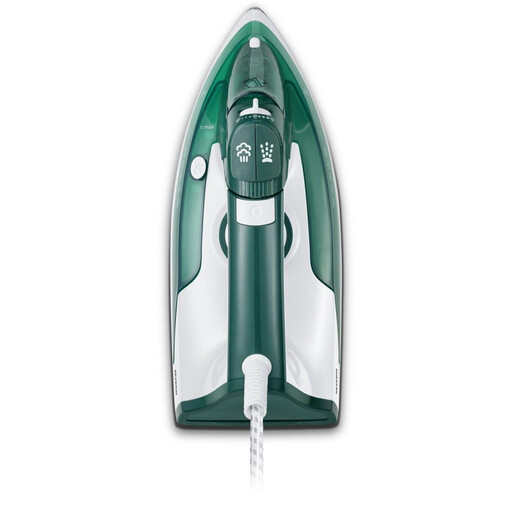 No image available
An option if you want to adjust the steam and temperature to suit each skirt.
Variable steam output up to 30 g/min; 85 g/min steam shot; removable 175-ml water tank.
An anti-drip function and self-cleaning are listed.
 No image available
An option for ironing sessions where tank capacity and continuous steam are important.
Up to 40 g/min of continuous steam and a 160 g/min steam shot; 250-ml tank and 2-m cable.
An anti-drip system and anti-limescale system are listed.
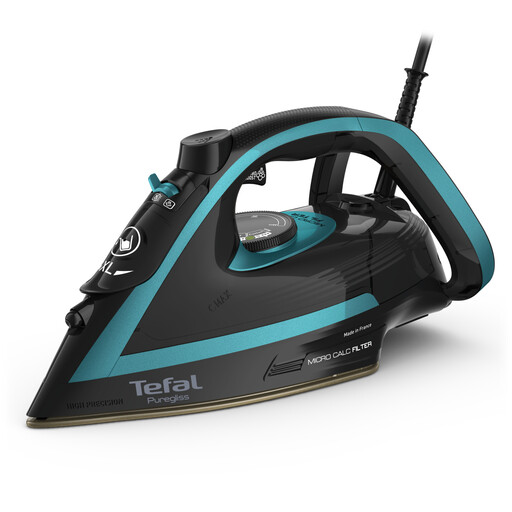 No image available
An option if you’re looking for a steam iron with specified fabric-care and shut-off features.
Up to 50 g/min of continuous steam and a 280 g/min steam shot.
An anti-limescale filter, anti-drip function and automatic shut-off are listed.
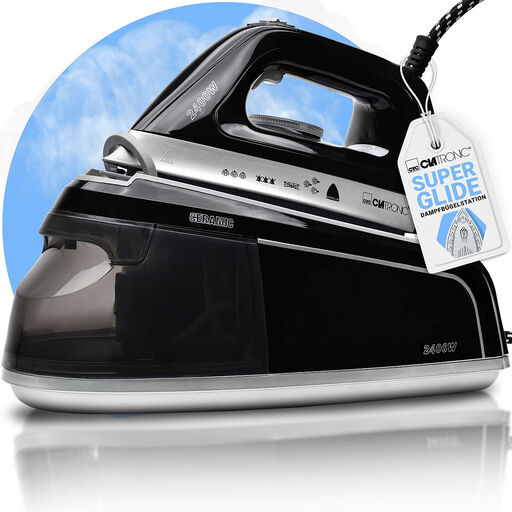 No image available
An option for larger ironing sessions if you have room for the separate base unit.
A 1.2-l tank, continuously adjustable temperature control and steam output of up to 90 g/min are listed.
The description lists a removable tank and an operating time of 80 minutes.
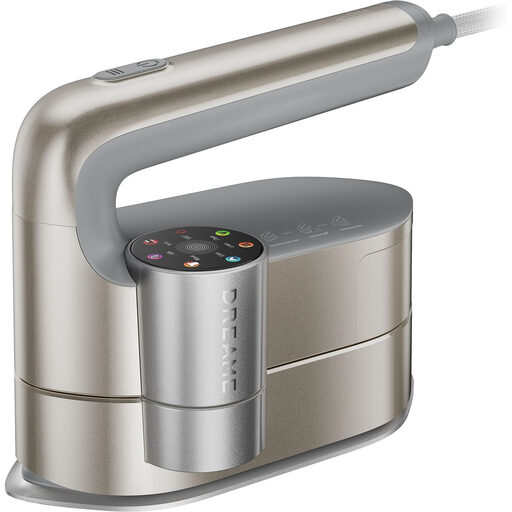 No image available
An option if you want to check the steam and dry modes against the care instructions for each skirt.
Four steam levels and automatic temperature control are listed.
The water tank holds 100 ml, so you may need to refill it more often when ironing several skirts.
No. The care label on the finished skirt is what matters, not just the fibre name. GINETEX distinguishes between ironing limits of 210 °C, 160 °C and 120 °C; a 120 °C symbol may mean that you should iron without steam. You should also follow any instruction not to iron the garment.
Before first use, check the skirt’s care label against the instructions for the specific iron. If it has a self-cleaning function or a removable limescale collector, follow the manufacturer’s cleaning instructions; an anti-limescale function doesn’t eliminate the need for maintenance.
According to the European Union, electrical and electronic equipment is among the product groups that require CE marking. By applying the marking, the manufacturer declares that the product meets the relevant EU product regulations; it isn’t an individual safety approval from an EU authority. Check the marking and product information for the specific appliance.
For a consumer purchase from a trader, the European Union’s consumer portal describes a legal guarantee of at least two years from the date you receive the goods. This is separate from a manufacturer’s guarantee. Whether a purchase for a holiday let counts as a consumer or business purchase can’t be determined from the intended use alone.