Careful tie owners
You want to smooth out creases without damaging the material or shape of your particular tie, so you check its care instructions first. GINETEX explains care symbols, while The Tie Bar provides care advice for its own ties.


For a single cotton tie, don’t buy an iron just because of the material. Check the care label first; hanging it up or rolling it may be enough for light creases. The Tie Bar recommends carefully steaming its own ties rather than ironing them to tackle deep creases. If ironing is allowed and you also press other suitable laundry, an iron with adjustable settings could be a good fit. High steam output or a steam generator won’t remove the risk to the fabric or shape.
You want to smooth out creases without damaging the material or shape of your particular tie, so you check its care instructions first. GINETEX explains care symbols, while The Tie Bar provides care advice for its own ties.
You use and put away a hot appliance in shared spaces, so clear settings and safety features matter to you. Braun Household Germany and Tefal Germany describe how automatic switch-off varies by model.
You want an appliance for quick ironing sessions that’s also useful for other suitable laundry, without having to find space for a steam generator. F.A.Z. Kaufkompass says a steam iron is enough for many households; De’Longhi Group Newsroom published the results of a YouGov survey commissioned by Braun about ironing habits.
Start with the tie’s care label. Only then can you decide whether you need an appliance and which features matter for other laundry in your household.
A good fit if: The tie is only lightly creased, or you’d like to try smoothing it without heat first.
The trade-off: For deep creases, The Tie Bar recommends carefully steaming its own ties rather than ironing them. This isn’t a guarantee that the same approach is right for every tie.
A good fit if: The care symbol allows ironing and you also press other suitable laundry.
The trade-off: You’ll need space to store it and must use it carefully. Set the temperature and steam to suit the care instructions for each fabric.
More suitable if: Your household regularly has large amounts of other suitable laundry to iron.
The trade-off: Care instructions don’t justify buying a steam generator just for individual ties, and you’ll need extra storage space.
| Priority | What to check when buying | Who is this important to? |
|---|---|---|
| Protect the fabric and shape | Care label; suitable temperature and steam settings if ironing is allowed. | If I want to smooth my tie without risking its shape or fabric, I check the care instructions first. Around 42% of consumers prioritise treating their clothes as gently as possible. |
| Use and put it away safely | Check the model’s automatic switch-off details and instruction manual; make sure you have a suitable place to put it down. | In a shared space, I want to be able to use a hot appliance carefully and put it down safely. Around 33% of consumers prioritise ease of use when buying. |
| Limited storage space | Check the appliance’s dimensions and tank size against the space where you plan to store it. | For quick ironing sessions, I want to be able to put the appliance away easily afterwards. Around 17% of consumers prioritise how much space the iron and accessories take up. |
| Iron other laundry too | Check the temperature, steam and dry-ironing settings against the fabrics you actually need to iron. | If there’s other suitable laundry to iron as well as the tie, I want to be able to use the appliance for that too. Around 8% of consumers prioritise this kind of versatility. |
The care symbol for the complete textile item determines how it can be treated. The Tie Bar warns against ironing its own ties, even those containing cotton.
Check the label first, and try tackling light creases without an iron.
Braun specifies automatic switch-off for the FreeStyle 3 series, depending on the model; Tefal explicitly states that model FV2836E0 does not have this feature.
Check the full model number and instruction manual. Always make a point of switching the appliance off, whether or not it has an additional safety feature.
More steam and a larger tank may be useful for other laundry, but they don’t change the care instructions for the tie. F.A.Z. Kaufkompass considers a steam iron sufficient for many households.
First think about which other fabrics you’ll actually iron and where you’ll store the appliance.
The FreeStyle 3 series includes steam irons with settings that vary by model; FI 3194 BK is the specific model described here.
Express Steam FV2836E0 is a steam iron for other suitable laundry.
According to the manufacturer, Powersteam Ultra 20630-56 is also designed for ironing larger loads of laundry.
The details given here for the 2000 Series apply specifically to the refurbished DST2020/80R1 model.
The Joybuy options below are steam irons for occasional use and other suitable laundry. The tie’s care label will tell you whether it can be ironed.
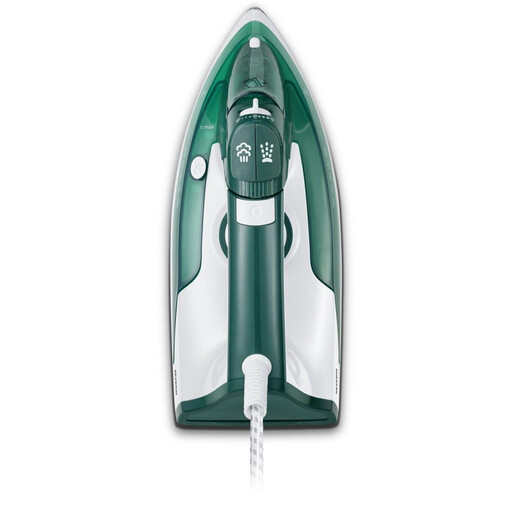 No image available
An option if you want to iron other suitable laundry as well as your tie.
2400 W; steam boost 85 g/min; variable steam output 30 g/min; removable 175-ml water tank; stainless steel soleplate.
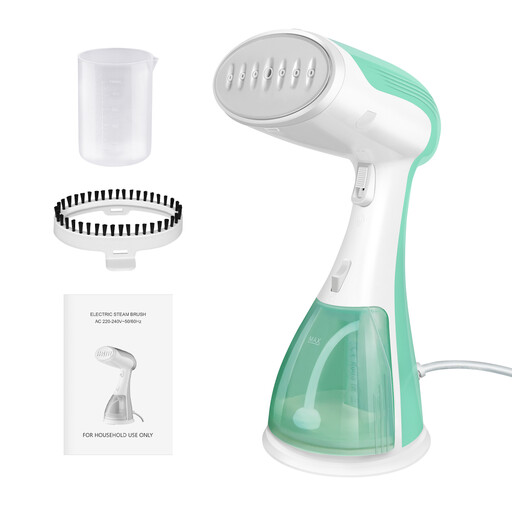 No image available
A handheld option if you’re looking for a steam iron for other suitable fabrics too.
1500 W.
 No image available
An option if you iron other suitable laundry as well as ties.
2500 W; continuous steam 40 g/min; steam boost 160 g/min; Eco function; anti-drip system.
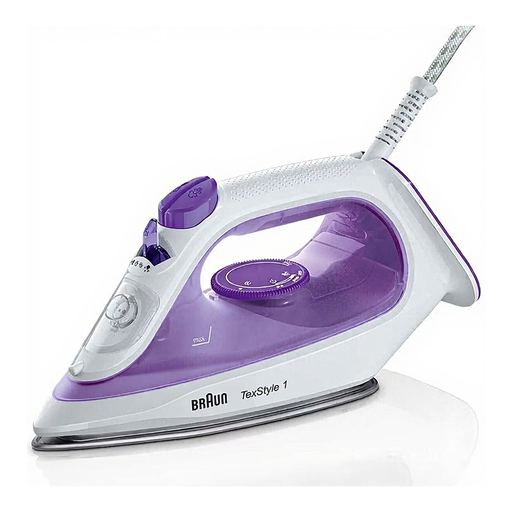 No image available
If you use an appliance in a shared space, check the model-specific details about how to use it and whether it has automatic switch-off.
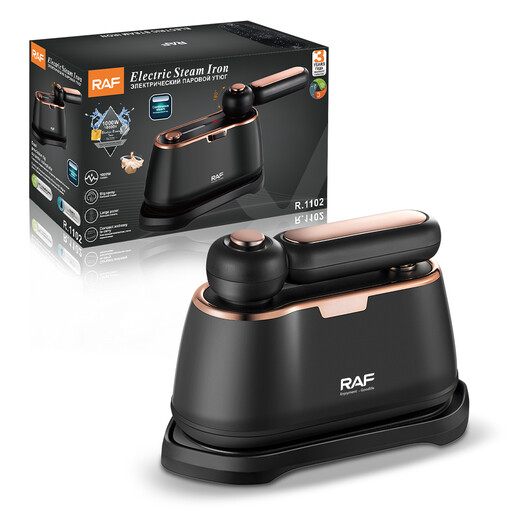 No image available
A compact option if storage space is limited and you occasionally iron other suitable fabrics.
1000 W; 120-ml water tank; handle rotates through 180°; vertical and continuous steam.
Don’t assume so just because of the outer fabric: what matters is the care label for the whole tie. GINETEX lists maximum soleplate temperatures of 110, 150 or 200 °C, depending on the ironing symbol; the 110 °C setting is for ironing without steam. The Tie Bar advises against ironing its own ties and recommends carefully steaming them to tackle deep creases.
Read the instructions for the specific appliance and decide where you’ll put it down and store it safely. Set the temperature and steam according to the fabric. Automatic switch-off, where available, is an extra feature and doesn’t replace switching the appliance off yourself.
Descaling requirements depend on the model: Russell Hobbs lists an anti-scale cartridge and self-cleaning for 20630-56; Tefal describes an anti-scale system for FV2836E0. Verbraucherzentrale distinguishes between your statutory rights against the seller and a voluntary manufacturer’s guarantee (as at 28 September 2026).
The Low Voltage Directive 2014/35/EU covers electrical equipment with a rated voltage of 50 to 1,000 V AC or 75 to 1,500 V DC; EUR-Lex lists the consolidated text as at 30 May 2026. According to information from the European Union, manufacturers use the CE marking to declare that their products comply with the relevant EU rules. A product description alone doesn’t prove that a particular offer is compliant.