What should you look for when buying?
Check the care label first, then consider temperature, steam and how easily you can guide the iron over narrow areas. Tank capacity and storage space become more important if you regularly iron other laundry too. For mains-powered appliances covered by the relevant EU rules, check the applicable product requirements and the required CE marking. The European Commission describes CE marking as the manufacturer’s declaration, not an independent quality assessment of the appliance’s ironing performance.
Dry iron
A good fit if: the care label allows ironing and you mainly do short, precise jobs without needing built-in steam.
The trade-off: The Severin BA 3211 is a dry iron with no steam output, according to the manufacturer. That means you won’t have built-in steam for other textiles either.
Adjustable steam iron
A good fit if: you iron other suitable laundry as well as ties and only want to use steam when the relevant care label allows it.
The trade-off: The water tank and model-specific limescale care involve extra work. A steam boost and continuous steam are different specifications, and neither confirms that a particular tie is suitable for steam.
Handheld garment steamer
A good fit if: you want to smooth light creases on a tie that’s suitable for steaming, without pressing the fabric directly with an iron’s soleplate.
The trade-off: A garment steamer works differently from an iron on an ironing board and doesn’t override a ban on ironing or other care instructions. Philips describes the portable STH3010/30R1 as compact and foldable; this particular model is listed as refurbished.
Steam generator
A good fit if: you regularly have larger loads of suitable laundry to iron and have room for the generator and hose in your utility room.
The trade-off: The Tefal SV6115 has a separate 1,4-l tank, according to the manufacturer. The generator and hose need extra space, and they’re not automatically an advantage for ironing individual narrow items.
| Buying criterion |
What to check before buying |
Who is it important to? |
| Protecting the shape and fabric |
Temperature control and the option to switch off the steam; follow the care label and use a clean pressing cloth if needed. |
If I want to smooth my tie without subjecting the interlining and shape to heat, moisture or pressure, gentle handling comes first. Around 36 % of consumers would make shape protection their top buying priority. |
| Precision in narrow areas |
Consider the shape of the tip, the handle and your view of the area being ironed on the specific appliance. |
If I want to work carefully on narrow areas, I look for a tip that’s easy to guide and comfortable handling. Around 29 % of consumers would give precision for detail work the highest priority. |
| Space and amount of laundry |
Take into account the working and storage space, as well as any other textiles you regularly iron. |
If I also iron plenty of other suitable laundry, the set-up needs to suit the space available and the amount of ironing I do. For around 21 % of consumers, this would be their top buying priority. |
| Cleaning and maintenance |
Read the instructions for the specific model to find out about filling it with water and limescale care. |
If I want to keep maintenance to a minimum, I weigh that against the benefits of a steam system for other textiles. Around 14 % of consumers would put easy appliance care first. |
Joybuy products for adjustable steam ironing
The following Joybuy picks are adjustable steam irons for controlled ironing of cotton ties and other suitable laundry. Only use steam if the tie’s care label allows it.
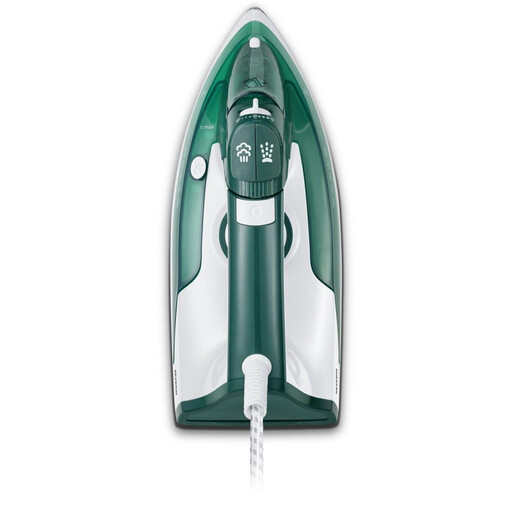 Image unavailable
Severin BA 3261 steam iron
If you want to switch steam on or off depending on the care label, this model also has a dry-ironing mode.
2400 W; variable temperature control; variable steam up to 30 g/min; steam boost 85 g/min; 175-ml tank; anti-drip function and limescale protection; stainless steel soleplate.
View at Joybuy
 Image unavailable
2400 W handheld steam iron with anti-drip function
If you want to switch between dry ironing and steam, the product description lists both modes.
2400 W; five temperature settings; continuous steam 50 g/min; steam boost 180 g/min; 350-ml tank; anti-drip system; vertical steam and automatic cleaning function.
View at Joybuy
 Image unavailable
Rowenta DW4320 Express Steam
If you’re looking for a steam iron with a built-in tank rather than a separate generator, this model has the design you’re after.
2500 W; continuous steam 40 g/min; steam boost 160 g/min; 250-ml tank; anti-drip system, limescale protection and vertical steam.
View at Joybuy
 Image unavailable
Tefal FV8066 Puregliss
If you want to adjust the heat and steam settings to suit the fabric before ironing, the product information lists settings for this purpose.
Continuous steam up to 50 g/min; steam boost up to 280 g/min; built-in water tank; limescale technology, anti-drip system and automatic shut-off.
View at Joybuy
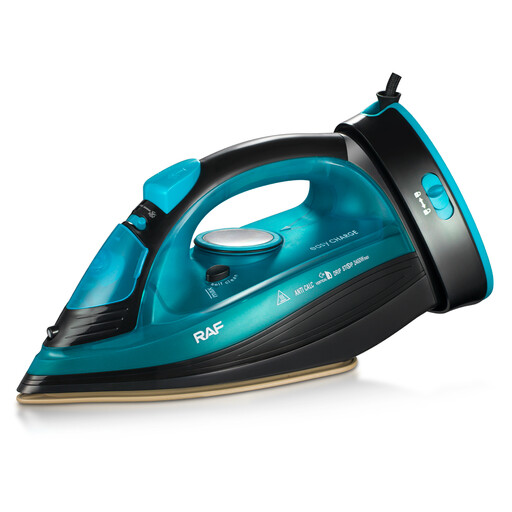 Image unavailable
RAF R.1210B steam iron
If you’re tackling narrow areas, the description mentions a precision tip, and the steam output is adjustable.
2400 W; cordless operation with 360° charging base; 320-ml tank; steam output 15–25 g/min; ceramic soleplate and anti-drip function.
View at Joybuy
Frequently asked questions
Can I automatically iron a cotton tie on the highest setting?
No. Follow the care label for the whole item, not just the fibre of the outer fabric. GINETEX lists maximum temperatures of 200 °C, 150 °C and 110 °C for the different iron symbols; the 110 °C symbol means you should iron without steam.
How should I prepare a tie for ironing?
Use a suitable, heat-resistant ironing surface, check the care label and press gently. A clean pressing cloth can protect the tie from direct contact with the soleplate; pressing too hard can damage the interlining and shape. Never leave a hot iron unattended, and unplug it after use.
What water and descaler should I use?
Follow the instructions for your specific model, as Calc-Clean and other limescale systems vary between appliances. Don’t fill or clean an iron while it’s plugged in.
Are a guarantee and your statutory rights the same thing?
No. Your statutory rights cover faults and apply to the retailer; a guarantee is an additional voluntary promise with its own terms. The Verbraucherzentrale recommends checking the guarantee terms and the seller before you buy.
What should I know about the conformity of electrical appliances in Germany?
For electrical appliances covered by the relevant harmonised EU rules, the required CE marking is relevant. It’s the manufacturer’s declaration of conformity, not an independent quality assessment of ironing performance, and it doesn’t replace checking the information for the specific product.


