For regular linen ironing
If you’re ironing several tea towels, follow the care label on each one when choosing the setting. GINETEX Germany explains that care symbols show the maximum treatment allowed.


For ironing individual linen tea towels, an iron with an adjustable temperature is a sensible place to start; use steam only if the care label allows it. If you regularly iron larger loads in a shared house and have room for a separate base unit, a steam generator iron may be worth considering. For just a few towels, dry ironing is another option. If the iron will be shared, check that the controls are easy to use and look at the safety features of the specific model.
If you’re ironing several tea towels, follow the care label on each one when choosing the setting. GINETEX Germany explains that care symbols show the maximum treatment allowed.
If several housemates will be using the same appliance, look for clear controls, a safe place to rest it and safety features on the specific model.
For occasional use, you can compare a handheld iron with a steam generator that has a separate base unit. The key question is whether you have room for the extra equipment and whether setting it up suits your routine.
A good fit if: you regularly iron several towels and their care labels allow steam.
Consider: the water tank and descaling add extra maintenance.
A good fit if: you only iron a few towels, want to avoid water-related maintenance or the care label rules out steam.
Consider: you won’t have the extra smoothing effect of steam.
A good fit if: you regularly have larger loads of laundry to iron in your shared house and have room for a separate base unit.
Consider: the base unit and tank need extra storage space; the added equipment may not be necessary for just a few towels.
The care label on each towel sets the limits: GINETEX Germany explains that care symbols show the maximum treatment allowed.
| What to consider | What to check before buying | Who is it important to? |
|---|---|---|
| Temperature and steam | Check whether you can adjust the temperature and regulate or switch off the steam to suit the care label. | When I iron several linen towels, I want to choose the setting to suit each care label; around 40% of consumers put getting the right ironing result first. |
| Safety features | Check the automatic shut-off and controls using the full model number, and make sure you have a safe place to rest the appliance. | When an iron is shared, I look for clear controls and safe use; around 30% of consumers prioritise sharing. |
| Space and design | Compare a handheld appliance with the extra space needed for a steam generator, including its base unit and tank. | If I only iron a few towels, I want to store the appliance without unnecessary set-up; around 20% of consumers prioritise space and ease of use. |
| Water maintenance | Check the descaling instructions and the type of water approved for the specific model. | If I want to avoid water maintenance and possible drips, I also check whether the iron has a dry setting; around 10% of consumers prioritise keeping maintenance to a minimum. |
A short burst of steam is not the same as continuous steam output. A high peak figure therefore doesn’t tell you how much steam the iron produces continuously.
For the exact models you’re comparing, check the continuous steam output in g/min against the same figure for another model. Compare steam boost figures separately.
This feature varies between the irons mentioned, depending on the model. A brand name alone doesn’t tell you whether a particular appliance switches off automatically.
Check the feature against the full model number. Even so, never leave a hot iron unattended.
For one Tefal iron, the description as a dry iron doesn’t match the steam specifications provided; the model numbers also differ.
Before deciding to buy, check the full model number and operating mode against reliable product documentation.
The FreeStyle 3 FI3194BK is a specific steam iron with manual temperature control.
The DST7040/80 and PSG6023/20 represent two different designs: a handheld iron and a steam generator.
The Easygliss Energy FV5781 is a steam iron with an Eco mode.
The Focus Excel DW5210D1 is a steam iron with manual temperature control and a precision tip.
This selection includes handheld steam irons, including models with a dry ironing setting. This lets you match the operating mode and settings to the care label when ironing individual towels.
 No image available
An option if you want to switch between steam and dry ironing to suit the care label.
Five temperature settings; dry ironing and continuous steam; self-cleaning function and anti-drip system.
 No image available
For towels whose care labels allow steam ironing, when you also want to take continuous steam output into account.
40 g/min of continuous steam; 160 g/min steam boost; 2500 W; Eco function and anti-drip system.
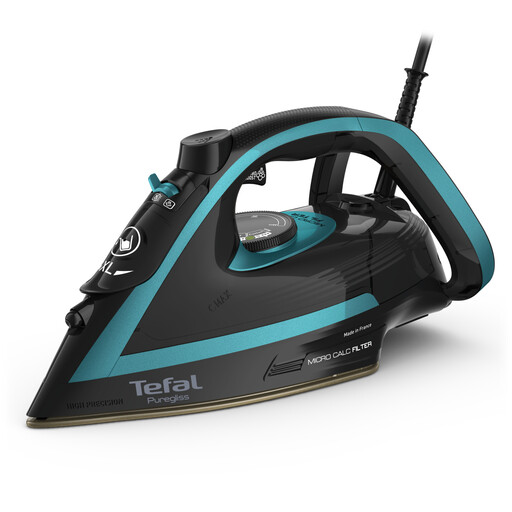 No image available
An option if you want to choose a temperature setting to suit each fabric.
Up to 50 g/min of continuous steam; 280 g/min steam boost; fabric-specific temperature settings; Micro-Calc filter, drip-stop system and automatic shut-off.
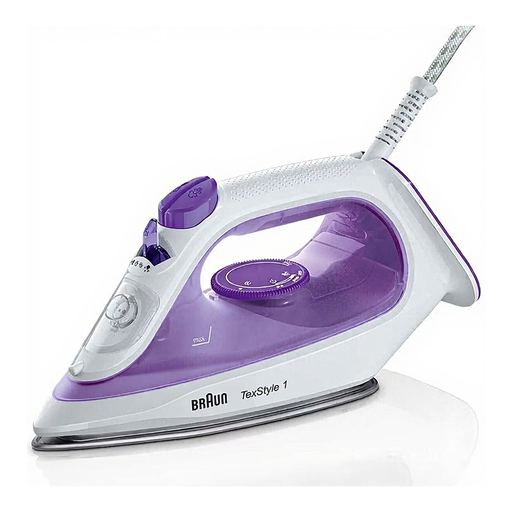 No image available
Adjust the temperature for different towels and use the dry ironing setting when needed.
Temperature control and dry ironing setting; self-cleaning, drip-stop system and automatic safety shut-off.
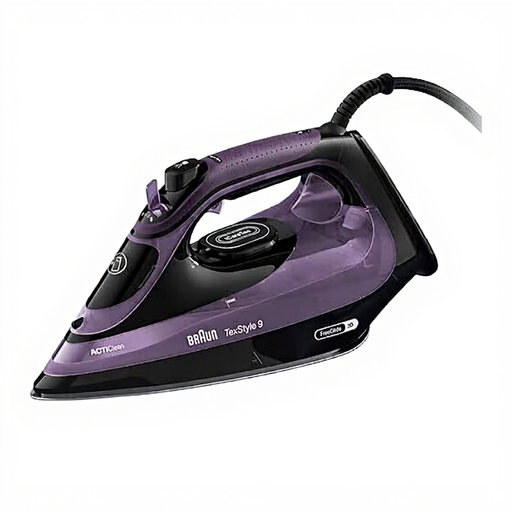 No image available
This model may suit you if you want to adjust the temperature for different fabrics and vary the steam setting.
iCare temperature control and variable steam settings; descaling function, drip-stop system and automatic shut-off.
Follow the ironing symbol on the individual towel, rather than relying on the material description ‘linen’ alone. GINETEX Germany explains that care symbols show the maximum treatment allowed; for printed or blended towels, follow the label on the specific item.
First, check the instructions for your model. Philips lists a setting that is too low for steam ironing and the need to descale as possible causes for irons with a temperature control; this isn’t a diagnosis that applies to every brand.
The Verbraucherzentrale distinguishes statutory rights, which mean you can contact the seller if there’s a fault, from a guarantee, which is an optional extra offered subject to its own terms and conditions. Keep your proof of purchase and check the exact model number if you have questions about accessories or repairs.
The European Commission explains that the manufacturer is responsible for meeting the relevant EU requirements and providing the required CE marking. An old iron should be collected separately for recycling: the Umweltbundesamt lists local collection points and retailer take-back schemes among the available options.