For a precise finish on collars
If you regularly iron shirt collars and the areas around buttons, look for a tip designed for precise manoeuvring. Braun lists a precision tip for the FI3194BK; Tefal also specifies one for the FV9844.


For regularly crisp shirt collars, a steam iron with a precision tip is a suitable choice, as long as you have room for an appropriate ironing surface and a heat-resistant stand. If storage space is very limited, a foldable travel iron could be an option. A garment steamer is designed for freshening clothes vertically, and there’s no evidence that it’s an equivalent substitute for a sharply pressed collar edge. Before you buy, check the care label, the automatic shut-off feature and the space required by the specific model.
If you regularly iron shirt collars and the areas around buttons, look for a tip designed for precise manoeuvring. Braun lists a precision tip for the FI3194BK; Tefal also specifies one for the FV9844.
If you only iron occasionally and have very little room to store an iron, a folding handle could be useful. Rowenta describes this design for the DA1610 travel iron; Tefal specifies a foldable design for the DT1034 garment steamer.
If you switch between different fabrics that can be ironed, check the temperature settings and what the care label allows. Russell Hobbs lists a temperature setting for model 25090-56; Philips describes its OptimalTEMP technology for the DST8020/20.
A good fit if: you want to press collars and button plackets regularly on a suitable ironing surface. Braun and Tefal explicitly list a precision tip for the models in question.
Consider: The iron needs space to sit and be stored. The soleplate and water tank also need to be cared for in accordance with the model’s instructions.
A good fit if: you only have a few collars to iron and a folding handle would make storage easier. Rowenta describes the DA1610 as having a folding handle and a precision tip.
Consider: Rowenta specifies a continuous steam output of 10 g/min for the DA1610 and does not list an automatic shut-off feature.
A good fit if: you mainly want to freshen clothes while they’re hanging and are looking for a foldable appliance that doesn’t need a traditional ironing surface. Tefal describes the DT1034 for vertical use.
Consider: There’s no evidence that a garment steamer can produce an equally sharp, pressed collar edge. Tefal specifies a 70 ml tank and no automatic shut-off feature.
A good fit if: you regularly iron larger loads of laundry as well as collars, and have room for a separate base unit. Tefal describes the SV6131’s base as having a footprint smaller than DIN A4.
Consider: The iron, hose and ironing surface all need extra space, so the compact base alone doesn’t tell you much about the overall space required.
For anyone in a small flat who wants to iron shirt collars, the figures below offer a rough guide based on the main buying priority.
| Priority | What to look for when buying | Who is this particularly important to? |
|---|---|---|
| Precise pressing around the collar | A precision tip on the specific model and access to the area around buttons; the shirt’s care label. | If I need a crisp collar edge, precise manoeuvring is key. This would be the main priority for around 36% of consumers. |
| Footprint and storage | The dimensions of the complete appliance and its parts; space for a heat-resistant stand and an ironing surface. | If I have very little storage space, I want to be able to put the iron away easily after use. Space would be the top priority for around 29% of consumers. |
| Different fabrics that can be ironed | The care label and temperature settings; check whether steam is suitable for the garment in question. | If I switch between fabrics that can be ironed, I want to avoid unnecessary adjustments. Easy fabric care would be the main priority for around 21% of consumers. |
| Maintenance and shut-off | Model-specific descaling instructions and an explicitly listed automatic shut-off feature. | If regular maintenance and an automatic shut-off feature are my priorities, the specific model’s features matter. Around 14% of consumers would have this as their main concern. |
Tefal describes the DT1034 for vertical steaming. There’s no evidence that it can produce an equally sharp, pressed collar edge.
If a crisp edge is important, start by looking for a model with a soleplate and a precision tip.
If you also need traditional ironing results, you may need an iron and a suitable ironing surface as well.
Tefal’s claim that the SV6131 base is smaller than DIN A4 refers to the base, not every part of the steam generator.
Measure the storage and working space available for the iron, hose and base.
As well as the base, you’ll need space for the iron, hose and a suitable ironing surface.
Rowenta explicitly states that the DA1610 does not have automatic shut-off.
Check the feature list for the specific model and unplug the iron after use.
Russell Hobbs’ information about the temperature setting on the 25090-56 doesn’t mean it’s suitable for fabrics whose care labels say not to iron or steam them.
Read the shirt’s care label before ironing and follow its instructions.
Ironing against the care label’s instructions can damage the fabric.
The FreeStyle 3 and TexStyle ranges include steam irons; the features listed here apply to specific models.
The DA1610 is a foldable travel steam iron; the DW6341 is a standard steam iron.
The FV9844 and DT1034 represent different types of appliance; the SV6131 is a steam generator.
The 3000 Series includes steam irons; the Azur 8000 DST8020/20 is described as having automatic temperature technology.
The One Temperature 25090-56 is designed for people who want to make few adjustments when ironing fabrics that can be ironed.
The DB 6005 CB is a steam iron with adjustable temperature and switchable steam.
This selection includes compact travel and steam irons, including models with a precision tip. Check whether each one’s design, features and space requirements suit your collar-ironing needs.
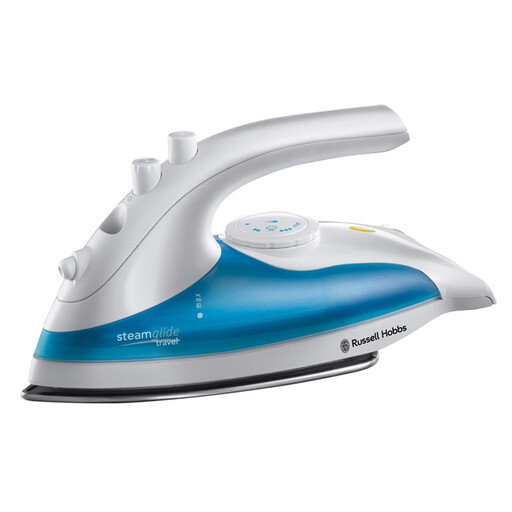 No image available
For occasional ironing when storage space is limited; this model is described as a travel iron.
Dual voltage; stainless steel soleplate; 80 ml water tank; 10 g/min continuous steam; 1.5 m cable.
 No image available
For traditional steam ironing; the description also mentions vertical steaming.
Non-stick soleplate; five temperature settings; 350 ml water tank; self-cleaning function.
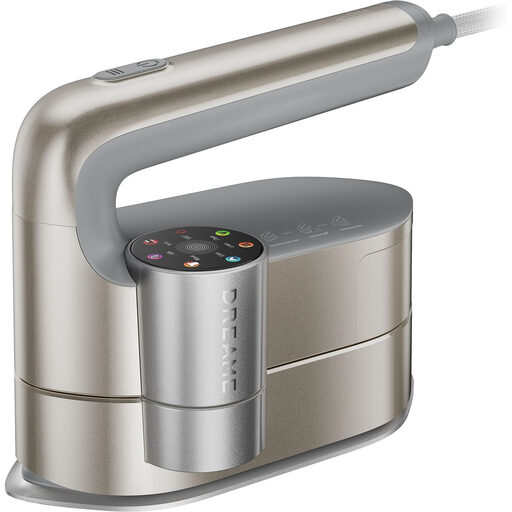 No image available
For ironing in limited space; the description highlights a compact design with a rotating soleplate.
Dimensions: 9,3 × 14,8 × 17,3 cm; soleplate rotates through 90°; automatic temperature control; 100 ml tank.
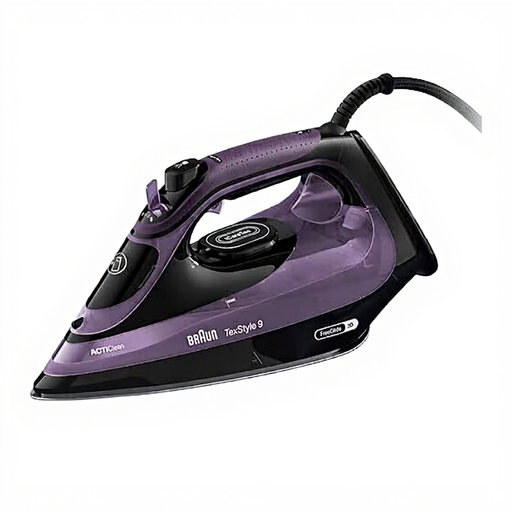 No image available
For precise ironing in hard-to-reach areas; the product description lists a precision tip.
Automatic iCare temperature setting; 330 ml water tank; automatic shut-off; vertical refresh function.
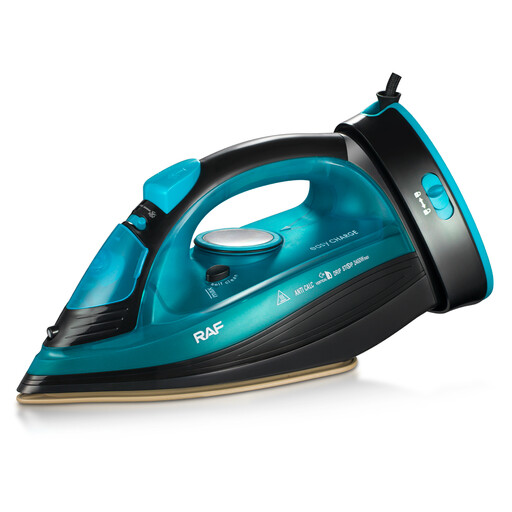 No image available
For ironing around buttons and collars; the product description lists a precision tip. The 360° charging base is needed for cordless use.
2000 W; 320 ml tank; 15–25 g/min steam output; ceramic soleplate; self-cleaning function.
Start by checking the care label. It tells you what heat is suitable and may rule out ironing or steam ironing altogether. Set the temperature and steam according to the shirt, not just the appliance description.
Follow the instructions for the specific model. Philips recommends emptying the tank regularly for the steam irons described in its guidance; Tefal notes that water hardness affects how often descaling is needed. Don’t use cleaning products or follow maintenance intervals from another appliance without checking first.
If a product is faulty, your statutory rights are against the seller; a manufacturer’s guarantee is an additional voluntary service. If there’s a fault, repair or replacement may be available in the first instance. Online purchases also generally come with a 14-day right to cancel; the start of the period and any exceptions depend on the circumstances. The Verbraucherzentrale explicitly distinguishes between statutory rights and guarantees.
The EU Low Voltage Directive applies to electrical equipment with a rated voltage of 50 to 1,000 V AC. The European Commission describes CE marking as the manufacturer’s declaration that the relevant EU requirements have been met. The mark is not an independent EU quality seal. Check the marking on the specific appliance and its product documents.