For precise cuff pressing
If you want to work around buttons and seams, an easily manoeuvrable pointed tip, a flat soleplate and a temperature setting suited to the care label matter more than maximum steam output.


For crisp cuffs, an iron with an easily manoeuvrable pointed tip and a suitable soleplate is usually the obvious choice. Undo the cuff buttons and set the temperature according to the care label. If you only iron occasionally and have little storage space, a small dry iron may be enough. A steam generator is a better choice if you regularly have larger loads of laundry to iron in your shared flat. A handheld garment steamer is more suited to freshening clothes on a hanger than to pressing a crisp edge into a cuff.
If you want to work around buttons and seams, an easily manoeuvrable pointed tip, a flat soleplate and a temperature setting suited to the care label matter more than maximum steam output.
If you share an iron, clear settings, a safe place to rest and cool it, and an automatic shut-off (if the model has one) are important. This feature is no substitute for handling a hot appliance carefully.
If you iron individual shirts rather than large loads of laundry, weigh up the storage space and maintenance involved against the benefits of a water tank and steam.
A good choice if: you want to press cuffs precisely and use steam to tackle creases when needed.
Things to consider: the water tank and model-specific descaling requirements mean extra maintenance.
A good choice if: you iron infrequently, want to keep storage to a minimum and don't need built-in steam.
Things to consider: there is no built-in steam to help tackle stubborn creases.
A good choice if: several shirts or larger loads are regularly ironed in your shared flat, and you have a permanent place for it.
Things to consider: the separate base unit needs extra space for use and storage, and may need descaling depending on the model.
A good choice if: you want to freshen shirts on a hanger and a sharply pressed cuff isn't a priority.
Things to consider: steaming a hanging garment is not the same as pressing it precisely on a flat surface.
The figures refer to consumers choosing an appliance to iron shirt cuffs in a shared flat; each person is assigned to their main reason for buying.
| Priority | What to check when buying | Who it's important to |
|---|---|---|
| Press cuffs precisely | Check the tip shape for working around buttons; match the temperature and steam settings to the care label. | If I want to press neatly around buttons and seams, I need a tip that's easy to guide and a flat soleplate. Around 33% of consumers put precise cuff pressing first. |
| Safe to share | Check whether the exact model number has an automatic shut-off and the conditions under which it works; plan a safe place to rest and cool the iron. | When several flatmates use the appliance, easy-to-understand settings and safe handling of the hot iron are essential. For around 27% of consumers, safe use in a shared flat comes first. |
| Quick to use and put away | Compare the appliance's dimensions with your available storage space; decide whether you need a water tank and steam. | For individual shirts, I want to be able to get the iron out and put it away without any fuss. Around 20% of consumers prioritise quick ironing when space is limited. |
| Fabric care and appliance maintenance | Check the care symbols before ironing; look up the descaling instructions for the specific model. | If our household has shirts made from different fabrics, I want to set the temperature correctly and keep maintenance manageable. This is the main priority for around 13% of consumers. |
| Iron several shirts in a row | Take account of how often everyone uses the iron, as well as the tank and footprint of the specific steam generator. | For regular, longer ironing sessions, I want to be able to work through several shirts in a row. Around 7% of consumers say larger loads of shirts are their main reason for buying. |
A handheld garment steamer is designed to freshen hanging clothes. For cuffs, Philips recommends undoing the buttons and laying the fabric flat.
If a sharply pressed cuff is what you're after, compare irons with an easily manoeuvrable pointed tip first. Choose a garment steamer instead if you mainly want to freshen clothes on a hanger.
Features depend on the specific model: Braun says the SI 5277 GR switches off after 30 seconds in a horizontal position and eight minutes in a vertical position. Rowenta does not list an automatic shut-off for the DW8210D1.
Check the details against the full model number, and make sure you have a safe place to rest and cool the iron regardless.
F.A.Z. Kaufkompass considers a steam iron sufficient for many households. Philips says steam generators need descaling, depending on the model, to help prevent limescale problems.
Before choosing a steam generator, compare the actual number of shirts you iron regularly with the space you have and the maintenance involved.
A separate base unit needs extra space for use and storage. Depending on the model, regular descaling is another task to factor in.
The FreeStyle 3 and TexStyle 5 ranges are worth considering if you're comparing traditional steam irons with an easily manoeuvrable pointed tip.
The range includes dry irons, steam irons and separate steam generators, each with different space requirements and ways of working.
Steam irons with a precision tip and handheld garment steamers are designed for different tasks: pressing on a flat surface or freshening clothes on a hanger.
The Pro Master DW8210D1 is an option if you want to compare a precision tip with manual temperature control.
The BA 3211 is an option if you want a small dry iron for occasional use without a water tank.
This selection includes steam irons designed for use on an ironing surface. Which features make cuff ironing easier depends on the model.
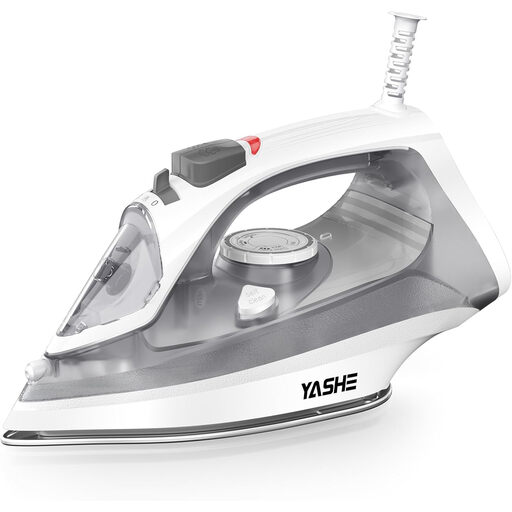 No image available
For shoppers looking for a steam iron for cuffs and a range of shirt fabrics. Check that the tip and temperature control suit your needs.
2300 W; 300 ml water tank; steam boost 150 g/min; non-stick soleplate; self-cleaning; anti-drip.
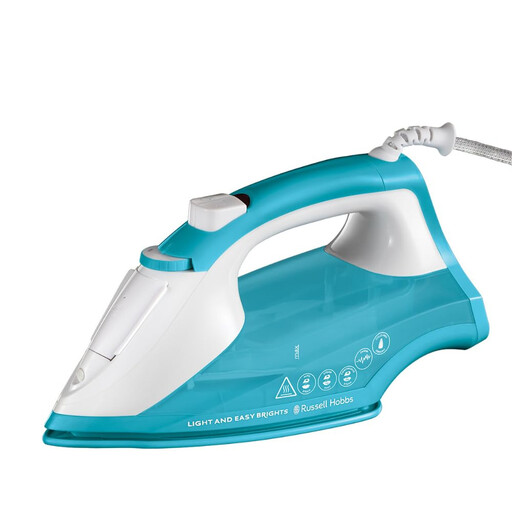 No image available
A steam iron option for shoppers who want to press individual shirts on an ironing board. Before buying, check that the tip and temperature setting are suitable for working around buttons and your shirt fabric.
 No image available
For shoppers comparing handheld steam irons with different temperature settings. To create a crisp cuff edge, check how easily the iron can be guided over a flat surface.
2400 W; five temperature settings; 350 ml water tank; self-cleaning; anti-drip.
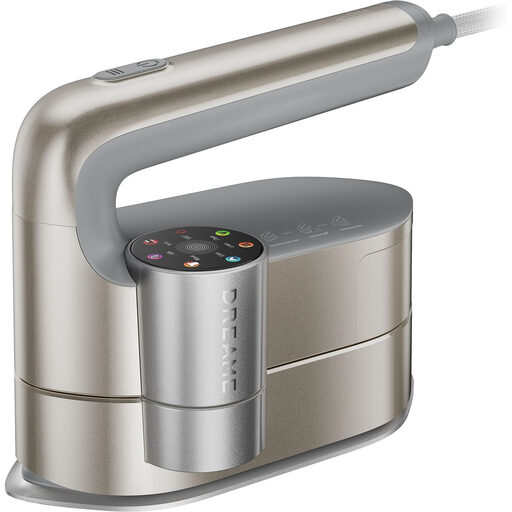 No image available
For shoppers comparing compact steam irons. Check whether the soleplate works well on a flat surface, as required for pressing cuffs.
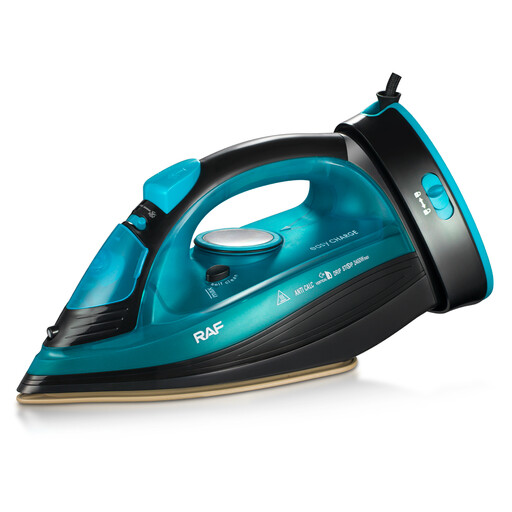 No image available
For shoppers comparing a precision tip and cordless operation for cuff ironing. To use it cordless, the iron needs to be placed on the 360° charging base.
2000 W; 320 ml capacity; steam output 15–25 g/min; ceramic soleplate; self-cleaning.
Undo the cuff buttons and lay the fabric flat on the ironing board. Philips recommends ironing the inside first, followed by the outside, and carefully working around the buttons. Set the temperature according to the care label first.
There is no evidence that an automatic shut-off is a general requirement for the models mentioned, and the feature does not make it safe to leave a hot iron unattended. Braun lists it for the SI 5277 GR; Rowenta explicitly says the DW8210D1 does not have one. Check the features against the full model number.
Agree on who will descale it, following the instructions for the specific model. Philips notes that limescale can reduce steam output and cause white or brown marks on its steam generators. The procedure described does not apply to every iron.
If a product is faulty, you have statutory rights against the seller; a manufacturer's guarantee is separate and voluntary. The Verbraucherzentrale explains that you can initially ask for the fault to be put right by repair or replacement.
No. According to the Bundesanstalt für Arbeitsschutz und Arbeitsmedizin, the GS mark is voluntary. Mains-powered irons with an AC voltage of 50 to 1,000 V must meet the relevant EU requirements. CE marking and the GS mark are not the same thing.