For ironing cuffs with precision
If you iron shirts for appointments, an easy-to-reach tip and good handling around seams and buttons are important things to consider. Braun Household highlights its precision tip for hard-to-reach areas.


For crisp, flat cuffs, choose a compact iron with an easy-to-reach tip and suitable temperature and steam settings, provided you have an appropriate ironing surface. If you only iron occasionally, a basic model may be enough. A handheld garment steamer freshens clothes without an ironing board, but it won’t press a cuff flat in the same way. Always check the specific model’s auto shut-off and descaling instructions.
If you iron shirts for appointments, an easy-to-reach tip and good handling around seams and buttons are important things to consider. Braun Household highlights its precision tip for hard-to-reach areas.
If you only iron the odd shirt, remember to allow space for a suitable ironing surface as well as the iron itself. A handheld garment steamer is another option if you mainly want to freshen clothes without an ironing board.
When an iron is shared, clear controls, a suitable place to rest it and checking the safety features on the specific model all help. The Federal Institute for Occupational Safety and Health stresses the importance of following the instructions and keeping equipment in good condition.
Best for: regularly pressing cuffs flat and creating crisp edges.
Consider: you’ll need to fill it with water and descale it according to the model’s instructions.
Best for: occasionally pressing a small area and avoiding the need for a water tank.
Consider: there’s no steam to help with stubborn creases, and the temperature still needs to match the care instructions.
Best for: mainly freshening shirts while they’re hanging, when you don’t have room for an ironing surface.
Consider: steaming without a flat pressing surface is not the same as creating a sharp cuff edge.
Best for: several people regularly ironing large loads of laundry, with room for the unit and an ironing surface.
Consider: the unit and tank need extra storage space and must be descaled according to the model’s instructions.
| Priority | What to check before buying | Who is it important to? |
|---|---|---|
| Precision around cuffs and buttons | Check the tip shape, how easily you can guide the iron along the button placket and how comfortable it is to handle. | If I want to guide the iron neatly around narrow areas and seams, precision on the specific model matters to me. Precision is the top priority for around 33% of consumers. |
| Storage space for occasional use | Consider storage for both the iron and ironing surface, as well as how often you’ll actually use them. | If I only iron the odd shirt, I want to be able to store the iron and the ironing surface I need without difficulty. Around 27% of consumers prioritise space and features that suit how they use the iron. |
| Safe handling in a shared household | Check whether the exact model has auto shut-off, and make sure you have a stable place to rest it and can refer to the instructions. | If several people use the iron, clear controls and a safe place to rest it are important to me. Safety comes first for around 27% of consumers. |
| Fabric-appropriate temperature and steam care | Check the care label and follow the model’s settings and descaling instructions. | If I iron shirts with different care symbols, I want to be able to set the heat and steam to suit each one. Around 13% of consumers prioritise having the right settings for different fabrics. |
A steam boost figure doesn’t tell you how much steam the iron produces continuously. For example, Rowenta lists separate manufacturer figures for these two functions on the DW8210 model.
Compare the figures separately and check the continuous steam output if you’ll be ironing for longer periods.
This feature varies by model: Tefal explicitly lists it as unavailable on the FV5781, while Braun describes it as a feature of the FreeStyle 3 series.
Check the full model number and read the instruction manual. Auto shut-off doesn’t replace using the iron as intended.
A handheld garment steamer can freshen clothes without an ironing board. However, pressing a cuff flat requires a different approach.
Before buying, decide whether freshening clothes is enough or whether you want a defined, pressed edge.
The FreeStyle 3 series is an option for precise work around seams and buttons. TexStyle 1 and TexStyle 9 are other steam iron ranges to consider.
Easygliss steam irons are an option if you’re looking for a precision tip. Handheld garment steamers are designed for freshening clothes without an ironing board.
Philips offers steam irons with different steam and safety features.
Severin offers dry, steam and travel irons as different options for occasional ironing.
The Pro Master DW8210 is a steam iron with a precision tip for narrow edges and seams.
The Joybuy products below are traditional steam irons for pressing cuffs flat; you’ll need a suitable ironing surface to use them.
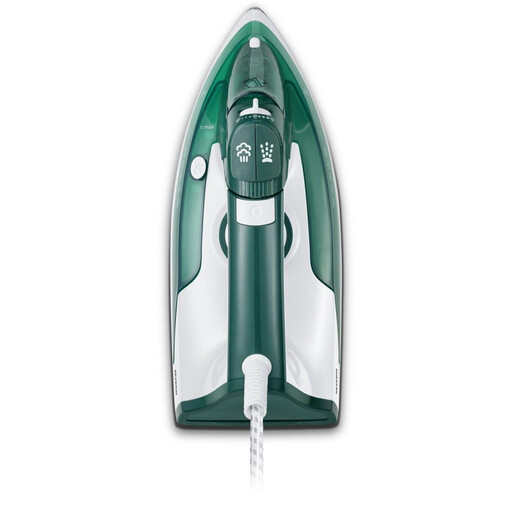 No image available
An option for pressing cuffs flat, with adjustable temperature and steam settings.
Stainless steel soleplate; variable temperature control; variable steam up to 30 g/min; 85 g/min steam boost; removable 175-ml tank; anti-drip, anti-scale and self-cleaning functions.
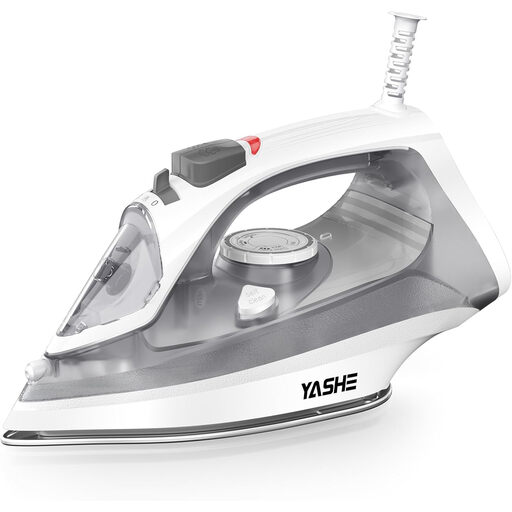 No image available
An option for pressing cuffs flat, with an adjustable thermostat and continuous steam.
2300 W; 300-ml water tank; 25 g/min continuous steam; 150 g/min steam boost; non-stick soleplate; self-cleaning and anti-drip function.
 No image available
An option if you want to choose a temperature for different fabrics and have auto shut-off.
Ceramic soleplate; temperature display with settings for delicate and robust fabrics; auto shut-off; 380-ml tank; 2,5-m cable; anti-drip, anti-scale and self-cleaning function.
 No image available
An option for flat ironing, with several temperature settings and different steam functions.
Non-stick soleplate; five temperature settings; dry ironing, continuous steam and spray function; 350-ml tank; automatic cleaning and anti-drip function.
 No image available
An option for pressing cuffs flat, with separate figures for continuous steam and steam boost.
2500 W; stainless steel soleplate; 40 g/min continuous steam; 160 g/min steam boost; 250-ml tank; Eco function, anti-drip system and vertical steam.
Check the care label first: the dots on the iron symbol indicate the permitted heat setting, while a crossed-out iron means the garment must not be ironed. Set the temperature and steam to suit the shirt, and guide the tip carefully around narrow areas.
Read the instructions for the specific appliance, check that it’s in good condition and make sure you have a suitable place to rest it. The Federal Institute for Occupational Safety and Health recommends following the instructions and using equipment as intended for safe operation; auto shut-off, if available, is no substitute.
Follow the descaling method in your model’s instructions. Philips explains that limescale can build up in steam ironing systems and may reduce steam output; Severin lists an anti-scale and self-cleaning system for the BA 3210. Don’t assume the same methods or intervals apply to other appliances.
If there’s a fault, your statutory rights are generally against the seller; a manufacturer’s guarantee is separate. Consumers usually have a 14-day right to cancel an online purchase after receiving the goods. Exceptions and conditions may apply to your specific purchase; the Verbraucherzentrale explains these rights.
Use the appliance as instructed and make sure it’s in good condition, as advised by the Federal Institute for Occupational Safety and Health. According to the Federal Environment Agency, an iron that’s reached the end of its life should not go in household waste; take it to a suitable collection point for waste electrical equipment instead.