Regular dress ironers
If you iron several cotton dresses one after another, you’ll want to consider large areas of fabric, a suitable level of continuous steam and a process with as few interruptions as possible.


For ironing one or several cotton dresses, a steam iron is the natural starting point if you want to smooth them on an ironing board and tackle details precisely. A steam generator is worth considering for longer ironing sessions, while a clothes steamer is better suited to freshening up dresses on the hanger. Check the care label first: a manufacturer’s steam claims don’t guarantee a particular result on your dress.
If you iron several cotton dresses one after another, you’ll want to consider large areas of fabric, a suitable level of continuous steam and a process with as few interruptions as possible.
When you’re dealing with seams, buttons and narrow sections, a well-shaped tip that’s easy to manoeuvre and conveniently placed controls are important things to look for.
If a dress contains more delicate materials or embellishments, follow the care instructions for that particular garment rather than relying on the general description ‘cotton’.
First decide whether you want to press garments on an ironing board, tackle longer ironing sessions or freshen up dresses on the hanger. If you’re buying a mains-powered appliance, also check the CE marking on the specific product listing. The European Commission says this is the manufacturer’s declaration that the product complies with the relevant EU rules; it is not a certificate issued by a central EU body.
A good fit if: you want to smooth cotton dresses on an ironing board and tackle seams or button plackets precisely.
The trade-off: You’ll need an ironing board. Tank capacity, steam output and controls vary by model.
A good fit if: you regularly have longer ironing sessions and have room for a separate base unit.
The trade-off: The base unit needs space for use and storage. Philips lists a 1.5-litre tank and up to 160 g/min continuous steam for the PerfectCare PSG7200/20; these specifications apply to this model only.
A good fit if: you want to freshen up a dress on the hanger or tackle light creases, and the care label allows steaming.
The trade-off: A clothes steamer is not necessarily a substitute for pressing fabric with an iron soleplate. Philips lists a 100 ml tank for the STH7020/20.
| What you need | What to check before buying | Who is this especially relevant to? |
|---|---|---|
| Large areas of cotton | Compare continuous steam rather than just the steam boost, tank capacity and ease of use; check the care label first. | When I’m smoothing several cotton dresses one after another on an ironing board, I want as few interruptions as possible, so I look at continuous steam and tank capacity. Around 36% of consumers say large areas of cotton are their top buying priority. |
| Seams and narrow sections | Check the shape of the tip, the handle and how easy the controls are to reach on the specific model. | When I’m ironing seams, buttons or narrow edges, I want to be able to manoeuvre the appliance precisely. Around 29% of consumers put precision on dress details first. |
| Following care instructions | Check the dress’s ironing symbol and steam instructions against the appliance’s temperature and steam settings. | If different fabrics or embellishments need different care, I follow the relevant label rather than relying on the word ‘cotton’. Around 21% of consumers prioritise choosing the right treatment for different areas of fabric. |
| Ease of use and care | Consider the space you have, the cable reach, tank and descaling instructions for the specific model. | In the utility room, I want to be able to set the appliance down, store it and maintain it as instructed by the manufacturer. Around 14% of consumers say ease of use and appliance care are their top buying priorities. |
A steam boost is not the same as continuous steam when ironing several dresses. Controls and anti-drip features also vary by model.
Compare the continuous steam output, controls and anti-drip feature of the specific appliance together.
Care symbols apply to the entire labelled textile. Depending on the symbol, ironing may be prohibited or steam may not be suitable.
Check the ironing symbol before setting the temperature, and take any embellishments on the dress into account.
A steam generator has a separate base unit. Philips lists a 100 ml tank for the handheld STH7020/20, so you may need to refill it during longer sessions.
Choose the type of appliance to suit how much you iron, whether you want to press garments and the space you have for using and storing it.
Braun offers steam irons in ranges such as FreeStyle 3 and TexStyle 9; the features listed apply to the specific range or variant.
The Ultimate Pure FV9844 is an example of a Tefal steam iron with published specifications for steam, tank capacity and features.
Philips offers steam irons, steam generators and clothes steamers for different uses.
The Express Steam DW4320 is a steam iron with manual settings and a precision tip, according to the manufacturer.
The selection below includes steam irons for pressing cotton dresses on an ironing board. Compare the continuous steam, tank capacity and controls in particular; these specifications alone do not guarantee a particular result on your dress.
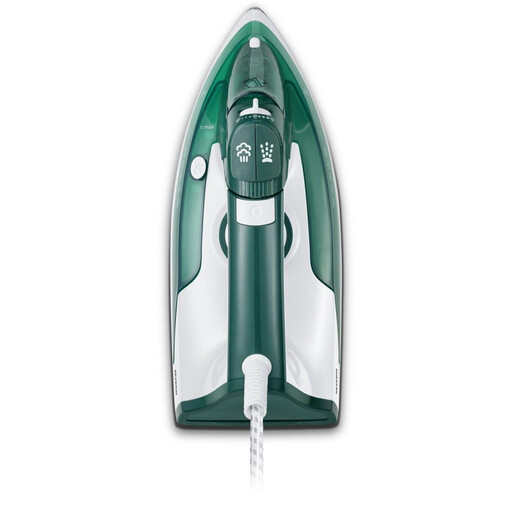 No image available
Continuous temperature control and variable steam output make it a good option if you’re looking for a choice of settings.
2400 W; 85 g/min steam boost; variable steam output up to 30 g/min; removable 175 ml tank; anti-drip feature.
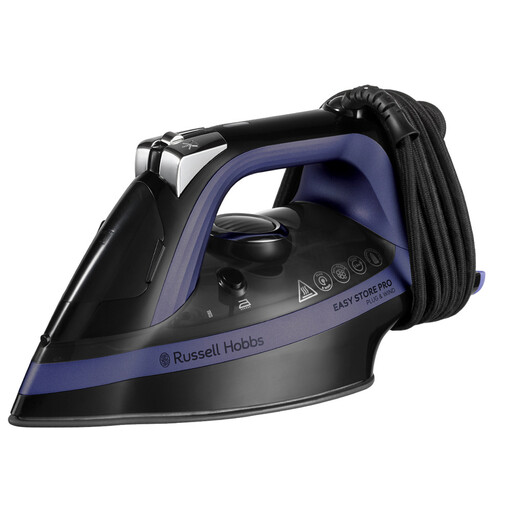 No image available
The stated continuous steam output and tank capacity are useful points of comparison if you have several garments to iron one after another.
2400 W; One-Temp technology; 40 g/min continuous steam; 200 g/min steam boost; ceramic soleplate; 320 ml tank; automatic switch-off; integrated cable storage.
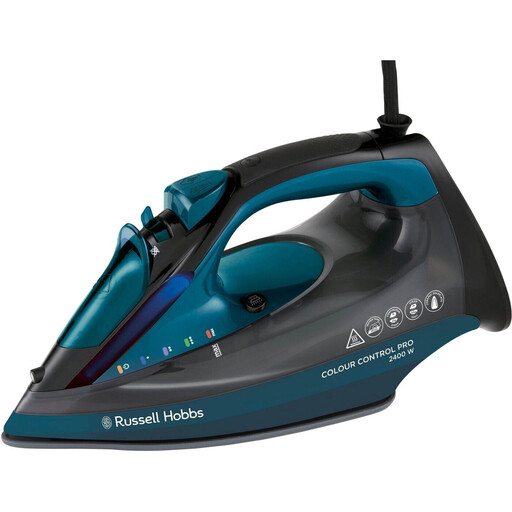 No image available
Digital temperature control and variable steam output are worth considering if you want to compare appliance settings.
45 g/min continuous steam; 380 ml tank; automatic switch-off; 2.5 m cable storage.
 No image available
Five temperature settings and continuous steam are useful when checking the appliance against the care instructions for your dress.
45 g/min continuous steam; non-stick soleplate; vertical steam; anti-drip protection; automatic cleaning function.
 No image available
For precise ironing, the manufacturer-listed tip and anti-drip feature are useful features to look for. Also check that the controls suit your routine.
40 g/min continuous steam; 160 g/min steam boost; 250 ml tank; stainless steel soleplate; anti-drip feature. Rowenta states that this model does not have automatic switch-off.
No. The care label on the specific dress is what matters. GINETEX care symbols indicate the permitted treatment; some symbols rule out ironing or steam.
Follow the instructions for the specific model. Philips describes an EASY-DE-CALC process for certain PerfectCare ranges and recommends unplugging the appliance and letting it cool before opening the cap. This process does not automatically apply to other steam generators or steam irons.
No. Consumer goods sold in the EU are generally covered by a statutory guarantee of at least two years against the seller. A voluntary manufacturer’s guarantee is separate and subject to its own terms and conditions.
No. By applying the CE marking, the manufacturer declares that the product complies with the relevant EU requirements; no central EU body issues a CE certificate. The Verbraucherzentrale distinguishes the CE mark from the independently tested GS mark.