For quick touch-ups
If you often iron just one or two pairs of shorts, a simple standalone iron may be more practical than a station designed for larger laundry loads. The German Environment Agency considers a steam iron sufficient for home use.


If you often iron just a few pairs of cotton shorts, a steam iron with adjustable steam and a precision tip is a versatile place to start. A dry iron is a good choice if you’d rather do without steam and the creases are usually light. A garment steamer is better for freshening clothes, while a steam generator is rarely the obvious choice for ironing just a few pairs of shorts. Always check the care label on the shorts themselves: the word ‘cotton’ alone isn’t enough to determine the right settings.
If you often iron just one or two pairs of shorts, a simple standalone iron may be more practical than a station designed for larger laundry loads. The German Environment Agency considers a steam iron sufficient for home use.
If you want to tackle creases and areas around pockets and seams, check the shape of the iron’s tip and the steam settings on the specific model. Braun highlights these features on its FreeStyle 3 FI3194BK.
If you iron a range of garments, set the temperature and use steam according to the care label on each pair of shorts. GINETEX GERMANY explains that the label shows the maximum treatment permitted.
A good choice if: you want to tackle creases and areas around pockets or seams with the soleplate in direct contact with the fabric.
Things to consider: you’ll need to look after the water system. Check the steam control, tip and descaling instructions for the specific model.
A good choice if: your shorts are usually only lightly creased and you’d rather iron without a water tank or steam.
Things to consider: there’s no steam boost for tougher creases, and the temperature still needs to match the care label.
A good choice if: you want to freshen up a pair of shorts or smooth out light creases without setting up an ironing board. Philips says its 5000 Series garment steamer also has a mode for cotton.
Things to consider: an iron makes direct contact with the fabric, which is useful for pressing edges, pockets and seams.
A good choice if: you regularly iron much larger loads as well as your shorts, and a larger water tank would be useful.
Things to consider: the German Environment Agency considers a steam iron sufficient for small loads at home; it also says steam generators generally use more electricity.
| Priority | What to look for | Who is this important to? |
|---|---|---|
| Quick ironing jobs | Check the size, handle, controls and set-up requirements of the specific appliance. A steam generator won’t automatically offer an advantage for small loads. | If I often iron just one or two pairs of shorts, I want an appliance that’s easy to grab and use. Around 36% of consumers prioritise quick, straightforward use. |
| Creases around pockets and seams | Check the tip, soleplate shape and adjustable steam settings. A high steam boost alone doesn’t guarantee better results or quicker ironing. | If creases are pronounced, I want to be able to tackle pockets and seams precisely too. Around 29% of consumers prioritise crease removal. |
| Fabric care and safety | Read the care label and check the temperature control and automatic shut-off on the exact model. An automatic shut-off doesn’t replace putting the iron down safely. | If I care about treating my shorts correctly and having safety features, I check the care label and the appliance’s features together. Around 21% of consumers put this first. |
| Water care and maintenance | Check the steam control and descaling instructions. A dry iron doesn’t need water care, but it also doesn’t provide steam to help remove creases. | If I want to keep water-related care and limescale maintenance to a minimum, I’d also consider a dry iron. Around 14% of consumers prioritise low maintenance. |
A larger tank is more useful for longer ironing sessions. The German Environment Agency considers a steam iron sufficient for small loads at home.
Start by comparing steam irons with adjustable steam. Consider a steam generator if you regularly have much larger loads to iron.
A steam generator takes up more space at home. The German Environment Agency also points out that these appliances generally use more electricity than steam irons.
The permitted treatment depends on the care label on the specific garment, not just the fibre name.
Check the ironing symbol before you start, then set the temperature and steam accordingly. GINETEX GERMANY says that a maximum temperature of 110 °C means: do not use steam.
This feature varies by model: Tefal explicitly says that the Express Steam FV2838E0 does not have an automatic shut-off.
Check whether the exact model has an automatic shut-off, and never leave a hot iron unattended.
The FreeStyle 3 FI3194BK is a steam iron for quick jobs and precise ironing around pockets and seams.
The 3000 Series DST3041/80 is a steam iron, while the 5000 Series STH5010/70R1 is a handheld garment steamer, so they’re different types of appliance.
The Express Steam FV2838E0 is a steam iron, while steam generators are designed for different laundry needs.
The Effective DX1550D1 is a steam iron with a stainless steel soleplate.
The BA 3211 is a dry iron for anyone who wants to do without steam when ironing small loads.
The following Joybuy products include steam irons for quick jobs and for ironing with steam and direct contact between the soleplate and the fabric.
 No image available
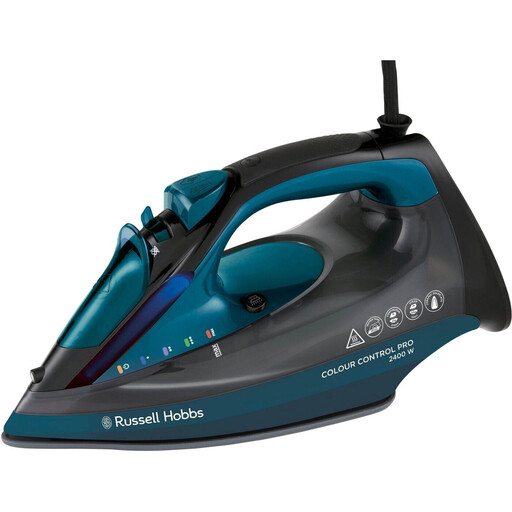
Described as a steam iron with direct soleplate contact and a temperature display.
380 ml water tank; continuous steam and steam boost. The description also lists an anti-drip function, self-cleaning and automatic shut-off.
 No image available
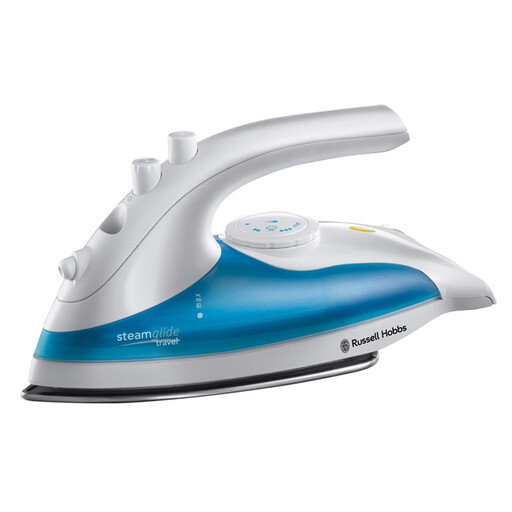
Described as a compact travel iron with steam and dry ironing options.
80 ml water tank, adjustable steam, water spray and stainless steel soleplate. The model is marked as Dual Voltage.
 No image available
Described as suitable for ironing with steam and direct soleplate contact, and also as an appliance for travel.
2400 W, 350 ml water tank and five temperature settings. The description also lists continuous steam, steam boost, self-cleaning and an anti-drip function.
 No image available
Described as a steam iron with a stainless steel soleplate and steam to help smooth creases.
2500 W, continuous steam at 40 g/min, steam boost at 160 g/min and a 250 ml water tank. The description also lists an anti-drip function, anti-limescale system and vertical steam.
 No image available
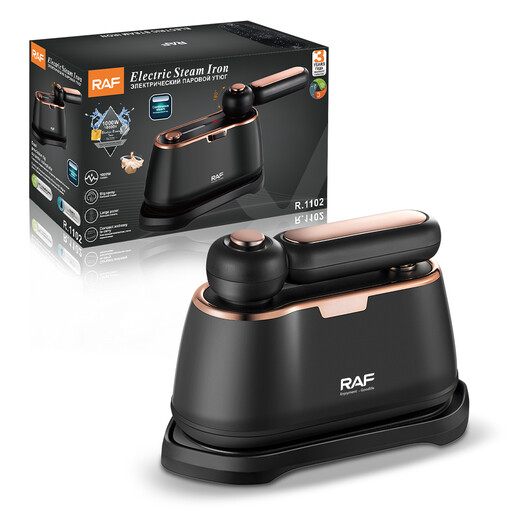
Described as a portable steam iron for quick jobs, with a rotating handle.
1000 W and a 120 ml water tank. The description lists continuous steam, vertical steaming and a smooth-gliding ironing surface.
No. Follow the care label on the garment itself rather than relying on the fibre name alone. GINETEX GERMANY lists maximum soleplate temperatures of 200, 150 and 110 °C, as well as a ‘do not iron’ symbol. The 110 °C setting means you shouldn’t use steam.
Follow the instructions for filling with water and descaling the specific model. The German Environment Agency lists a descaling function as a feature to consider when buying; the consumer advice centre recommends descaling steam irons regularly.
When you buy from a trader, Your Europe says you’re entitled to a legal guarantee of at least two years from the date you receive the goods. This is separate from any additional manufacturer’s guarantee. For most online purchases, you generally have 14 days from delivery to change your mind. Depending on the applicable conditions, you may have to pay the return postage.
Don’t put it in household waste. Take it to a separate collection point for waste electrical equipment. The German Environment Agency lists municipal recycling centres and retailer take-back schemes among the options. Check which collection point is right for you.