Quick ironing for a single skirt
If you usually just need to smooth one skirt after your commute, you’ll want to tackle the hem, waistband or pleats without having to set up a separate station.


For a single cotton skirt that can be ironed according to its care label, a handheld steam iron is a sensible place to start if steaming is permitted. If steam is prohibited, dry ironing is only an option within the stated temperature limit. A steam generator is more suitable if you regularly iron larger loads of clothes that can be ironed and have room for the separate base unit. Before ironing, check the care label on the entire skirt and treat any soiling according to its care instructions.
If you usually just need to smooth one skirt after your commute, you’ll want to tackle the hem, waistband or pleats without having to set up a separate station.
If the skirt may contain blended fibres or trims, or steam is restricted, the care label matters more than the highest possible steam output.
If you regularly iron other garments as well as skirts, and have room for a separate base unit, a steam generator may also be worth considering.
| Priority | What to check before buying | Who it matters most to |
|---|---|---|
| Smoothing a single skirt precisely | Check the soleplate tip, handle, heat-up information and adjustable steam settings on the specific model. | If I only iron one skirt after my commute, I want to reach the hem, waistband and pleats without a lengthy set-up. Around 36% of consumers prioritise precise, quick ironing. |
| Protecting the fabric and trims | Follow the care label for the whole skirt and use only the permitted temperature and amount of steam. If it is soiled, check the recommended cleaning method. | If my skirt has blended fibres or trims, I want to stick to the permitted treatment rather than use as much heat or steam as possible. Around 29% of consumers prioritise fabric care. |
| Ironing larger loads | Compare how often you iron, the space available and the tank capacity of the specific model. | If I regularly have other ironable laundry as well as my skirt, I want to weigh up the extra tank capacity against the space and set-up required. Around 21% of consumers prioritise handling larger loads of laundry. |
| Managing drips and limescale | Check for an anti-drip feature, the descaling system and the instructions for the full model number. | If I want to reduce water marks and regular maintenance, I look for drip protection and a clear cleaning process. Around 14% of consumers prioritise less maintenance and fewer stains. |
The care label shows the maximum treatment permitted for the garment. In particular, a one-dot symbol limits the use of steam.
Read the entire label before setting the appliance. A more powerful appliance cannot override a no-ironing or no-steam instruction.
A separate base unit takes up space, and a larger tank offers no advantage when smoothing a single skirt.
Only weigh up a steam generator against a handheld iron if you regularly have larger loads of clothes that can be ironed.
Descaling systems vary. Philips says that limescale build-up can cause stains and reduce steam output.
Check the cleaning instructions for the full model number.
Cleaning the appliance as instructed for its model remains a regular task.
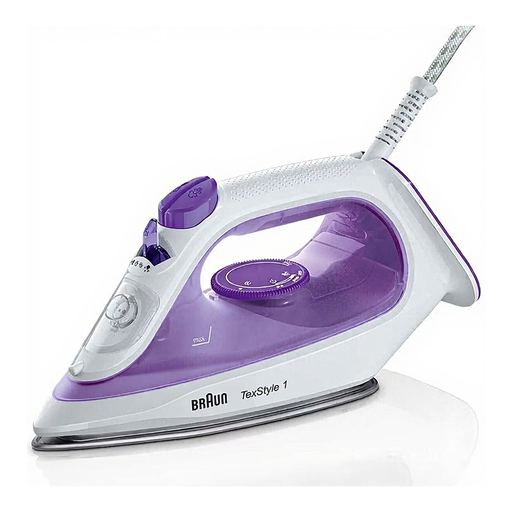
The FreeStyle 3 FI3194BK is a handheld steam iron for targeting specific areas. Braun highlights a precision tip on this model.
The 7000 Series DST7040/80 is a handheld steam iron with variable steam settings.
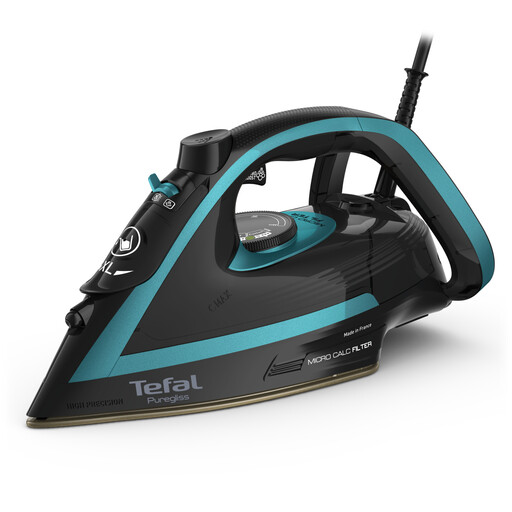
The FV9844 is a handheld steam iron, while the Express Easy SV6131 is a steam generator for larger loads of laundry.
The Steam Pro DG9661 is another steam generator option if a larger laundry load and a separate base unit suit your household.
The One Temperature 25090-56 is a handheld model with a fixed temperature setting.
This selection features handheld steam irons for occasional ironing. Whether the steam and temperature settings are suitable for your skirt still depends on its care label.
 No image available
A handheld steam iron for occasional ironing. Check the skirt’s care label before using steam.
Joybuy lists 2,500 W, 40 g/min continuous steam, a 160 g/min steam boost, an Eco function and an Anti-Drip system.
 No image available
A handheld model for garments that can be ironed. The care label determines how your skirt may be treated.
Joybuy lists a 280 g/min steam boost, vertical steam, an XL filling opening, anti-limescale technology, an anti-drip function and automatic shut-off.
 No image available
A handheld steam iron for occasional ironing. Set the temperature and steam according to the skirt’s care label.
 No image available
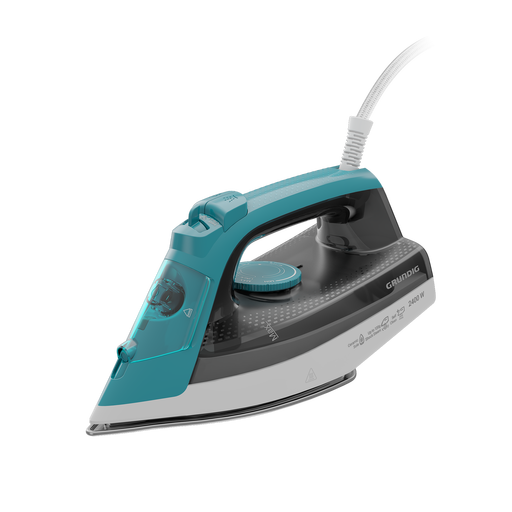
A handheld steam iron for occasional ironing. Check whether steam and temperature are permitted for the whole skirt.
 No image available
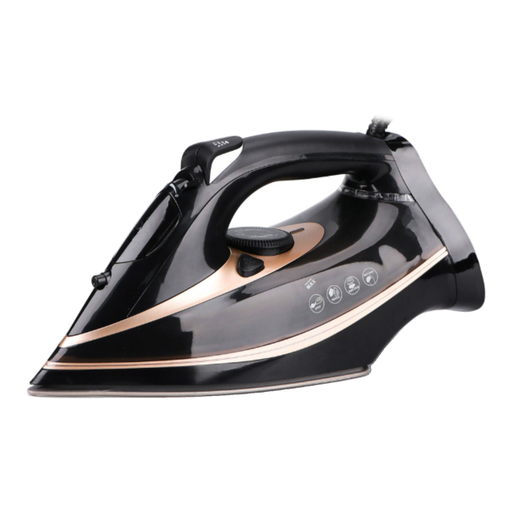
The appliance has steam and dry ironing modes. According to the instructions, the temperature dial should be set to MAX for steam ironing. Follow the skirt’s care label.
Joybuy lists 2,200 W, a 400 ml tank, a ceramic soleplate, a 1.8 m cable, continuous steam and a self-cleaning function.
Don’t assume so just because the fabric is described as “cotton”. GINETEX Germany explains that the care label shows the maximum permitted treatment. Follow the temperature and steam limits for the whole garment. If the skirt is soiled, treat the marks according to the care instructions rather than using ironing as a way to clean it.
Follow the instructions for the full model number, as descaling methods vary. Philips lists Quick Calc Release for the DST7040/80, while Tefal lists a Micro-Calc filter for the FV9844. Don’t apply instructions from a different model.
When you buy from a trader in the EU, you’re entitled to a legal guarantee of at least two years from the date you receive the goods, with the seller responsible, as Your Europe explains. This is separate from any additional manufacturer’s guarantee on offer; check the terms of the specific deal.
Check the specific listing to see whether the appliance is identifiable and includes manufacturer details and a CE mark. The Bundesnetzagentur lists these points as part of its market surveillance. According to the European Union’s guidance, the CE mark indicates that the manufacturer declares the product meets the relevant EU product rules. It is not an independent quality mark.
Don’t put it in your household rubbish. Take it to a local collection point for waste electrical equipment. Verbraucherzentrale notes that local authorities accept these appliances free of charge; retailers’ and online sellers’ take-back rules depend on factors including the size of the business and the appliance.