For anyone with a short ironing slot
If you share washing or ironing time and only have a few napkins to do, easy-to-reach controls and a handy appliance matter. You shouldn’t assume a specific time saving just from the type of appliance.


If you only have a few linen napkins to iron in a short shared ironing slot, a handy steam iron is usually the natural place to start. For larger piles on a regular basis, a steam generator iron with a bigger tank can mean fewer pauses to refill, but it needs more space. F.A.Z. Kaufkompass points out that not every household has enough laundry to justify a steam generator iron. For every napkin, follow the care label and its permitted temperature.
If you share washing or ironing time and only have a few napkins to do, easy-to-reach controls and a handy appliance matter. You shouldn’t assume a specific time saving just from the type of appliance.
If you regularly have larger piles to iron, tank capacity and the space available for a separate steam generator iron matter more than they do for just a few napkins.
If you want to smooth hems and creases precisely, check whether the model has a precision tip, suitable steam control and an anti-drip function.
Start by considering the size of the piles you usually iron and the space you have available. Then check that the temperature and steam settings suit the care symbols on your napkins.
| Buying consideration | What to check before buying | Who is it important to? |
|---|---|---|
| Short ironing slot | Check the handle, how easy the controls are to reach and the model’s stated heat-up time. | If I only have a short time to iron, simple controls and an easy-to-reach dial matter. For around 29% of consumers, limited ironing time is likely to be the main concern. |
| Creases in linen | Check the care symbols on each napkin and use suitable temperature and steam settings. | If my linen napkins crease badly after drying, I want to tackle the creases without ignoring the care label. For around 23% of consumers, linen that is difficult to smooth is likely to be the main concern. |
| Larger pile of napkins | Compare the capacity of the exact model’s tank and the space it needs; don’t assume tank capacity alone tells you how long it will run. | If I have several napkins to iron at once, I want to keep interruptions to refill to a minimum. For around 18% of consumers, larger piles are likely to be the main concern. |
| Edges and water marks | Check the precision tip, steam control and anti-drip function on the exact model variant. | If I’m ironing hems and creases, I want to work precisely and avoid drips. For around 18% of consumers, precise results with fewer marks are likely to be the top priority. |
| Care and safety | Read the model’s instructions on water and descaling; check for an automatic shut-off and a safe way to stand the iron. | If several people use the appliance, clear care instructions and straightforward safety features matter to me. For around 12% of consumers, care and safety features are likely to be the main concern. |
A short burst of steam doesn’t tell you how much steam the iron produces throughout an ironing session.
For longer sessions, compare the stated continuous steam output and tank capacity. The steam boost also matters for individual stubborn creases.
The care label applies to the finished textile. You can’t tell the fibre blend, colour or finish just from the word ‘linen’.
Check the ironing symbol on each napkin before setting the temperature or steam. One linen supplier recommends ironing linen while slightly damp, but the care label remains the deciding factor.
A larger tank can be useful for piles, but it doesn’t guarantee a time saving for short ironing sessions. A steam generator iron also needs space for its separate base.
Choose according to the size of the piles you usually iron, the space you have available and how often you’re likely to need to refill.
Features vary by model: Braun lists automatic shut-off for the FI3194BK, while Rowenta says the DW5310D1 does not have it.
Check the feature against the exact model number. Either way, agree who will switch the appliance off and put it away safely after use.
The details below apply to the models and product ranges mentioned, not necessarily to a brand’s entire range.
The FreeStyle 3 FI3194BK is a steam iron for shorter sessions and precision work around edges.
The Ultimate Pure FV9844 is an option for anyone who regularly wants to tackle stubborn creases.
The 3000 Series DST3041/80 is a steam iron, while the PerfectCare Compact Plus GC7920/20 is a separate steam generator iron.
The Focus Excel DW5310D1 may suit anyone considering a steam iron with manual controls and a precision tip.
The One Temperature 25090-56 is for anyone who doesn’t want to keep selecting a temperature when ironing different fabrics that can be ironed.
This selection includes handheld steam irons for individual napkins and a steam generator iron for larger piles.
 No image available
This handheld steam iron is worth considering for ironing individual napkins on an ironing board.
 No image available
This handheld steam iron is an option for individual napkins; be sure to follow the textile’s care symbols.
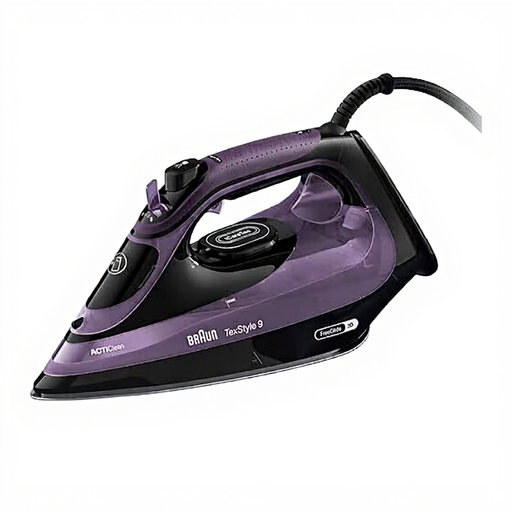 No image available
This handheld steam iron may suit individual napkins. Check the temperature settings of the exact variant against the care symbols.
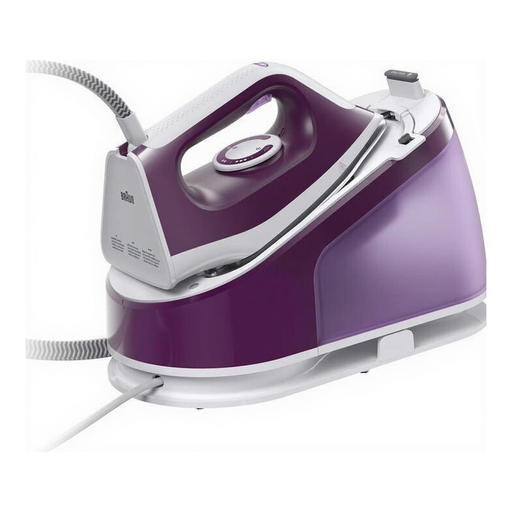 No image available
This steam generator iron may suit larger piles of napkins if you have room for the base.
Compare the tank capacity and the temperature and steam settings of the exact variant with your needs.
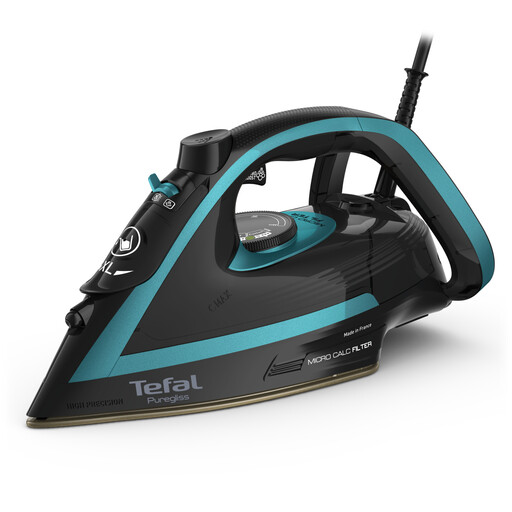 No image available
This handheld steam iron is an option for napkins; set it according to the care label.
Follow the ironing symbol on each napkin, rather than relying on the fibre description ‘linen’ alone. GINETEX explains that the dots indicate the permitted temperature range; three dots mean a maximum of 210 °C at the soleplate.
One linen supplier recommends ironing linen while slightly damp and suggests sprinkling water on fabric that has already dried. Also follow the care label; this does not mean steam is always suitable.
Follow the instructions for the exact model. Braun advises against using only distilled water in its steam ironing systems; don’t apply this advice to appliances from other manufacturers without checking.
No. In Germany, statutory consumer rights generally apply against the seller; the terms of any additional manufacturer’s guarantee are separate. Verbraucherzentrale explains that faulty goods generally come with two years of statutory rights.
For electrical appliances covered by the relevant EU rules, EU information describes CE marking as the manufacturer’s declaration of conformity, not an individual approval by a public authority. Don’t put an old electrical appliance in household waste: Umweltbundesamt lists local collection points and suitable take-back options at retailers. Check the specific conditions at your chosen collection point.