For ironing individual linen scarves, a compact iron with an appropriate temperature setting is a good place to start. A steam iron releases moisture directly from the appliance, while a dry iron has no water tank. The care label on each scarf is the deciding factor: GINETEX recommends ironing linen while it is thoroughly damp and inside out, but the permitted temperature and use of steam depend on the fabric. A steam generator is better suited to longer sessions involving several items, and needs more space and maintenance.
Who this choice of appliance is relevant for
For ironing scarves with stubborn creases
If your linen scarf is badly creased, look for a suitable temperature control and the option to use moisture. GINETEX Germany recommends ironing linen while it is thoroughly damp and inside out; the care label on the scarf itself specifies the treatment it can safely withstand.
For ironing scarves with narrow edges
A smooth-gliding soleplate with a precision tip can be useful when choosing an iron for hems and scarf ends. How well it suits your way of working is a personal preference, not a proven result for every linen scarf.
For occasional scarf ironing
If you only iron a few items, consider whether an appliance without a water tank will do, and whether you can dampen the scarf separately when needed.
What to look for when buying
Compact steam iron
A good fit if: You iron one or several scarves on a firm surface and want to control moisture directly at the appliance, provided the care label permits steam.
Things to consider: A water tank and descaling add extra maintenance; manufacturers' steam-performance figures do not prove how well an iron will work on a linen scarf.
Dry iron
A good fit if: You only iron a few scarves occasionally, or the care label does not allow steam and you would prefer to add moisture separately.
Things to consider: The appliance does not produce steam; if your linen is dry and creased, you will need to dampen it separately.
Steam generator
A good fit if: You regularly iron several items one after another and have room in your utility room for the base unit and a safe place to set it down.
Things to consider: Allow for the space it needs, storage and descaling; there is no proven advantage for ironing individual linen scarves.
| What matters |
What to check when buying |
Who will find this particularly important |
| Creases and care limits |
Check that the temperature setting and steam function are suitable for the care label on the scarf. GINETEX Germany recommends ironing linen while it is thoroughly damp and inside out. |
If I want to smooth out creases without exceeding the care limits for my scarf, I pay particular attention to the temperature and permitted moisture. Around 36% of consumers put this focus on care and creases first. |
| Narrow hems and ends |
Compare the tip shape, soleplate area, weight and grip of the specific model. Rowenta says the precision tip on the DW5310D1 helps with narrow edges and seams. |
If I want to guide the iron carefully around hems and scarf ends, handling matters more to me than having a large steam generator. Around 29% of consumers put precise control first. |
| Simple, occasional use |
Consider whether you need integrated steam or can dampen the scarf separately; if choosing a dry iron, check its temperature control. |
If I only iron a few scarves, I want to avoid unnecessary appliance maintenance and can dampen them separately. Around 21% of consumers prioritise this simplicity. |
| Longer ironing sessions |
Check the tank design, the space required and the descaling instructions for the specific model. A larger tank alone does not prove that you will save time. |
If I regularly iron several items one after another, refilling and the space required are important factors for me. Around 14% of consumers prioritise longer sessions and the tank design. |
Common mistakes when choosing
-
Choosing the highest setting for every linen scarf without checking
The care label specifies how the particular fabric can be treated; blended fabrics may have different requirements too.
Check the label first, then set the temperature and, where appropriate, the steam accordingly.
-
Choosing a steam generator for a single scarf
A steam generator's larger tank is designed for longer sessions; the base unit also needs space, and descaling takes time and attention.
Choose the type of appliance to suit how much you usually iron, and check that you have a suitable place for it in your utility room.
-
Confusing a steam boost with continuous steam
These are separate manufacturer specifications. A short burst of steam does not describe continuous steam output.
Compare the two figures separately, and only for the specific model you are considering.
Brands to consider
Severin
The BA 3211 is a dry-ironing option with temperature control and no steam tank.
- Severin says the BA 3211 produces no steam and has stepless temperature control.
- You will need to dampen linen separately if required; Severin does not list a repair service for this model.
Rowenta
The Focus Excel DW5310D1 is an example of a steam iron with a precision tip.
- Rowenta lists up to 45 g/min of continuous steam, a 180 g/min steam boost and a 300-ml tank for this model.
- The manufacturer's specifications do not prove a particular ironing result on linen scarves.
Philips
The 7000 Series DST7040/80 is an example of a steam iron with a descaling function and automatic shut-off.
- Philips lists Quick Calc Release and a 250 g steam boost for this model.
- These specifications alone do not show how a particular linen scarf will look after ironing.
Bosch
The TDS4070 is an example of a steam generator for longer ironing sessions.
- Bosch describes it as having a large, refillable tank and Calc'nClean Easy.
- Space and descaling are part of your decision; this does not prove an advantage when ironing just a few scarves.
Braun
The FreeStyle 3 FI 3194 BK is a steam iron with a precision tip.
- Braun lists a steam output of 45 g/min, a 200 g steam boost and a 270-ml tank for this model.
- These model specifications are not the result of an independent test on linen scarves, and do not prove a particular result on them.
Joybuy product selection
The Joybuy products below include compact steam irons and a steam generator. Before buying, check the specifications for the specific appliance and follow the care label on your scarf.
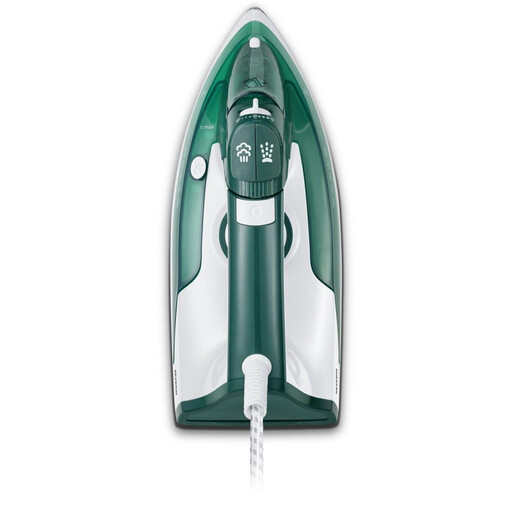 No image available
Severin BA 3261 steam iron, 2400W
This compact steam iron could suit individual scarves, provided the care label allows steam.
Variable steam output: 30 g/min; steam boost: 85 g/min; removable tank: 175 ml.
View at Joybuy
 No image available
Rowenta DW4320 Express Steam steam iron, 2500W
This compact steam iron could suit one or several scarves, if their care labels allow steam.
Continuous steam: 40 g/min; steam boost: 160 g/min; tank: 250 ml; Eco function and anti-drip system.
View at Joybuy
 No image available
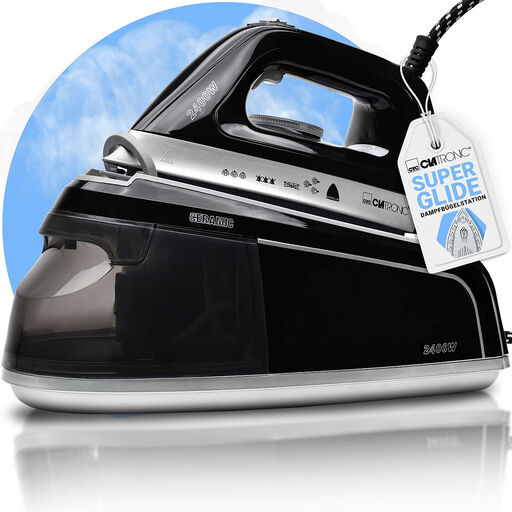
Clatronic DBS 3749 steam generator, 3,5 bar
This steam generator is better suited to longer ironing sessions; allow space for it and check the scarf's care label.
Tank: 1,2 l; operating time: up to 80 minutes; Superglide soleplate and anti-drip system.
View at Joybuy
 No image available
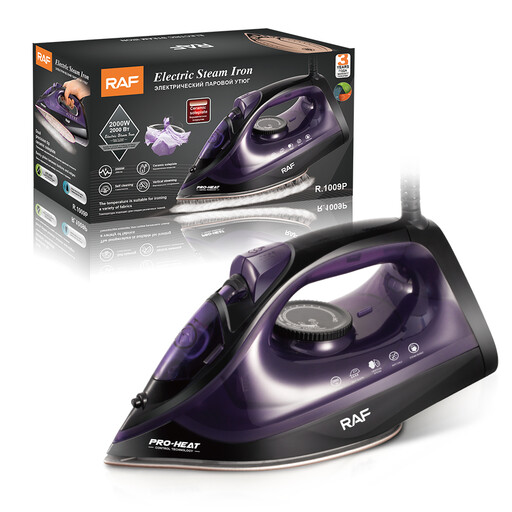
RAF steam iron with ceramic soleplate, 1600W
This compact steam iron is an option for one or several scarves, provided the care label permits steam.
Tank: 210 ml; with vertical steam, steam boost, self-cleaning and spray functions.
View at Joybuy
 No image available
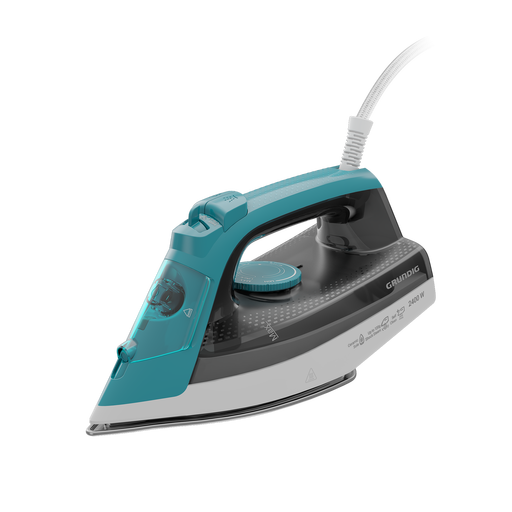
Grundig SI 3550 steam iron
This compact steam iron could suit individual scarves, provided the care label allows steam.
Continuous steam: 25 g/min; steam boost: 120 g/min; tank: 220 ml; with anti-scale and self-cleaning functions.
View at Joybuy
Frequently asked questions
Can I iron every linen scarf on the highest steam setting?
No. The care label specifies the maximum treatment permitted for that particular scarf. GINETEX recommends dampening linen thoroughly and ironing it inside out; if the fabric is blended, or the label rules out steam or specifies a lower temperature, follow the textile's care instructions.
How should I prepare a dry linen scarf for ironing?
If the care label allows it, dampen the scarf and iron it inside out. Also follow the instructions for the iron you are using.
How should I maintain a water-using appliance in the utility room?
Descale it according to the instructions for the relevant appliance range. Philips explains that limescale can cause marks or reduce steam output in its steam generators; do not assume this guidance applies to other models without checking.
What electrical compliance requirements are relevant when buying in Germany?
Mains-powered household appliances within the relevant voltage range are covered by the EU Low Voltage Directive. Where CE marking is required, the European Union explains that the manufacturer is responsible for ensuring compliance with the applicable requirements. CE marking is not an independent quality seal; check the markings on the specific appliance.
Who should I contact if a product I bought in Germany is faulty?
In general, the seller is responsible for the statutory warranty when a product is faulty; the Verbraucherzentrale describes this as a two-year period. Any additional manufacturer's guarantee is separate.


