Pressing collars precisely
If you want to press collars and button plackets flat, an easy-to-use iron tip and a stable ironing surface are important. Braun describes the tip on its FreeStyle 3 range as being designed for areas like these.


For neatly pressed collars, choose an iron with an easy-to-use pointed tip and a suitable, stable ironing surface; you don’t need a large freestanding ironing board. A garment steamer is an option for freshening up clothes, but there’s no evidence that it can replace pressing a collar flat. Check the care label and measure the space available for ironing and storage before you buy.
If you want to press collars and button plackets flat, an easy-to-use iron tip and a stable ironing surface are important. Braun describes the tip on its FreeStyle 3 range as being designed for areas like these.
Compact appliances are worth considering if you only need to iron specific areas and want to put the iron and its surface away afterwards. Prym lists the soleplate area of its mini iron as 130 × 75 mm.
A garment steamer can be a good choice if you want to smooth light creases without setting up an ironing board. Philips describes the STH5020/40R1 as suitable for vertical and horizontal use; this doesn’t prove that it can replace pressing a collar flat.
Suitable if: You want to press collars, seams and button plackets precisely. Braun describes the tip on its FreeStyle 3 range as suitable for collars; Leifheit lists the ironing surface of the Air Board Table Compact as 73 × 30 cm.
Bear in mind: You’ll still need space on a table and a safe place to set down the hot iron.
Suitable if: You mainly need to press small areas and want an appliance that takes up little storage space. According to the manufacturer, the Prym mini iron has an ironing surface of 130 × 75 mm.
Bear in mind: A small ironing surface may mean more individual strokes on larger shirts. The Severin BA 3234 has a 0,05 l tank, so you may need to refill it more often when ironing several shirts.
Suitable if: You want to freshen up a hanging shirt without setting up an ironing board and don’t need a collar pressed flat. Philips describes the STH5020/40R1 as suitable for vertical and horizontal use.
Bear in mind: Steaming isn’t the same as pressing a collar. This particular Philips model is sold as refurbished.
| What you’re looking for | What to check when buying | Who it matters most to |
|---|---|---|
| Pressing collars precisely | The shape and reach of the tip, along with a suitable, stable ironing surface. | If I want to tackle collars and button plackets precisely, an easy-to-reach tip matters more than a large soleplate. Around 36% of consumers prioritise precision around the collar. |
| Workspace and storage | Table space and a safe place to set the iron down, as well as the surface’s dimensions and suitability for heat and steam. | When floor space is limited, I want to be able to put the appliance and ironing surface away afterwards without compromising on a safe workspace. Around 29% of consumers prioritise saving space. |
| Suitability for the fabric | The care label, the permitted temperature and the appliance’s steam setting. | I adjust the heat and steam to suit my shirt’s care label. Around 21% of consumers prioritise treating the fabric appropriately. |
| Quick freshening up | Whether a quick freshen-up is enough or the collar needs pressing flat; check which direction the appliance can be used in. | If I only want to freshen up light creases, I don’t want to set up an ironing board; but I’ll need an iron to press a collar flat. Around 14% of consumers prioritise a quick freshen-up. |
As well as an iron, you need a usable surface to press a collar precisely. According to Prym, its ironing mat is only suitable for smooth surfaces that are not sensitive to heat or steam.
Measure the table space available and make sure there’s a safe place to set down the hot iron.
Philips describes the handheld STH5020/40R1 as suitable for vertical and horizontal steaming. This doesn’t mean it’s equivalent to ironing a collar flat.
Before you buy, decide whether a quick freshen-up is enough or whether you want to press the collar flat.
Tefal lists an automatic shut-off for the FV9851, but explicitly states that the FV2838 doesn’t have one.
Check the full model code to confirm the shut-off feature and any other functions.
The FreeStyle 3 range is a traditional steam iron with a precision tip that the manufacturer says is designed for collars.
Prym offers a mini steam iron and a stowable ironing mat for smaller ironing areas.
The BA 3234 is a travel steam iron with a foldable handle, designed for limited storage space.
The FV2838 and FV9851 are steam irons with model-specific information about their tips and other features.
The handheld garment steamer STH5020/40R1 is described as suitable for vertical and horizontal steaming.
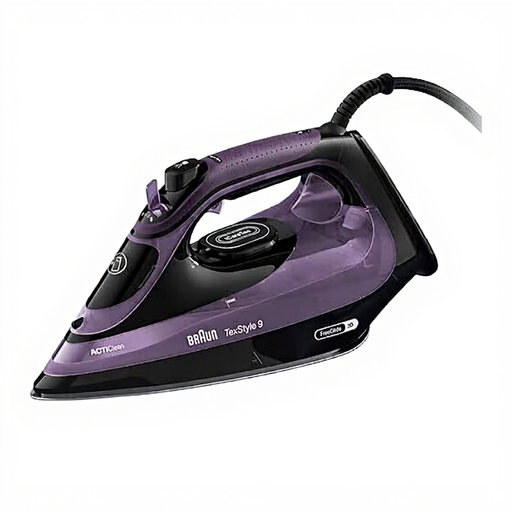
A steam iron for pressing collars precisely and freshening up clothes.
 No image available
The product description lists a precision tip with a steam shot for targeted ironing.
iCare temperature setting.
Water tank: 330 ml.
According to the product description, it can also be used to freshen up clothes vertically.
Yes, as long as there’s enough room on the table and you can set the hot iron down safely. According to the manufacturer, the Leifheit Air Board Table Compact has an ironing surface of 73 × 30 cm. Compare its dimensions with the table space you have available.
No. Set the temperature and steam according to the shirt’s care label. Philips explains that the dots in the iron symbol show the permitted heat setting, while a crossed-out iron means the garment must not be ironed.
Follow the instructions for your specific model. Philips recommends unplugging the iron and letting it cool before cleaning the soleplate. Don’t assume that instructions about water or descaling apply to other models.
For online orders, you generally have 14 days from receiving the goods to cancel, as explained by the Verbraucherzentrale. This is separate from your statutory rights if goods are faulty: the EU Your Europe portal explains that the seller must repair or replace faulty goods free of charge.