Precision ironing for uniform sleeves
If you want to press seams and cuffs precisely, look for an accessible tip, suitable temperature settings and a narrow pressing surface.


For neatly pressed seams and cuffs, an easy-to-manoeuvre iron with a narrow, stable surface is usually the better choice; a foldable sleeve board can also help. Set the temperature and steam according to the care label, and allow space for the base unit and hose if you’re using a steam generator. A handheld garment steamer is better suited to freshening clothes on a hanger than pressing a defined crease.
If you want to press seams and cuffs precisely, look for an accessible tip, suitable temperature settings and a narrow pressing surface.
If worktop and storage space are limited, think about where your iron and board will sit while you’re using them, and where you’ll put them away afterwards.
If you regularly iron several items, consider tank capacity, how often it needs refilling and how to care for the steam system.
A good fit if: You regularly press sleeves precisely and want to iron other suitable uniform items too.
Things to consider: Depending on the model, the tank and steam system may need refilling and maintenance. Steam isn’t suitable for every care label.
A good fit if: You want to iron without a water tank, or the care label specifies dry ironing.
Things to consider: There’s no optional steam function if steam is permitted and preferred for a particular garment.
A good fit if: You mainly want to freshen clothes on a hanger that are suitable for steaming according to their care labels.
Things to consider: Without a suitable pressing surface, its compact design won’t necessarily replace an iron for creating a defined crease in a sleeve.
A good fit if: You want to iron several suitable items in succession and make use of a larger tank.
Things to consider: As well as the iron, you’ll need a suitable place for the base unit and hose.
| Priority | What to check when buying | Who is this important for? |
|---|---|---|
| Pressing sleeves and cuffs precisely | Check the shape of the tip and how easy the iron is to manoeuvre, as well as the width and stability of the pressing surface. | If I want to reach seams and cuffs precisely, an easy-to-manoeuvre tip and a suitably narrow pressing surface matter. Around 36% of consumers would make precision pressing their top priority. |
| Worktop and storage space | Compare the dimensions of the iron and pressing surface, and check the space needed for the base unit and hose. | If I’m working in a small laundry area, the setup needs to stand securely while I’m ironing and be easy to put away afterwards. Around 29% of consumers would make space requirements their main buying priority. |
| Protecting uniform fabric | Compare the care label for each item with the temperature and steam settings available on the specific appliance. | If my uniform items have different care requirements, I want to be able to choose the right setting for each one. Around 21% of consumers would make fabric protection their top priority. |
| Several items and appliance maintenance | Check the tank capacity, descaling instructions and the space available for the amount of laundry you typically iron. | If I’m ironing several suitable items in succession, I want to be able to plan for refilling and maintenance breaks. Around 14% of consumers would put the number of items and the appliance’s maintenance requirements first. |
GINETEX warns that steam can cause irreversible damage at a low ironing setting.
Always check the care label on each uniform item first, then choose the temperature and steam setting accordingly.
Even the DG7644, which Rowenta describes as compact, has a separate base unit and a 1.1-l tank. The base and hose need space.
Before choosing, check where the base unit, hose and a safe iron rest will fit in your laundry area.
Leifheit’s instructions for sleeve board 71820 say not to place the iron on its cover.
Follow the instructions for positioning and resting the iron on your specific board, and place it on a suitable, level surface.
The FreeStyle 3 range includes steam irons designed for precise work around seams and buttons.
The 3000 Series includes a steam iron and a separate, foldable garment steamer.
The Ultragliss Plus FV6846 is a steam iron with listed steam and maintenance features.
The BA 3211 is a dry iron for shoppers looking for adjustable temperature control without a water tank.
The Compact Steam Pro DG7644 is a steam generator with a separate base unit.
This selection includes steam irons, a steam generator and a portable appliance that, according to its product description, is also designed for vertical steaming. Compare the listed features with your care label and the space you have available. For mains-powered appliances, check the labelling and documentation for the specific model before buying.
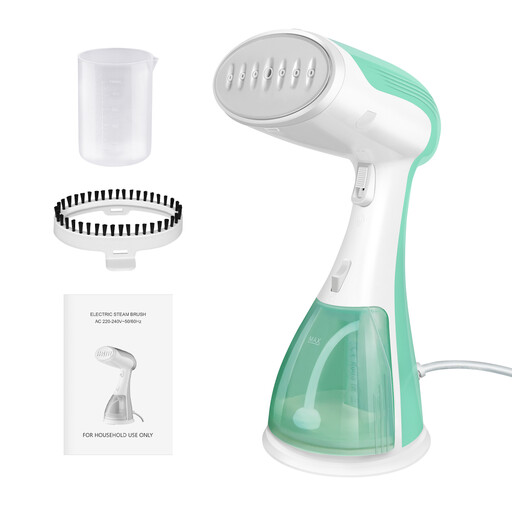 No image available
An option if you’re looking for a portable appliance that, according to its description, can be used for both vertical steaming and ironing on a flat surface.
300 ml tank; stated steam output: 27 g/min. The description mentions a hot metal soleplate.
 No image available
Could be suitable if you want to choose between steam ironing and dry ironing to suit different care labels.
350 ml tank; five temperature settings, with steam and dry ironing options according to the product description.
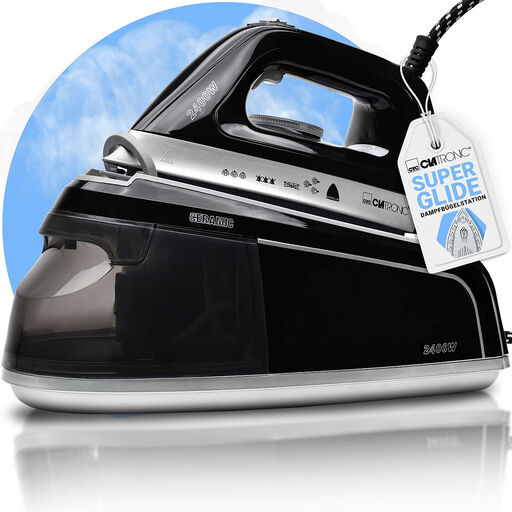 No image available
A steam generator option for ironing several items in succession, provided you have enough space for the base unit and hose.
Removable 1.2 l tank; 3.5 bar and 2400 W according to the product name. The description lists continuously variable temperature control, as well as horizontal and vertical steam ironing.
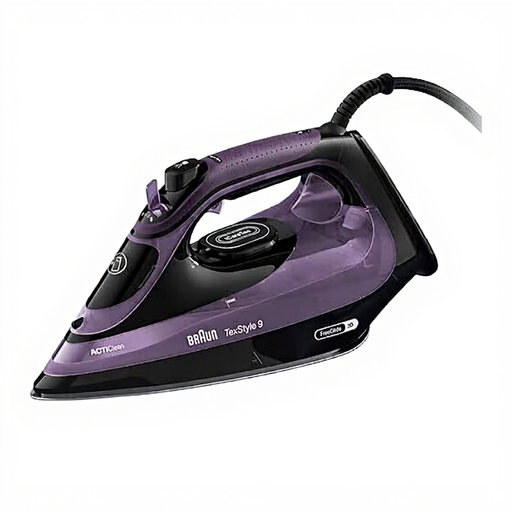 No image available
Could be suitable for precise ironing in hard-to-reach areas, if its features match the care requirements of your uniform items.
330 ml tank, iCare temperature setting, precision tip and limescale collector according to the product description; vertical steaming is also listed.
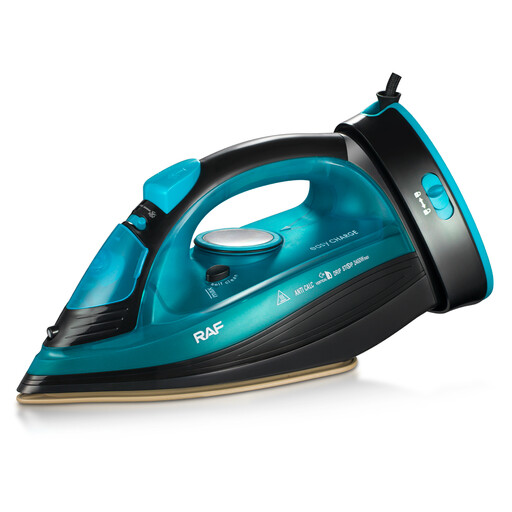 No image available
Could be a good option if you want more freedom of movement while ironing and have room for a charging base in your laundry area.
320 ml tank and 2400 W according to the product name; the description lists a precision tip, steam modes and a 360° charging base.
No. Always follow the care label for the specific item. GINETEX’s guide notes that steam can cause irreversible damage at a low ironing setting. Uniform items may have different care requirements.
Place the board on a suitable, level surface and follow the instructions for the specific model. Leifheit’s instructions for sleeve board 71820 say not to set it up on an uneven surface or place a hot iron on its cover.
Follow the instructions for your specific model. Tefal notes that the hardness of your local water affects the maintenance required. The limescale collector on the FV6846 doesn’t set a general cleaning schedule for other appliances.
For goods bought in the EU, the official EU consumer portal describes a legal guarantee of at least two years from the date you receive them. The seller is responsible for handling your legal claims; an additional manufacturer’s guarantee doesn’t replace the legal guarantee.
For mains-powered appliances covered by the EU Low Voltage Directive, the applicable conformity requirements and required CE marking must be observed. The Directive applies within its voltage range of 50 to 1,000 V AC or 75 to 1,500 V DC, and includes exceptions, so check the documentation for the specific appliance. A mechanical sleeve board isn’t covered by it simply because it’s used for ironing.