For anyone ironing hems and seams
If you want to press narrow, iron-safe trouser hems precisely, look for a tip that can reach into tight spaces and consider how easily you can guide the iron along an edge.


For precise trouser hems, an iron with a pointed tip that’s easy to manoeuvre and suitable temperature and steam settings is a sensible choice. Always check the care label on the individual garment: GORE‑TEX recommends low-temperature ironing without steam and with a pressing cloth only for suitable outerwear; according to GORE‑TEX, SHAKEDRY garments must not be ironed.
If you want to press narrow, iron-safe trouser hems precisely, look for a tip that can reach into tight spaces and consider how easily you can guide the iron along an edge.
If your technical outer layers are dirty, first check whether they can be washed, heat-treated or must not be ironed. The care label on the specific garment is what matters.
If you regularly iron other garments that are explicitly labelled as suitable for ironing, steam output, ease of use and refilling the water tank may also influence your choice.
First check whether the garment can be ironed. Then consider how easy the iron is to guide along a hem, how much steam you need for other laundry, and how simple it is to use and care for.
| Buying priority | What to look for | Who it matters to |
|---|---|---|
| Precision along the hem | Check whether the tip can reach narrow seams and whether the iron is easy to guide. | If I want to press a narrow, iron-safe trouser hem precisely, being able to guide the iron along the edge matters more than a high steam output. Around 36% of consumers would put precision along the hem first. |
| Protecting outdoor fabrics | Read the care label first; check the permitted heat and steam settings only if ironing is allowed. | If an outdoor layer is dirty, I first want to find out how it can be cleaned and whether ironing is allowed. Around 29% of consumers would make protecting the fabric their top buying priority. |
| Steam for other laundry | Compare continuous steam and the steam boost separately; they refer to different operating modes. | If I iron other garments that are explicitly suitable for ironing as well as hems, I look for the right level of steam output. Around 21% of consumers would prioritise steam for additional ironing. |
| Ease of use and care | Compare the controls and follow the cleaning and care instructions for the specific model. | For occasional ironing, I want to be able to set up the iron easily and care for it according to the instructions. Around 14% of consumers would put ease of use and care first. |
Whether a garment can be ironed, and whether steam is allowed, depends on its care instructions. For suitable outerwear, GORE‑TEX describes conditional heat treatment without steam; according to GORE‑TEX, SHAKEDRY garments must not be ironed.
Always check the care label first. Use steam only if the care instructions for the specific garment allow it.
A steam boost and continuous steam output refer to different operating modes, so their figures are not directly comparable. Tefal Germany lists 60 g/min of continuous steam and a 250 g/min steam boost for the FV9844.
When comparing several models, compare the same manufacturer specification for each one, and also consider how easy the iron is to use.
A cleaning or anti-scale function does not replace the care instructions for the iron itself.
Check the model’s manual and use only the type of water and cleaning method it specifies.
The Ultimate Pure FV9844 is described as having a precision tip, adjustable steam and an anti-scale filter. These specifications apply to this model.
The TexStyle 3 SI 3055 BK is available with a FreeGlide 3D soleplate.
According to the manufacturer, the One Temperature 25090-56 is designed for people who don’t want to keep changing the temperature setting when ironing suitable fabrics.
For the Azur 8000 DST8020/20, Philips Germany lists OptimalTEMP and up to 55 g/min of continuous steam for ironable fabrics.
According to the manufacturer, the DB 6005 CB has continuously adjustable temperature settings and a steam function that can be switched off.
This selection includes steam irons for ironable trouser hems and other laundry that is explicitly suitable for ironing. For outdoor clothing, the care label determines whether ironing is allowed at all.
 Image unavailable
The stated continuous steam output and separate steam boost may be useful for other ironable laundry.
Stainless steel soleplate; 40 g/min continuous steam; 160 g/min steam boost; 2500 W.
For outdoor clothing, always check the care label first.
 Image unavailable
The listed steam specifications distinguish between continuous output and a separate steam boost for ironable fabrics.
Up to 50 g/min continuous steam; 280 g/min steam boost; vertical steam; automatic shut-off.
For outdoor clothing, always check the care label first.
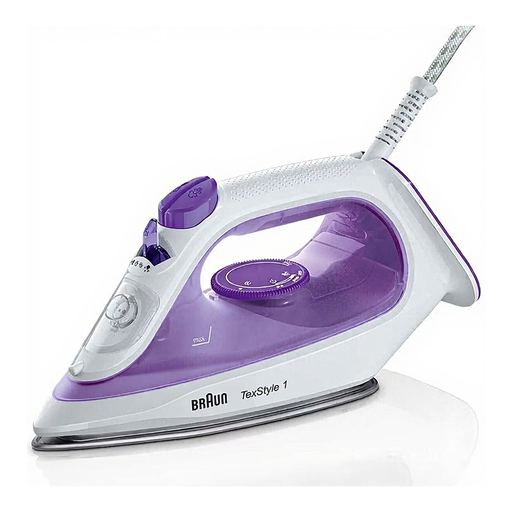 Image unavailable
The stated precision tip is a useful feature if you need to reach narrow areas on ironable clothing.
Ceramic soleplate; 25 g/min continuous steam; 130 g/min steam boost; vertical steam; self-cleaning function.
For outdoor clothing, always check the care label first.
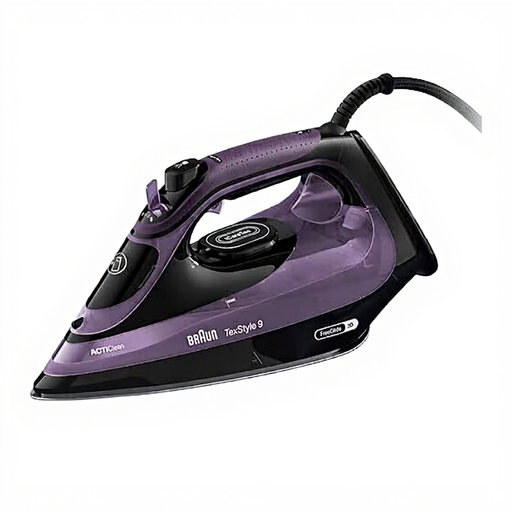 Image unavailable
The stated precision tip and variable steam settings are useful features for narrow areas and other suitable laundry.
60 g/min continuous steam; 250 g/min steam boost; 330 ml water tank; vertical steam; automatic shut-off.
For outdoor clothing, always check the care label first.
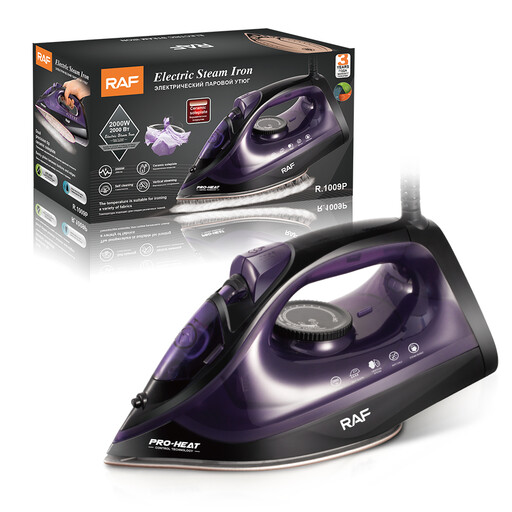 Image unavailable
The ceramic soleplate and stated steam boost are features to consider when choosing an iron for clothing that is explicitly suitable for ironing.
1600 W; ceramic soleplate; 210 ml water tank; steam boost; vertical steam; self-cleaning function.
For outdoor clothing, always check the care label first.
Check the care label first and clean the trousers accordingly. GORE‑TEX recommends washing before any permitted heat treatment; this guidance does not automatically apply to other outdoor fabrics. According to GORE‑TEX, SHAKEDRY garments must not be ironed.
There’s no single temperature that suits every pair of trousers; follow the ironing symbol on the specific garment. The GINETEX guide distinguishes between maximum soleplate temperatures of 120, 160 and 210 °C, among others, and also identifies garments that must not be ironed.
Tefal recommends unplugging the iron and letting it cool completely before cleaning. For the soleplate, the manufacturer recommends using a soft, damp cloth. Also follow the instructions for your specific iron.
If a product is faulty, your statutory rights are claims against the seller; a manufacturer’s guarantee is an additional, voluntary offer with its own terms. The Verbraucherzentrale (German consumer advice centre) clearly distinguishes between these two forms of protection.