
Lieferung heute & morgen

Qualitätsgarantie

Willkommens-Angebote freischalten: KOSTENLOSE Lieferung | Bis zu 80 % RABATT | Kostenlose 30-Tage-JoyPlus-Testphase
App herunterladen
Choosing a car seat is one of the most important decisions parents make for their child's safety. However, the market can be overwhelming and full of technical jargon. The i-Size car seat standard, in particular, raises many questions. As your Joybuy Product Recommendation Officer, I'm here to help you separate fact from marketing hype and make an informed decision.
Before we dive into the crucial criteria, let's look at the typical pitfalls that can lead to an unsuitable or unsafe choice.
To avoid these pitfalls, focus on three objective core parameters that define a seat's safety and real-world usability.
The ECE R129 car seat regulation, better known as i-Size, is the current safety standard and is gradually replacing the older ECE R44/04. The key advantages are:
ISOFIX is an internationally standardised installation system that creates a rigid connection between the car seat and the vehicle's chassis. It minimises the risk of incorrect installation, which is common when using the vehicle's seat belt.
An all-in-one car seat can be an economical solution, provided it meets the requirements of each stage without compromise.
Here are three models that cater to different needs and meet the core parameters mentioned above.
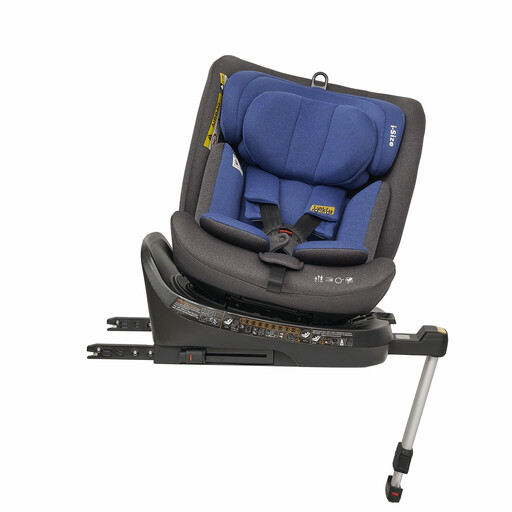
Why This Fits Their Persona: Ideal for families looking for a single, long-term investment. This seat covers the entire period of use from birth until a car seat is no longer required, combining this with practical features.
It avoids the "one-seat-fits-all" trap by meeting the strict i-Size standard (ECE R129) despite its long lifespan, and by using adjustable inserts to adapt to every growth stage.
360° rotation for easy entry and exit and a very wide usage range from 40 to 150 cm. Secure installation via ISOFIX and a support leg.

Why This Fits Their Persona: Perfect for parents who want to make no compromises on safety and comfort during the first four years. This seat is a specialist for the sensitive phase from newborn to toddler.
It focuses on one age group and optimises all functions for it, rather than trying to be a jack-of-all-trades. The focus is clearly on safety (extended rear-facing) and comfort (ventilation, rotation).
Allows for comfortable rear-facing travel up to 20 kg. The Plus version offers all-round air circulation with mesh fabric for a better seating climate. The 360° rotation simplifies daily use.
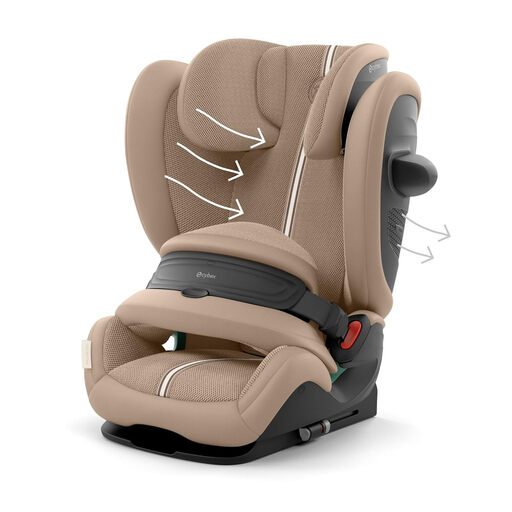
Why This Fits Their Persona: This 2-in-1 seat is designed for parents looking for a long-lasting solution after the infant carrier, accompanying their child from toddlerhood (approx. 15 months) to age 12.
It is a specialised all-in-one seat that uses an impact shield system for toddlers instead of a 5-point harness. According to the manufacturer Cybex, this reduces the risk of neck injuries. It later converts into a full-fledged Group 2/3 booster seat.
Very long lifespan of over 10 years (76-150 cm). The impact shield system is easy to use and offers an alternative safety philosophy. The Plus version features enhanced ventilation.
We have compiled a complete, up-to-date list of products that fully meet these strict selection criteria and German safety regulations.
i-Size is the latest European safety standard for child car seats. It classifies seats by the child's height, mandates stricter side-impact tests, and requires children to travel rear-facing until at least 15 months old. The goal is to increase safety and simplify the selection process for parents.
According to the i-Size standard, rear-facing travel is legally required until 15 months of age and a height of 76 cm. However, safety organisations recommend keeping children in a rear-facing car seat for as long as possible, ideally up to the age of four, as this provides significantly better protection for the cervical spine in a frontal collision.
Most vehicles built after 2013 are equipped with ISOFIX anchorage points. They are usually located on the two outer rear seats, between the seat cushion and the backrest, and are often marked with a small label or symbol. To be sure, check your vehicle's manual. Many car seat manufacturers, such as Cybex, also offer compatibility lists on their websites where you can check your vehicle model.