
Lieferung heute & morgen

Qualitätsgarantie

Willkommens-Angebote freischalten: KOSTENLOSE Lieferung | Bis zu 80 % RABATT | Kostenlose 30-Tage-JoyPlus-Testphase
App herunterladen
An i-Size car seat should suit your child, your vehicle and your everyday needs. However, product names, age recommendations and a wide range of features can often lead to the wrong purchase. It’s particularly important not to choose a seat based on age alone, or to assume that a long period of use means the seat will automatically fit properly at every stage.
1. Age isn’t a substitute for height.
Under ECE R129, also known as i-Size, your child’s height is a key factor when choosing a seat. A seat for 40 to 150 cm covers a wide range, but requires different inserts, harnesses and settings at different stages of development. That’s why it’s important to check the height range in centimetres and the limits for each stage of use.
2. A 360-degree rotation doesn’t automatically mean easy installation.
A rotating 360-degree car seat can make it easier to get your child in and out. However, the rotation feature doesn’t replace correct installation. Depending on the model, ISOFIX, a support leg or a top tether may be required. Before you buy, check that your vehicle can accommodate the required fittings.
3. “Grows with your child” doesn’t mean every stage works in the same way.
A car seat for ages 0 to 12 can cover several stages of development. However, the direction of travel, harness system and inserts often change. A seat for 40 to 150 cm is usually used first with a baby insert and a 5-point harness, and later with the vehicle’s seat belt. Make the change in line with the instructions and your child’s height.
An ECE R129 car seat must be approved for a specific height range. Common ranges include:
For babies and young children, a rear-facing car seat is worth considering, as your child travels facing backwards. Some models can be used in this position up to 105 cm. Always check the minimum and maximum height and the permitted direction of travel against the product instructions.
An ISOFIX car seat attaches to standardised anchor points in the vehicle. Many seats also use a support leg or top tether. Indicators can make installation easier, but they don’t replace checking that the seat is compatible with your vehicle.
With a booster seat that has no harness of its own, your child is secured using the vehicle’s three-point seat belt. Using only a lap belt is expressly not permitted with the Dunlop booster seat featured here. Before buying, check that the seat you plan to use has a suitable three-point belt.
An adjustable headrest, removable inserts and an easy-to-reach harness system are practical features for everyday use. A car seat with side-impact protection may include additional protective elements in its design, although the exact features vary by model.
Cleaning matters too. Removable covers that, according to the product information, can be washed at 30 °C make looking after the seat easier. Avoid fastening your child into a tightly fitted 5-point harness while they’re wearing a thick winter coat, as this can affect the fit.
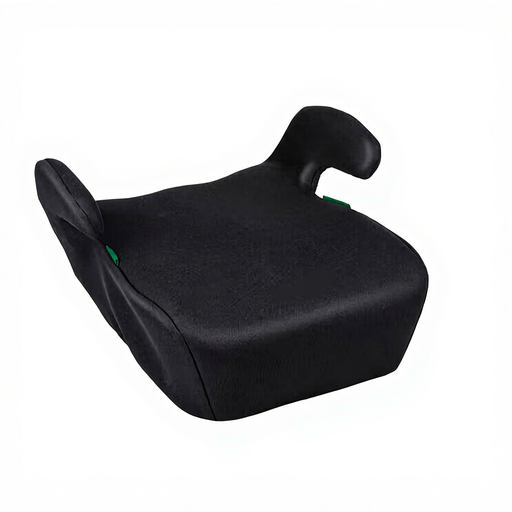
Why this product suits this profile: This lightweight booster seat is designed for older children measuring 125 to 150 cm and is easy to move between vehicles.
The clearly stated height range helps prevent the booster from being used too soon. It requires a three-point seat belt and doesn’t have its own 5-point harness.
ECE R129 approval, weighs around 1 kg, armrests and a removable, washable cover.

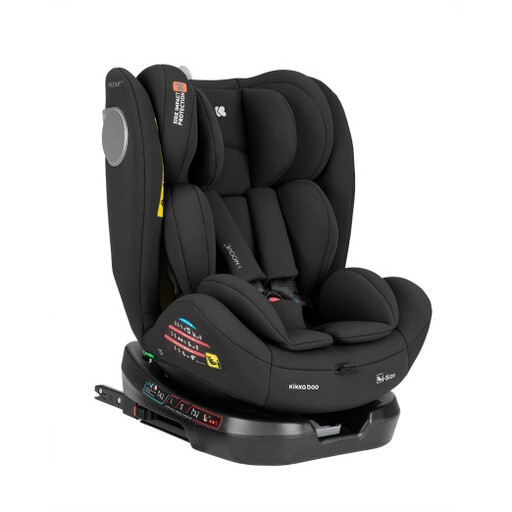
Why this product suits this profile: This seat is designed for families with a baby or toddler who want an integrated ISOFIX base and a 360-degree rotating car seat for use up to around four years of age.
Its specified height range of 40 to 105 cm clearly defines how long it can be used. That way, you’re not led to believe that one seat has to cover every age and stage.
UN R129/03, integrated ISOFIX base, 360-degree rotation, newborn insert and 12 headrest positions, according to the product information.
Why this product suits this profile: A good choice for families looking for a seat that can be used from birth to around 12 years, and for frequent journeys with changing needs.
The product information distinguishes between rear-facing use from 40 to 105 cm and forward-facing use from 76 to 150 cm. It also clearly specifies ISOFIX and top tether.
UN R129/04, 360-degree rotation, 24 headrest positions, 5-point harness and integrated side-impact protection system.
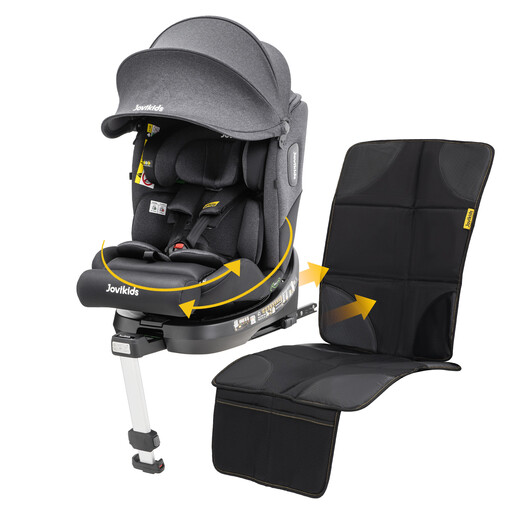
Why this product suits this profile: According to the product information, this seat covers 40 to 150 cm and combines ISOFIX, a rotation function, an adjustable headrest and removable padding.
The different settings and inserts are designed to adapt the seat to your child’s height. Before making any changes, follow the instructions and check the indicator on the seat.
ECE R129, ISOFIX, 360-degree rotation, 12 headrest positions and a removable cover.
We’ve put together a complete, regularly updated list of products that meet these strict selection criteria and fully comply with the safety regulations in force in the EU.
No. ISOFIX points, support legs, top-tether anchor points and available space vary from one vehicle to another. Check the manufacturer’s vehicle compatibility list and your vehicle handbook before buying.
That depends on your child’s height and the different stages of use. A seat for 40 to 150 cm can cover several stages, but it won’t be used in the same way throughout. Adjust the inserts, harness system and direction of travel in line with the instructions.
A booster seat is suitable only when your child is within its approved height range and the three-point seat belt sits correctly across their shoulder and pelvis. For smaller children, a seat with its own backrest and a suitable harness system is generally the more appropriate type of product.