
Lieferung heute & morgen

Qualitätsgarantie

Willkommens-Angebote freischalten: KOSTENLOSE Lieferung | Bis zu 80 % RABATT | Kostenlose 30-Tage-JoyPlus-Testphase
App herunterladen
Choosing a car seat is one of the most critical safety decisions you'll make for your child. However, the market is crowded and full of marketing promises that often create more confusion than clarity. As your Joybuy Product Recommendation Officer, I'm here to help you separate fact from fiction and make an informed decision. In this guide, we'll focus on the essential criteria and highlight common pitfalls that can lead to poor purchasing choices.
Before we dive into the technical details, let's clear up two widespread misconceptions that often lead to unsuitable and ultimately unsafe purchases.
To make a safe and practical choice, you should focus on three core parameters. These form the foundation for protecting your child in the vehicle.
The i-Size standard, officially known as UN R129, is the current European safety standard for child car seats. It is gradually replacing the older ECE R44 standard and introduces crucial improvements:
The method of installation in the car is a key safety factor. There are two primary methods:
Beyond safety standards, practical details often determine satisfaction in everyday use:
Instead of making a one-size-fits-all recommendation, we have selected models that meet specific needs and cleverly avoid the pitfalls mentioned earlier.

Why This Fits Their Persona: Ideal for parents who refuse to compromise on safety and comfort from birth (40 cm) up to approx. 4 years (105 cm). The 360° rotation function makes daily life significantly easier.
This seat avoids the "one-seat-fits-all" trap by specialising in the critical 0-4 year phase. The included newborn inlay ensures an ergonomically correct and secure position for the littlest ones.
Meets the strict UN R129/03 (i-Size) standard. Features integrated Linear Side-impact Protection (L.S.P. System) and a 360° rotation mechanism for easy entry and exit.
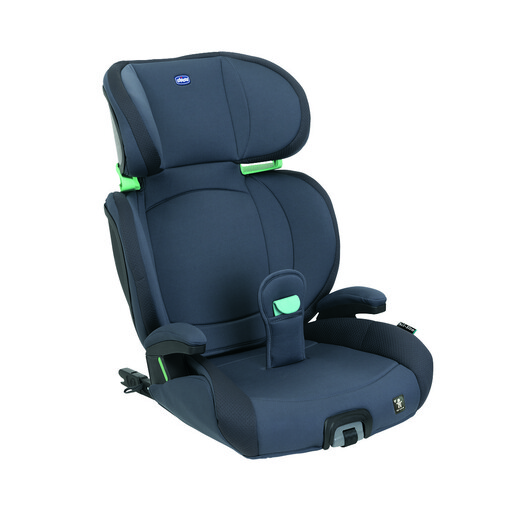
Why This Fits Their Persona: A solid choice for children from approx. 3 to 12 years (100-150 cm) who need a safe next-stage seat without breaking the bank. It focuses on essential safety features.
This is purely a next-stage seat and doesn't try to be suitable for newborns. It provides a fit and safety profile tailored to the anatomy of older children, making it an honest and secure solution.
Certified according to ECE R129/03 (i-Size). Installation is done with the 3-point belt, with optional ISOFIX connectors providing extra stability. The height-adjustable headrest grows with the child.
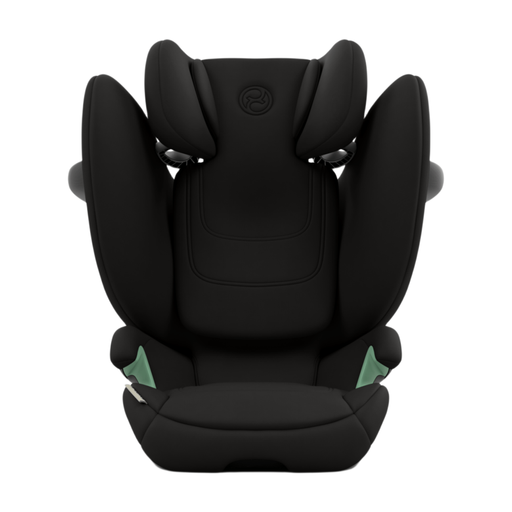
Why This Fits Their Persona: Perfect for families who frequently switch the seat between different vehicles (e.g., between the family car and the grandparents' car) or need to take it on trips.
This seat solves the problem of poor portability. Instead of a heavy, bulky seat, this model offers a lightweight design and a folding feature, which simplifies transport and storage.
Certified according to UN R129/04 (i-Size). At only 5.8 kg, it is very light and can be folded compactly. Installation is possible with both ISOFIX and the vehicle's seat belt.
We have compiled a complete, up-to-date list of products that fully meet these strict selection criteria and UK safety regulations.
Under the i-Size standard (UN R129), children must be transported rear-facing until at least 15 months of age and a height of 76 cm. Safety organisations like the ADAC recommend keeping children in a rear-facing seat for as long as possible, ideally up to the age of four, as this provides the best possible protection for the head and neck in a frontal collision.
Not necessarily. Although i-Size seats are designed to fit on all vehicle seating positions marked as "i-Size ready," this is not the case for all cars. Therefore, always check the child seat manufacturer's vehicle compatibility list. You can find this on the brand's website, where it lists the car models in which the seat has been tested and approved.
The switch from an infant carrier (Group 0+) to a next-stage seat should happen when your child's head reaches the top edge of the carrier, or when the maximum permitted weight or height is exceeded. It's fine for their feet to extend beyond the edge. Switching too early is a safety risk, as infant carriers offer the best protection for the very young.