
Lieferung heute & morgen

Qualitätsgarantie

Willkommens-Angebote freischalten: KOSTENLOSE Lieferung | Bis zu 80 % RABATT | Kostenlose 30-Tage-JoyPlus-Testphase
App herunterladen
Choosing a child seat is one of the most important decisions for your child's safety in the car. However, the market is saturated with jargon, marketing promises, and a confusing variety of models. As a Joybuy Product Recommendation Officer, I'm here to help you separate fact from fiction and make an informed decision. We'll highlight the most common pitfalls and the crucial criteria that truly matter.
Many well-intentioned purchases turn out to be impractical or even unsuitable in daily use. Pay attention to these three typical problems to avoid a poor investment.
To make the right choice, focus on these objective and safety-relevant features.
An i-Size child seat is certified according to the current UN Regulation R129. For you, this means:
A child seat with ISOFIX connects directly to the vehicle's chassis. The system consists of two locking arms on the child seat that click into corresponding anchor points between the car's seat cushion and backrest.
Consider what usage period makes sense for your family.
Here are some models tailored to different needs and life stages.

Why This Fits Their Persona: Ideal for parents seeking a single, long-lasting solution after the infant carrier stage. This seat covers the age range from toddler to the end of the car seat requirement (approx. 15 months to 12 years), thus maximising the value of the investment.
It bypasses the "one-size-fits-all" trap with a 2-in-1 system: an impact shield is used for younger children (76-105 cm) to distribute impact forces. Later, it's removed, and the seat is used as a high-back booster (105-150 cm) with the vehicle's seat belt.
Long lifespan of over 10 years; impact shield system which, according to manufacturer Cybex, can reduce the risk of neck injuries; simple ISOFIX installation.

Why This Fits Their Persona: Perfect for parents who want maximum comfort and ease of use in their daily routine. The rotation function is easy on the back and makes buckling the child in, especially in tight parking spaces, significantly easier.
This seat focuses on the age group from approx. 3 months to 4 years and is optimised for it. It doesn't try to be a compromise for 12 years but offers specialised safety and ergonomics for the most vulnerable years.
360° rotation for effortless entry and exit; integrated Linear Side-impact Protection (L.S.P. System); multiple recline positions in both forward and rear-facing modes.
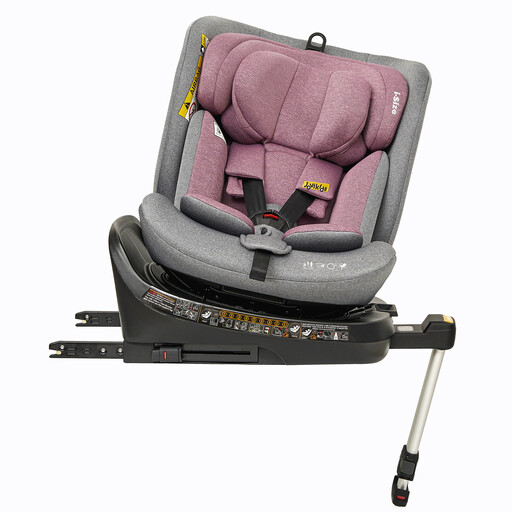
Why This Fits Their Persona: For parents looking for a single seat for the entire childhood. This model covers the full range from birth (40 cm) to age 12 (150 cm), combining longevity with convenience features.
It addresses the poor-fit trap through targeted adjustments: removable cushions for newborns and a 12-level adjustable headrest ensure the seat provides a proper fit throughout the different growth stages.
Extremely long lifespan (birth to 12 years); combines 360° rotation with an all-in-one design; ISOFIX and support leg for a stable installation.
We have compiled a complete, up-to-date list of products that fully meet these strict selection criteria and UK safety regulations.
1. How long must my child travel in a rear-facing seat? According to the i-Size standard (UN R129), rear-facing travel is legally required until at least 15 months of age and a height of 76 cm. However, safety experts recommend keeping children in a rear-facing seat for as long as possible, ideally up to 4 years old, as this provides significantly better protection for the head and cervical spine in a frontal collision.
2. Does every i-Size child seat fit in every car with ISOFIX? Not necessarily. Although i-Size aims for better standardisation, there are differences in the shape of car seats, the position of ISOFIX points, and the available space. Therefore, always check the vehicle compatibility list on the child seat manufacturer's website. It specifies for which vehicle models the seat is approved.
3. What is the difference between an impact shield and a 5-point harness? Both systems are used to secure young children (usually Group 1, approx. 9-18 kg or 76-105 cm).