
Lieferung heute & morgen

Qualitätsgarantie

Willkommens-Angebote freischalten: KOSTENLOSE Lieferung | Bis zu 80 % RABATT | Kostenlose 30-Tage-JoyPlus-Testphase
App herunterladen
An i-Size child car seat compliant with UN R129 or ECE R129 is designed to make choosing a seat based on your child’s height easier. Even so, the wide range of models often leads to unsuitable purchases. The key factors are not just the brand name, colour or low price, but whether the seat genuinely fits your child and your vehicle.
The description “from 15 months” or “up to 12 years” is only a rough guide. Under ECE R129, the seat is selected primarily according to the child’s height. A model for 76–150 cm may, for example, be suitable for a 15-month-old child, but it must be adjusted correctly and used in accordance with the instructions.
Height specifications are particularly important for a child booster seat: according to the product details, models such as the Dunlop seat are intended exclusively for 125–150 cm and 15–36 kg. This type of solution is not suitable for smaller children.
A child car seat with ISOFIX can generally be attached using standardised anchorage points. However, the vehicle, seating position and any additional attachments must all be compatible. Some models also require a Top Tether, while others use a support leg. Before buying, parents should therefore compare the vehicle’s manual with the car seat instructions.
Even with an ISOFIX seat, the headrest, harnesses and backrest must still be adjusted correctly. A vehicle seat belt that is routed incorrectly can impair the seat’s intended function.
A 360-degree child car seat can make it easier to place your child in the seat. A reclined position, ventilation and a washable cover are also practical features. However, they do not replace the correct approval and proper installation.
You should also consider the actual weight and dimensions. A heavy seat is less suitable if it needs to be moved regularly between several vehicles. A removable cover should not simply be advertised as “washable”; specific care instructions are important, such as machine washing at 30 °C and cleaning instructions for the plastic parts.
Before buying, check:
A child car seat from 15 months to 12 years can be used over the long term if the individual stages of development are clearly described. With a growing child car seat, it should be clear when the impact shield is removed and from what height the vehicle’s three-point seat belt should be used.
The ECE R129 or UN R129/04 marking indicates approval under the stated regulation. The relevant approval number and permitted height range should be checked on the product and in the instructions.
A child car seat with side-impact protection may feature integrated protective structures or energy-absorbing components. Statements about a percentage reduction in the risk of injury should be understood only as manufacturer claims. According to CYBEX’s manufacturer information, certain Pallas models are described as reducing side-impact forces or risks under defined comparison conditions. This does not support a general claim for every accident situation.
Before buying, you should establish:
A vehicle three-point seat belt is essential for a booster seat without its own harnesses. A lap belt alone is not sufficient. An unused booster seat should also be secured so that it does not become a loose object during heavy braking.
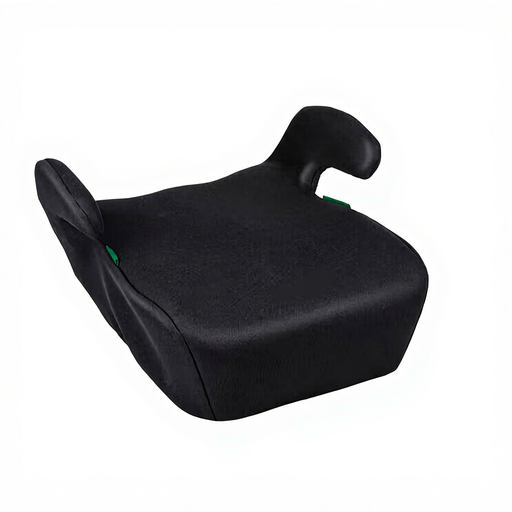
Why this product suits this profile: According to the product details, this compact booster seat is designed for children measuring 125–150 cm and weighs approximately 1 kg. It is therefore suitable for families who need to move a simple seat between vehicles.
The approved height and weight range is clearly stated. Use with a three-point seat belt is expressly required.
Removable cover that can be washed at 30 °C; armrests; low weight of approximately 1 kg.
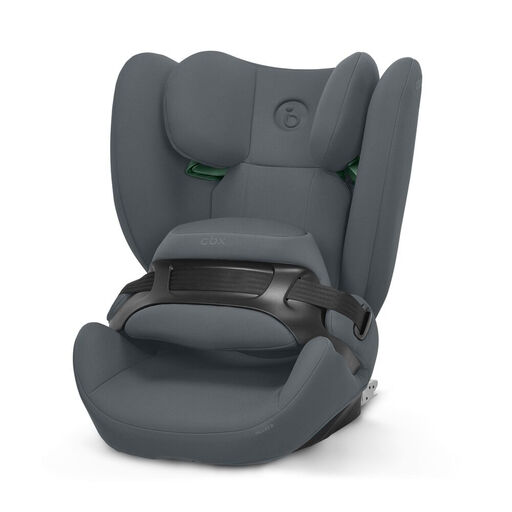
Why this product suits this profile: According to the manufacturer’s information, this 2-in-1 child car seat is designed for 76–150 cm, or approximately 15 months to 12 years. It features ISOFIX, Top Tether, an adjustable backrest and 12 headrest positions.
The different stages of use and the transition from the impact shield to the three-point seat belt are described in the product details.
UN R129/04; ISOFIX and Top Tether; machine-washable cover at 30 °C.

Why this product suits this profile: According to the product details, this 360-degree child car seat is designed for 61–105 cm and up to 20 kg. The swivel function makes it easier to place your child in the seat from the side, while five reclined positions and 12 headrest positions allow for adjustment.
The limited height range prevents unclear use across several age groups. ISOFIX and an integrated support leg are specifically stated as the installation method.
360-degree rotation; rear-facing and forward-facing use; removable cover that can be washed at 30 °C.
We have put together a complete, regularly updated list of products that fully meet these strict selection criteria and the safety regulations applicable in the EU.
That depends on the approved height range. Some seats start at 40 cm with a suitable baby carrier, while others start at 61 cm or 76 cm. The decisive information is what is stated on the seat and in the instructions, not the child’s age alone.
Depending on the model, a seat for 76–150 cm can be used from toddlerhood until approximately the age of twelve. The type of restraint often changes during this time: initially an impact shield or integrated harness system, followed later by the vehicle’s three-point seat belt. Following an accident involving significant impact, the seat should be replaced regardless of the child’s age.
ISOFIX can simplify installation and create a secure connection with the vehicle. However, it does not automatically make a seat suitable for every vehicle. Always check vehicle approval, the seating position, Top Tether or support leg requirements, and the correct routing of the seat belt. For older children, the three-point seat belt may also be required or used instead, depending on the model.