
Lieferung heute & morgen

Qualitätsgarantie

Willkommens-Angebote freischalten: KOSTENLOSE Lieferung | Bis zu 80 % RABATT | Kostenlose 30-Tage-JoyPlus-Testphase
App herunterladen
An ISOFIX i-Size car seat should be easy to install, grow with your child and suit both your vehicle and your child’s height. In practice, however, some marketing claims can lead to unsuitable purchases. A 360-degree rotation function is only helpful if the seat can be installed correctly and the rotation mechanism has enough space in the vehicle. Similarly, the claim “from birth to 12 years” does not replace a careful check of the height ranges and installation directions.
This buying guide from the Joybuy Product Recommendation Officer explains which technical details really matter and which models may suit different everyday situations.
The i-Size designation refers to the European approval standard UN ECE R129. Among other things, it sets requirements for child height, side-impact protection and installation. Even so, the ISOFIX points, support leg, Top Tether and available space must be compatible with the vehicle.
Parents should therefore check the car’s handbook and the seat manufacturer’s compatibility information before buying. For example, a seat with a support leg may only be used if the leg rests securely on the vehicle floor.
An 40–150 cm car seat or a car seat from birth to 12 years can cover several stages of a child’s development. However, the padding, headrest and harness must be adjusted regularly to suit the child’s height. A seat that can theoretically be used for many years is not automatically equally practical at every stage.
Clear information about the approved heights, installation directions and permitted weight is essential. When switching from rear-facing to forward-facing travel, always follow the instructions for the particular seat.
A sun canopy, additional padding or a drinks holder can be useful in everyday life. However, accessories must not interfere with the vehicle seat belt, 5-point harness, headrest or side-impact protection. Unapproved inserts and universal accessories may alter the fit.
Look for clear markings such as ECE R129, UN R129/03 or UN R129/04. The product description should also state the approved height range. With a child car seat complying with ECE R129 for 40 to 150 cm, check whether the seat may actually be used for newborns with the specified insert.
The approval standard does not replace correct installation. Before every journey, check the connections, belt routing and indicators.
ISOFIX clicks directly into the vehicle’s designated anchor points. Colour indicators can make it easier to check that the connection is secure. Depending on the model, installation is additionally stabilised with a support leg or a Top Tether. These systems cannot be exchanged freely.
For an ISOFIX rear-facing seat, check the approved rear-facing height range. A 360-degree rotating seat is only worthwhile if the vehicle provides enough room for movement and the rotation mechanism locks fully into place.
For children aged around 3 and over, seats covering 100 to 150 cm are often suitable. These models are generally used in a forward-facing position and use the vehicle’s 3-point seat belt. An adjustable backrest or height-adjustable headrest can make it easier to adapt the seat to different vehicle seats.
With a growing car seat for 40 to 150 cm, removable newborn inserts, multiple headrest positions and adjustable harnesses are important points to check. Above all, the harness must fit snugly against the child’s body and the instructions must be followed.
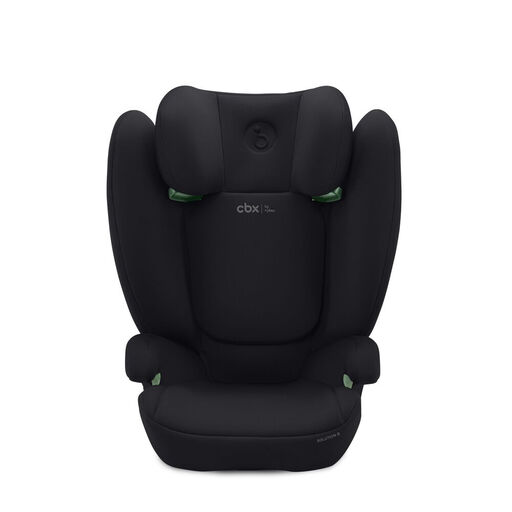
Why this product suits this profile: This seat is designed for children from around 3 to 12 years old, or 100 to 150 cm tall, making it suitable for families looking for a straightforward ISOFIX seat for the next stage of their child’s development.
The clearly stated height range prevents the seat from being mistakenly planned for smaller children or for use from birth.
UN R129/04, ISOFIX, 12-position height-adjustable headrest and integrated L.S.P. system, according to the product details.
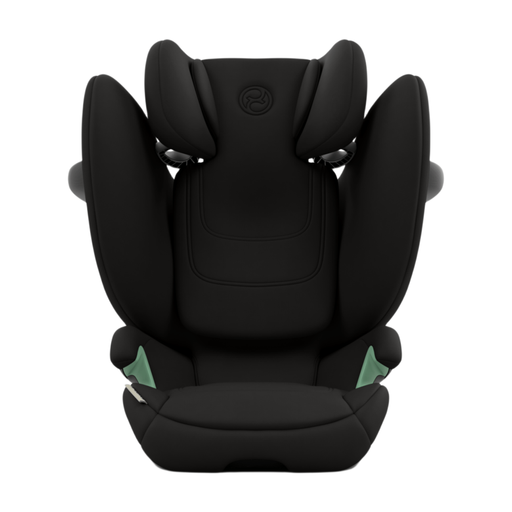
Why this product suits this profile: This seat is aimed at families who regularly switch between vehicles and value an adjustable backrest, easy transport and clearly defined height ranges.
The seat is expressly approved for 100 to 150 cm and approximately 3 to 12 years, and is not marketed as a seat for use from birth.
Folding design, weight of 5.8 kg, ISOFIX and UN R129/04, according to the product description.
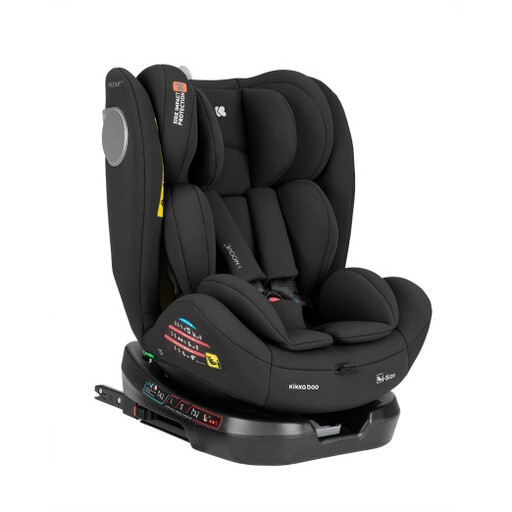
Why this product suits this profile: This growing seat is worth considering for families who spend a lot of time in the car and want rear-facing travel, a rotation function and several adjustment options in one model.
The product details distinguish between the rear-facing range of 40 to 105 cm and the forward-facing range of 76 to 150 cm.
360-degree rotation function, ISOFIX plus Top Tether, 24 headrest positions and adjustable seat recline, according to the manufacturer’s details.
We have put together a complete, regularly updated list of products that fully meet these strict selection criteria and the safety regulations applicable in the EU.
No. Some seats can alternatively be secured using the vehicle’s 3-point seat belt. With ISOFIX models, the vehicle anchor points and the approved installation method must be compatible. The instructions remain the definitive source of information.
This depends on the stated height range and the seat’s design. Models covering 40 to 150 cm can accommodate several stages of a child’s development. Seats for 100 to 150 cm, on the other hand, are typically intended for children from around 3 years old. The seat should be replaced if it shows visible wear or has been involved in an accident.
The rotation function can make getting in and out easier. Before buying, however, check the available space, the permitted direction of travel and how the particular model operates. A rotation function is a comfort feature and does not replace the correct size or proper installation.