
Lieferung heute & morgen

Qualitätsgarantie

Willkommens-Angebote freischalten: KOSTENLOSE Lieferung | Bis zu 80 % RABATT | Kostenlose 30-Tage-JoyPlus-Testphase
App herunterladen
If you want to buy Italian wine in a 6 x 0.75 l case, you’ll get six bottles containing 4.5 litres of wine in total. That can be handy for dinners, celebrations or stocking up at home. However, wine cases can vary considerably in grape variety, sweetness, region and alcohol content. A low-priced case won’t necessarily suit your taste.
Italy has a wide range of wine regions and grape varieties. A full-bodied Primitivo from Puglia tastes quite different from a fresh Grillo from Sicily or a structured Chianti DOCG from Tuscany. If you choose based only on the country of origin, you could end up with a wine case that doesn’t suit your favourite dishes or personal taste.
“Fruity” doesn’t automatically mean that a wine is sweet. A dry red wine can smell of cherries, plums or berries without tasting noticeably sweet. If you prefer a softer style, look specifically for medium-dry wine or check the residual sugar information.
A wine case containing six bottles doesn’t always mean six 0.75-litre bottles. Some offers include litre bottles or individual bottles rather than a case of six. Before buying, check the number of bottles, volume per bottle and total volume. A “6 x 0.75 l” case contains 4.5 litres net.
The grape variety is a useful starting point:
Quality designations are also relevant. DOCG stands for a controlled and guaranteed designation of origin, while DOC, IGT and IGP each have their own rules on origin and production. However, the designation alone won’t tell you what the wine tastes like.
A dry red such as Primitivo, Chianti or Montepulciano d’Abruzzo is quite different from a medium-dry Primitivo or rosé. The wines covered here typically have an alcohol content of around 11.5 to 14.5% vol., depending on the wine. Always check the information on the individual label.
As a general guide:
Serving temperature affects how you perceive alcohol, acidity and fruit. Red wines served too warm can feel heavier, while heavily chilled reds may show less aroma.
If you’re looking for organic Italian wine, check that the product carries valid organic certification. A wine from a particular region isn’t automatically organically produced. If you’re looking for vegan Italian wine, check for a relevant manufacturer or product statement, as animal-derived fining agents may be used in winemaking.
All the wines mentioned may contain sulphites. Check the allergen information on the product page and packaging before buying. Alcoholic drinks are only for adults of legal drinking age and are not suitable for pregnant women.
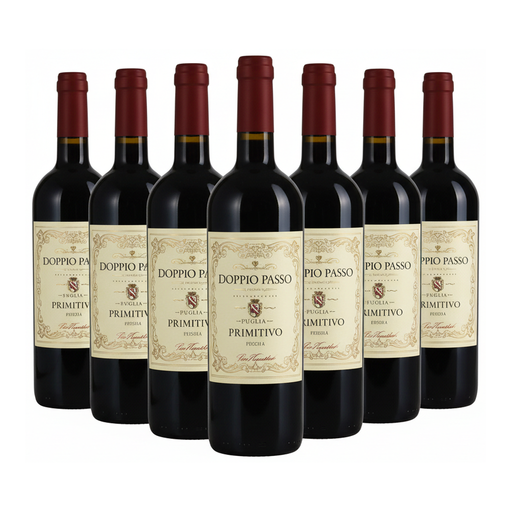
Why this product suits this profile: The case of six 0.75-litre bottles is a convenient choice to keep on hand for pasta, hearty dishes and get-togethers. The wine is described as medium-dry and has an alcohol content of 13% vol.
The number of bottles, volume per bottle, sweetness, region and serving temperature are all clearly stated. This makes it easy to assess the case objectively before buying.
Primitivo from Puglia, 6 x 0.75 l, 13% vol. and a fruit-forward style described as medium-dry.
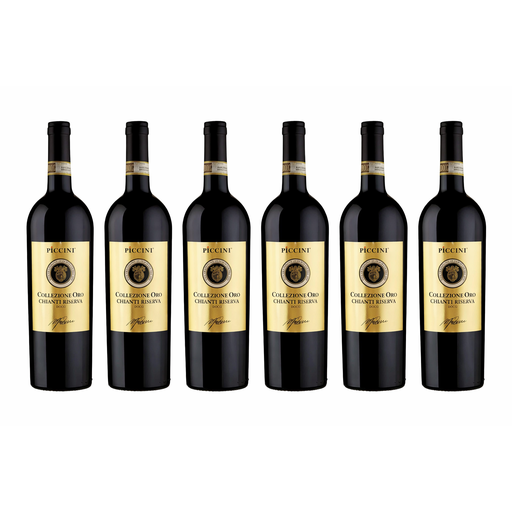
Why this product suits this profile: The Chianti Riserva DOCG designation, 13.5% vol. alcohol content and stated ageing in barriques and oak provide useful details when choosing a structured red wine.
Rather than relying on vague quality claims, the product highlights its designation of origin, ageing, grape variety and recommended serving temperature.
Chianti Riserva DOCG in a case of six, dry, 13.5% vol. and well suited to grilled meat, pasta and rich sauces.
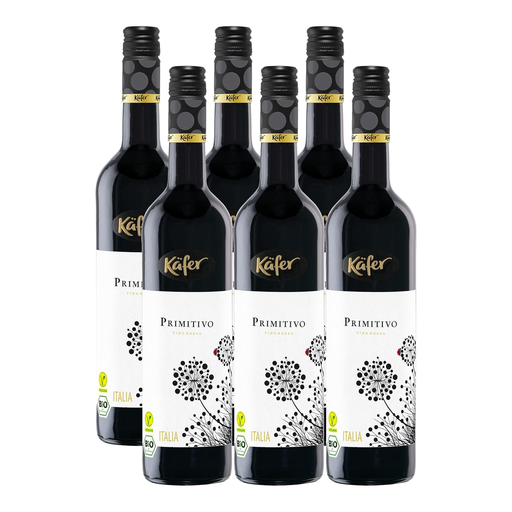
Why this product suits this profile: This case is for buyers looking for a dry red from Puglia with organic and vegan credentials.
The product details explicitly state that the wine is organic, vegan, dry and made from 100% Primitivo. Note that it also contains declared sulphites.
6 x 0.75 l, organic and vegan labelling, a dry style and 100% Primitivo from Puglia.
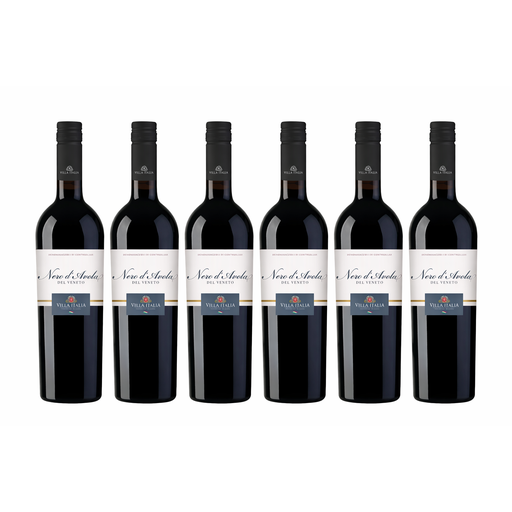
Why this product suits this profile: This case contains a Sicilian red made from Nero d’Avola, with an alcohol content of 12.5% vol. It also gives specific food-pairing suggestions, including pasta, red meat and cheese.
The region, grape variety, alcohol content, bottle volume and allergens are all listed. This makes it easy to compare the wine objectively with Primitivo or Montepulciano.
Nero d’Avola from Sicily, Sicilia DOC, 6 x 0.75 l and a moderate alcohol content of 12.5% vol.
We’ve put together a complete, regularly updated list of products that meet these strict selection criteria and the safety requirements in force across the EU.
Store unopened bottles in a cool, dark place, away from direct sunlight. Screw-cap bottles are usually easy to store upright at home. Bottles with natural corks can be stored on their side if you want to prevent the cork from drying out.
Once opened, wine changes as it comes into contact with oxygen. Depending on the wine, red should be drunk within a few days and resealed in the meantime. Put white and rosé wines in the fridge after opening. Always follow the specific advice on the label or product page.
A case like this contains six bottles of 0.75 litres each, giving you 4.5 litres of wine in total. That’s roughly six to seven bottle servings for a larger gathering, depending on the amount poured.
For pasta with a rich sauce, try Primitivo, Chianti, Nero d’Avola or Montepulciano d’Abruzzo. Lighter dishes may pair better with a lower-alcohol red or an Italian white such as Grillo. The sauce, seasoning and your personal taste all matter.
A case of six can be a good choice if the grape variety, sweetness, alcohol content and food pairings suit your needs. If you’d like to try different styles, compare the product information first or choose individual bottles, such as Barolo DOCG and rosé, separately. That way, you can avoid ending up with six bottles that don’t suit your taste.