
Lieferung heute & morgen

Qualitätsgarantie

Willkommens-Angebote freischalten: KOSTENLOSE Lieferung | Bis zu 80 % RABATT | Kostenlose 30-Tage-JoyPlus-Testphase
App herunterladen
As a Joybuy Product Recommendation Officer, I see professionals struggling with subpar equipment every day. A headset is often the Achilles' heel of the modern workday. Constant connection drops, poor voice quality, or limited range can significantly hamper productivity. Before you make a purchasing decision, it's crucial to understand the common pitfalls that often lead to frustration and poor investments.
Many users opt for headsets designed for recreational use and are then surprised by performance issues in an office setting. Here are two key aspects that are frequently overlooked:
To avoid these problems, you should focus on verifiable technical specifications rather than marketing promises. Two parameters are non-negotiable for professional use.
Unlike Bluetooth, DECT (Digital Enhanced Cordless Telecommunications) technology uses its own protected frequency band (typically 1.9 GHz). This offers decisive advantages for a professional headset for call centres and dynamic workspaces:
A modern work environment demands flexibility. A high-quality headset should connect seamlessly with various endpoints. Ensure the model supports connections for both PC and desk phone. A Jabra headset with a charging base not only recharges the device but also acts as a central hub, allowing you to take calls from multiple sources with a single headset.
Based on these objective criteria, we have identified several models that are well-suited for specific professional needs.
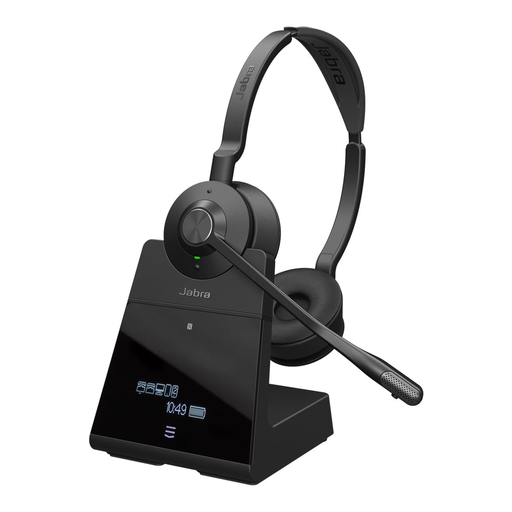
Why This Fits Their Persona: Ideal for users in call centres, open-plan offices, or management who require maximum freedom of movement, superior call quality, and uncompromising security for confidential conversations.
DECT technology bypasses crowded Bluetooth frequencies, ensuring a stable, interference-free connection. The advanced noise-cancelling microphone effectively filters out ambient noise.
Range of up to 150 metres and security via FIPS 256-bit encryption. The base station allows connection to a PC, desk phone, and other devices.
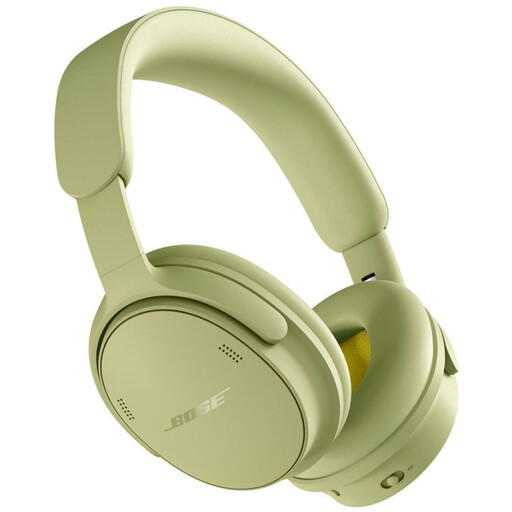
Why This Fits Their Persona: Suitable for executives and home office users who, in addition to clear calls, value first-class noise cancellation for focused work and high-quality music enjoyment.
This model is not just a communication tool. It combines a powerful microphone system for clear calls with industry-leading adaptive noise cancellation (ANC) for undisturbed concentration.
Outstanding adaptive noise cancellation and high audio quality through Bose TrueSpatial technology. Long battery life of up to 24 hours.
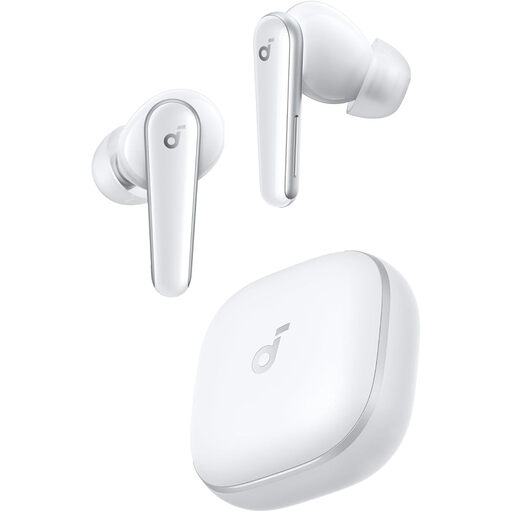
Why This Fits Their Persona: Perfect for professionals who are frequently on the move and need an extremely compact, discreet solution that fits in any pocket but still delivers reliable voice quality for calls.
This in-ear model avoids the bulkiness of over-ear headsets while still providing clear call quality through a system of six microphones and AI-powered noise reduction.
Compact and lightweight in-ear design with a charging case. Adaptive Noise Cancelling (ANC 3.0) and support for high-resolution audio (LDAC).
We have compiled a complete, up-to-date list of products that fully meet these strict selection criteria and German safety regulations.
The main difference lies in the wireless technology used. DECT utilises a dedicated frequency band, resulting in a greater range (up to 150 m), less interference, and higher security. Bluetooth shares the 2.4 GHz band with many other devices, which can lead to a shorter range and potential connection issues in office environments. For professional use in busy settings, DECT is often the more reliable choice.
Battery life varies depending on the model and usage. Professional DECT headsets like the Jabra Engage 75 SE typically offer enough talk time to cover a full workday (e.g., up to 13 hours according to the manufacturer). The included charging base ensures the headset is recharged between calls and ready for the next day.
Yes, this is one of the core features of the Jabra Engage 75 SE. The base station allows simultaneous connection to up to five devices, including a PC (via USB), a desk phone, and Bluetooth-enabled mobile devices. You can manage calls from different sources using a single headset, which significantly increases flexibility in your daily workflow.