For staggered mealtimes
If individual, already-baked potatoes are being served at different times, you need a straightforward way to reheat each one. Safe chilling between meals matters more than keeping food warm indefinitely.


For reheating individual, already-baked jacket potatoes at different mealtimes, an easy-to-use solo microwave is a sensible starting point, as long as your usual plate fits inside. A flatbed may be more practical for large or square plates; a grill or combination microwave is worth considering if you also want a browned finish. No microwave can replace safe storage in the meantime: the BfR recommends cooling prepared food promptly and reheating it just before eating.
If individual, already-baked potatoes are being served at different times, you need a straightforward way to reheat each one. Safe chilling between meals matters more than keeping food warm indefinitely.
If you share a kitchen and use different plates, including square ones, check that they fit inside the microwave. A flatbed without a turntable can make it easier to position certain types of crockery.
If you want a browned finish as well as a hot potato, compare models with a grill function. This adds another cooking mode, and you’ll need to check which dishes and accessories are suitable.
For staggered mealtimes, the main things to consider are ease of use, safe storage, enough room for your crockery and whether you need a browning function.
A good fit if: several people take turns reheating individual chilled portions, and clear time and power controls matter more than browning.
Consider: If the microwave has a turntable, your plate needs to fit on it; a separate grill function isn’t included with a solo microwave.
A good fit if: you often use large or square plates and find a turntable gets in the way.
Consider: Not having a turntable doesn’t guarantee even heating; plate size and temperature distribution still need to be considered.
A good fit if: you want a browned finish as well as reheating.
Consider: The grill is an additional mode. Make sure the instructions, suitable accessories and extra space and cleaning involved work for your kitchen.
| Buying priority | What to check | Who is it important to? |
|---|---|---|
| Easy to use | Check the time and power controls, as well as the start and stop buttons, on the model you’re considering. If the microwave will be shared, look for a clear end-of-cycle signal too. | If I want to reheat my portion without entering lots of settings, straightforward controls are essential. Around 36% of consumers prioritise ease of use. |
| Safe storage and reheating | The BfR recommends cooling prepared food promptly and reheating it again just before eating. For potatoes baked in foil, the CDC also sets out specific cooling and hot-holding conditions. | If there’s a long gap between baking and eating, I need to plan storage and reheating separately. Around 29% of consumers prioritise this safe approach. |
| Room for plates | Compare the width of your largest regularly used plate with the usable cooking area. If there’s a turntable, allow for the space it needs to rotate too. | If we share different plates, including square ones, I want to know they’ll actually fit. Around 21% of consumers prioritise space for their crockery. |
| Browned finish | Check whether the specific model has a grill mode and which dishes or accessories are approved for use with it. | If I want a browned finish, not just a hot centre, a separate grill mode may be worth considering. Around 14% of consumers prioritise browning. |
With staggered mealtimes, the risk also lies in the time between baking and reheating. The BfR points out that some bacterial toxins are heat-stable.
Plan chilling and reheating separately. Don’t assume a microwave can make a potato safe again if it hasn’t been stored safely.
The capacity in litres doesn’t tell you whether a large or square plate will fit. If there’s a turntable, your crockery also needs to sit securely on it and be able to rotate freely.
Measure the largest plate you use regularly and compare it with the usable cooking area, door opening and turntable of the specific model.
Microwave mode reheats food; the separate grill function is for browning. You don’t need the extra mode just to reheat food.
If you only need to reheat food, start by comparing solo models. If you want to brown the surface, check the grill mode and approved accessories in the instructions.
A grill function may take up extra space and mean more cleaning.
The freestanding solo model FFL023MS2 may suit buyers looking for QuickStart or a saved setting for portions they reheat regularly.
The MW 7770, with a turntable and rotary controls, is an alternative to the flatbed solo model MW 7761, which has no turntable.
The NN-GD34 combines microwave cooking with a separate grill, making it relevant if you want additional browning.
The solo model MS23K3515AK/EG offers digital controls, programmes and a 23 l capacity.
The FE023LMB2 is a grill option; the FF023LMB2 is a separate solo model with a favourite button.
The Joybuy microwaves featured here range from solo models for reheating individual portions to options with a grill function. Compare the controls and plate fit with whether you’d also like a browned finish.
 No image available
An option if you want to set the time and power manually for individual reheating sessions.
Inverter, 19 l, 700 W, six power levels, defrost function and turntable.
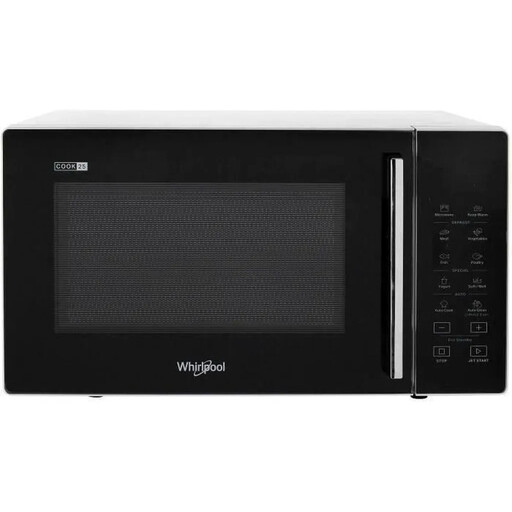 No image available
An option if you’d like to use Quick Start for portions you reheat regularly and want to check the turntable size.
25 l, 900 W, Jet Start, seven power levels and a 27 cm turntable. The listed keep-warm function doesn’t mean potatoes can be stored safely.
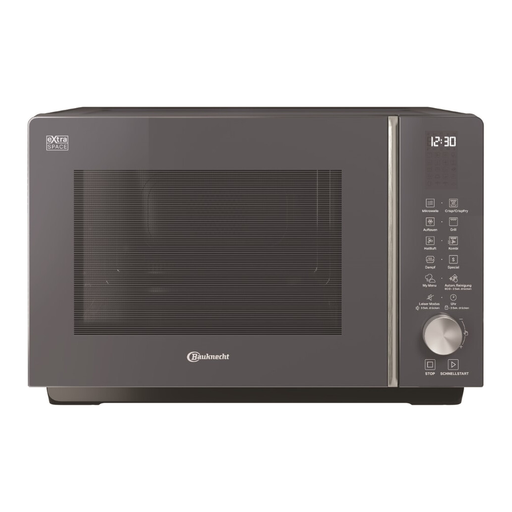 No image available
An option if you’d like to use grill or Crisp functions as well as reheat food.
25 l, flat cooking surface without a turntable, grill and Crisp functions. The instructions state that crockery and accessories must be suitable for grill or Crisp use.
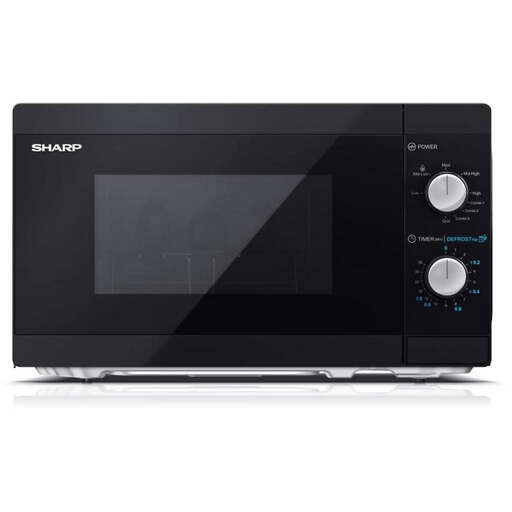 No image available
An option if you’d like to compare manual controls and an additional grill mode.
20 l, 800 W microwave power, 1000 W grill power, five power levels and a 25.5 cm turntable. The product description warns that grill surfaces get hot.
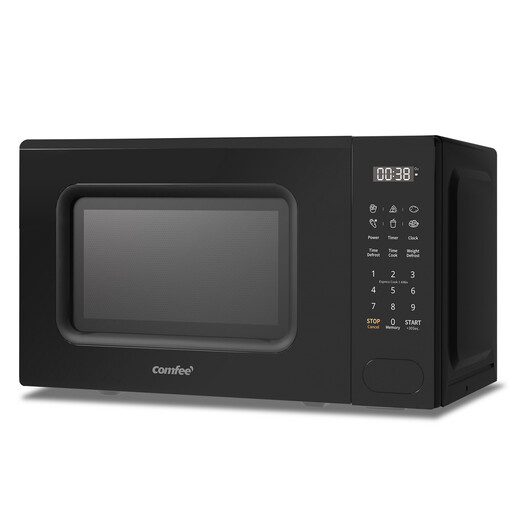 No image available
An option if you’d like to choose between Quick Start and a pre-set potato programme.
20 l, 700 W, six pre-set programmes and eleven power levels. A potato programme doesn’t remove the need to check that the food is heated through.
No. The BfR recommends cooling prepared food promptly for storage and reheating it just before eating. For potatoes baked in foil, the CDC recommends keeping them at 140 °F or hotter until serving, or cooling them at 40 °F or below with the foil loosened. This specific temperature advice applies to potatoes baked in foil.
Check the centre too, as the time and wattage setting alone don’t prove that the potato has heated evenly. The BfR recommends heating food to 70 °C throughout for at least two minutes. According to the HEA, smaller portions can help achieve more even temperatures; reheating can’t reliably undo unsafe storage.
Remove the foil before using the microwave. The instructions for the Severin MW 7761 warn against metal containers and utensils unless they’re specifically approved for microwave use. For plastic crockery, follow the stated temperature and wattage limits and check that it’s suitable for the intended use.
Your statutory consumer rights are separate from a voluntary guarantee; if there’s a fault, the first step may be repair or replacement. Electrical appliances must be collected separately and can generally be taken to local collection points free of charge. The Verbraucherzentrale explains your statutory rights, while the Umweltbundesamt provides information about the separate collection of electrical waste.