
Lieferung heute & morgen

Qualitätsgarantie

Willkommens-Angebote freischalten: KOSTENLOSE Lieferung | Bis zu 80 % RABATT | Kostenlose 30-Tage-JoyPlus-Testphase
App herunterladen
Japanese konjac jelly combines fruity flavour with an elastic, slightly firm texture. The portion cups or sachets are usually ready to eat and are ideal for work, school, eating on the go or as a quick dessert. However, if you want to buy Konjac Jelly, you should not be guided solely by fruit imagery or terms such as “light”.
A jelly may contain less energy than other sweets while still providing sugar. According to the product declaration, TARAMI Oishii Konjac Jelly Peach contains 60 kcal and 12.9 g of sugar per 100 g. For a 150 g pack, this works out at around 90 kcal.
Other products show significantly different values. According to the stated information, Shimonita Konjac Kobo Konjac Jelly Apple Flavor contains 102 kcal and 17.7 g of sugar per 100 g. That is why it is worth checking the nutrition table rather than relying on the product name.
According to their declarations, many varieties are fat-free, but contain sugar, glucose syrup, fruit juice or sweeteners. “0 g fat” describes just one part of the nutritional information. If you are looking for a fat-free jelly, you should also compare carbohydrates, sugar, ingredients and portion size.
The term “vegan” should not automatically be inferred from the konjac base either. Gelling agents, flavourings and possible traces must be checked against the information for the individual product.
Konjac jelly should not be confused with a softer fruit pudding. Depending on the recipe, it may be elastic, firm or chewy. Some products expressly advise chewing the jelly thoroughly and not swallowing it whole. Children and older people should be supervised while eating it. Lids and film should never be put in the mouth.
Three details are particularly important for a fair comparison:
According to the declaration, TARAMI Oishii Konjac Jelly Muscat contains 54 kcal and 11.5 g of sugar per 100 g. TARAMI Oishii Konjac Jelly Grape lists 66 kcal and 14.1 g of sugar per 100 g. The values therefore cannot be predicted from the flavour alone.
Konjac powder is usually just one part of the recipe. Depending on the product, ingredients may include fruit juice concentrate, sugar, dextrin, carrageenan, xanthan or other gelling and thickening agents. These ingredients affect the texture and flavour.
For allergy sufferers, the specific labelling on the product page and packaging is what matters. According to the recipe information, TARAMI Oishii Konjac Jelly Peach and comparable TARAMI varieties do not list any of the 14 major EU allergens. At the same time, the product information states that unintended traces of various ingredients may be present. This should be taken into account when assessing an individual allergy.
“Japanese jelly snack” can mean different things. Some products are made in Japan, while other konjac products come from China, South Korea or Thailand. If Japanese origin is important to you, check for the statement “Made in Japan” or verify the country of origin.
Most of the products mentioned are Ready-to-eat Snacks. They require no preparation and can be eaten straight after opening. As a rule, they should be stored in a dry, cool place and protected from direct sunlight and high temperatures. Once an individual sachet has been opened, the portion should be eaten immediately.
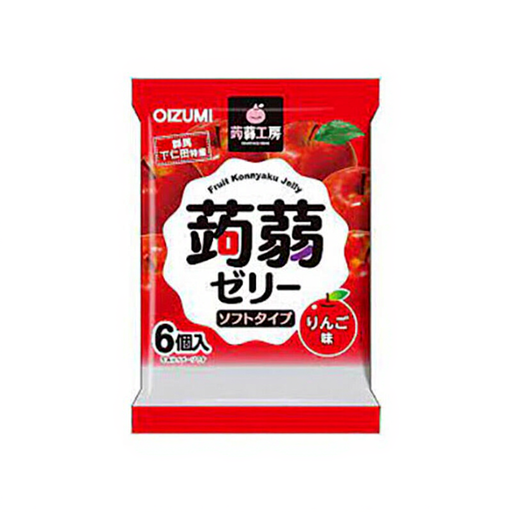
Why this product suits this profile: The individual sachets are ideal for lunchboxes, desks or snacking on the way to work. The apple flavour is an accessible choice for those trying konjac jelly for the first time.
The nutritional information lists 102 kcal and 17.7 g of sugar per 100 g. This puts the supposedly light sweet in proper perspective.
According to the product information, 0 g fat per 100 g, six individual pieces and made in Japan.
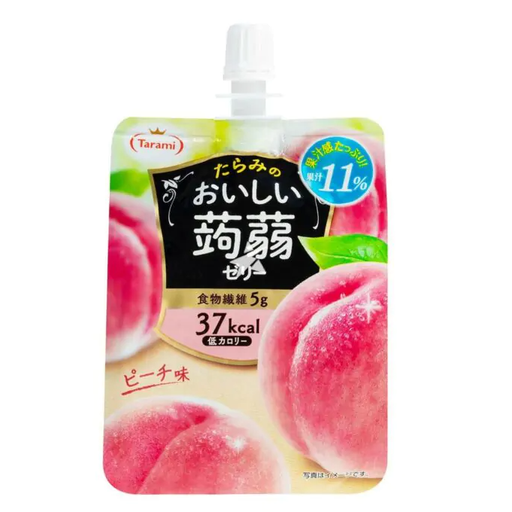
Why this product suits this profile: The recipe and nutritional information are provided in detail. The intense peach flavour and slightly elastic texture will appeal to fans of Japanese sweets.
The information makes it clear that “fat-free” does not mean “sugar-free”: 12.9 g of sugar is listed per 100 g.
According to the declaration, 60 kcal, 0 g fat and 1.0 g fibre per 100 g; ready to eat straight away.
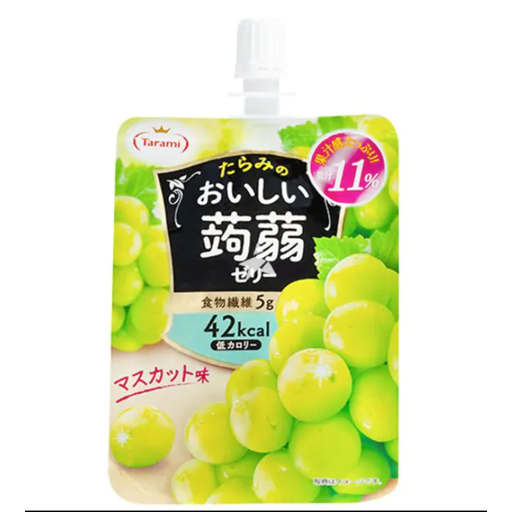
Why this product suits this profile: The 150 g portion and room-temperature storage are practical for the cupboard, office or days out. Muscat grape flavour offers a change from peach, apple or strawberry.
The 54 kcal per 100 g are listed together with 11.5 g of sugar. This makes it easy to compare with other varieties.
0 g fat, 1.2 g fibre per 100 g and a slightly elastic texture according to the product information.
We have put together a complete, regularly updated list of products that fully meet these strict selection criteria and the safety regulations applicable in the EU.
The selection ranges from peach, grape, muscat grape, apple, strawberry and mango flavours to lychee. For fruity notes with Japanese origins, TARAMI varieties are a good choice. According to the declaration, TARAMI Oishii Konjac Jelly Strawberry contains 53 kcal and 11.2 g of sugar per 100 g.
Even with a product explicitly labelled as vegan, such as Delief Konjac Jelly Mango (Vegan) 120g, shoppers should still check the allergen declaration. The product information lists mango as an allergen. According to the description, the product comes from South Korea and is therefore not automatically a Japanese product.
If you are looking for larger quantities for your household, you can also compare multipacks such as Jele Light-Grape 6x125 g or Jele Light-Lychee 6x125 g. These varieties are fruity jelly snacks from Thailand and, according to the product information, are listed at 40 and 36 kcal per 100 g respectively. Their origin, sweeteners and additives differ from those of Japanese konjac jelly.
According to the nutritional declarations, some varieties contain between around 53 and 66 kcal per 100 g, while other options contain around 100 kcal or more. Whether a product classified as low-calorie fits into your own diet depends on the portion size and your overall consumption. The specific nutrition table on the product page or packaging is the deciding factor.
Unopened products can often be stored at room temperature. Direct sunlight and high temperatures should be avoided. Some jellies taste better chilled. Once opened, the individual portion should be eaten immediately; the relevant manufacturer’s instructions take precedence.
The elastic texture may pose a choking risk. The jelly should be chewed thoroughly and not swallowed whole. Children and older people should be supervised while eating. Read the safety instructions on the packaging before buying and consuming the product.