
Lieferung heute & morgen

Qualitätsgarantie

Willkommens-Angebote freischalten: KOSTENLOSE Lieferung | Bis zu 80 % RABATT | Kostenlose 30-Tage-JoyPlus-Testphase
App herunterladen
Finding the perfect Japanese teacup set can be a challenge. It's not just about a vessel for drinking; it's a piece of culture that blends aesthetics with function. Many people seek authentic designs that also meet the demands of modern life, such as being dishwasher-safe.
This article serves as a practical guide. It outlines objective criteria for making your selection and presents a curated collection of sets that stand out for their material, design, and versatility. Our goal is to provide you with an informed basis for your decision, helping you find the right set for your tea enjoyment or as a thoughtful gift.
To make an informed choice, several key aspects are relevant. The following points will help you objectively evaluate the features of different sets.
The cornerstone of any good set is its material. Japanese ceramic teacups are renowned for their durability and ability to retain heat. Look for products made from high-quality, iron-rich clay. The glaze is another important hallmark of quality. Many sets combine a rough, textured exterior for a pleasant tactile experience with a smooth interior glaze. This not only simplifies cleaning but also allows the tea's true colour to shine through. From a health perspective, it is crucial that the materials and glazes used are declared lead- and cadmium-free.
Handleless teacups, often called Yunomi cups in Japan, are characteristic of Asian tea culture. This cylindrical shape is designed for everyday tea enjoyment. Holding the cup with both hands encourages a mindful appreciation of its warmth and aroma. These versatile cups are often suitable not only for tea but also as sake cups or for coffee, milk, and cold drinks. Their understated elegance makes them a subtle yet stylish element on any table.
Capacity is a practical consideration. Japanese teacups typically have a smaller volume (often between 150 ml and 220 ml) than their European counterparts, which supports the enjoyment of smaller, more concentrated infusions. For daily use, modern conveniences are also important. Check if the tea bowl set is suitable for the microwave, oven, and dishwasher. These features significantly enhance its functionality and make the set a practical everyday companion—an important factor if it's intended as a teacup set gift.
Based on the criteria above, we have compiled a selection of sets that distinguish themselves through their material quality, design, and functionality.
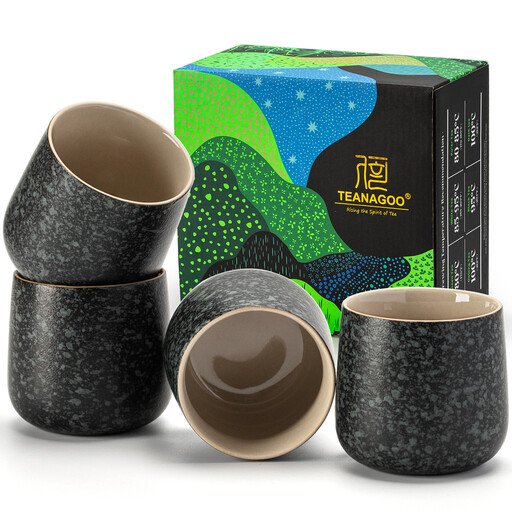
What Makes It Stand Out This set impresses with its generous 205 ml capacity and a striking dual texture. The rock-imitation glaze on the exterior offers a natural, tactile grip, while the smooth interior simplifies cleaning and clearly displays the tea's colour. Its high versatility is highlighted by its suitability for the microwave, oven, freezer, and dishwasher.
Pros:
Who Is It For? This set is ideal for users who prefer a larger cup for various hot and cold drinks and value maximum everyday practicality.
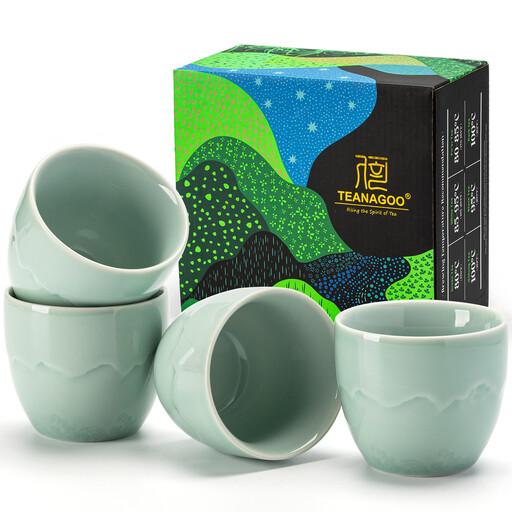
What Makes It Stand Out With its classic celadon-blue glaze and a texture reminiscent of natural stone, this set embodies a traditional Asian teacup aesthetic. The 160 ml capacity is well-suited for traditional tea ceremonies or daily enjoyment. According to the manufacturer, the iron-rich ceramic clay construction is free of lead and cadmium.
Pros:
Who Is It For? Ideal for lovers of traditional Asian aesthetics who are looking for a tea bowl set in a classic colourway and appreciate an authentic feel.
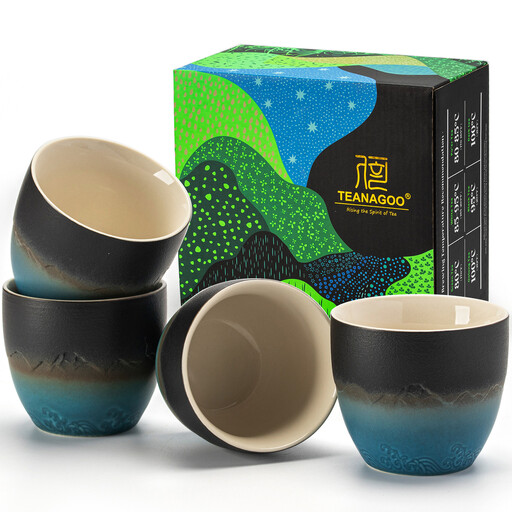
What Makes It Stand Out This set blends traditional craftsmanship with a modern design. The navy blue colour gradient (ombre effect), combined with the rock-like texture, makes each cup a visual highlight. With a 160 ml capacity, it is well-suited for enjoying Japanese and Chinese tea varieties.
Pros:
Who Is It For? Perfect for design-conscious individuals seeking a modern interpretation of classic Yunomi cups and desiring a set with high aesthetic appeal.
If these recommendations don't quite match what you're looking for, or if you'd like to expand your tea service with additional items, it's worth exploring our wider collection.
Discover more ceramic products for your home
1. Are handleless Japanese teacups suitable for hot beverages? Yes, the cups are designed for this purpose. The typically thicker ceramic walls insulate the heat, so the outside becomes pleasantly warm but not too hot. Holding the cup with both hands is part of the traditional tea experience, allowing you to feel the warmth of the beverage.
2. What is the difference between a Yunomi and a Chawan? Both are Japanese tea bowls, but they serve different purposes. Yunomi cups are generally taller and narrower, used for the informal, everyday enjoyment of leaf teas like Sencha or Bancha. A Chawan is a wider, more bowl-shaped cup used specifically for preparing and drinking Matcha as part of the Japanese tea ceremony.
3. What is the best way to care for Japanese ceramic teacups? Many modern Japanese ceramic teacups are dishwasher-safe. However, to preserve the special texture of the outer glaze over the long term, gentle hand washing is often recommended. The smooth inner glaze typically makes cleaning very easy. Additionally, avoid extreme temperature shocks (e.g., moving from the freezer directly into the microwave) to ensure the material's longevity.
Your Joybuy Product Recommendation Officer