
Lieferung heute & morgen

Qualitätsgarantie

Willkommens-Angebote freischalten: KOSTENLOSE Lieferung | Bis zu 80 % RABATT | Kostenlose 30-Tage-JoyPlus-Testphase
App herunterladen
Finding authentic Thai jasmine rice can be a challenge, especially when you have specific requirements. Whether for the needs of a restaurant, stocking up for a large family, or preparing special dishes in your home kitchen, the selection is vast, and quality differences are often not apparent at first glance. This guide is here to help you make an informed decision. We will introduce various types of jasmine rice and explain the key factors to consider when buying, so you can find the perfect product for your needs.
To make the best choice, it's helpful to have some basic knowledge about the different types and quality characteristics of jasmine rice.
One of the first decisions you'll make concerns the grain's integrity.
If you are looking for authentic Thai rice, the "Hom Mali" seal is a key indicator. This seal is awarded by the Thai government and certifies that the product is genuine Hom Mali rice, renowned for its distinct floral aroma. This fragrant rice is grown only in specific regions of Thailand and is considered the gold standard for high-quality jasmine rice.
The choice of package size depends on your individual consumption.
Here is a selection of different jasmine rice products that cater to various needs and applications.
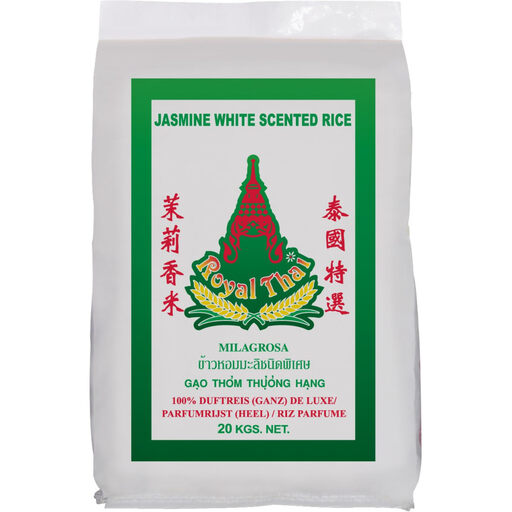
What Makes This Product Stand Out This rice consists of 100% broken grains of Thai Hom Mali jasmine rice. Although the grains are broken, they fully retain the characteristic floral scent and the slightly sticky, sweet texture of premium whole-grain jasmine rice when cooked.
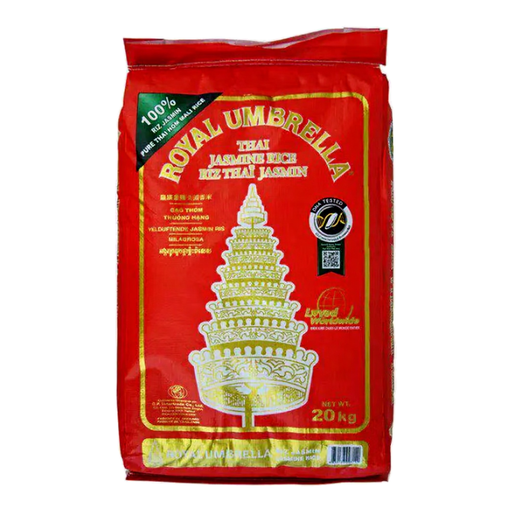
What Makes This Product Stand Out ROYAL UMBRELLA is a well-known brand for high-quality Hom Mali rice. This product consists of whole, carefully selected rice grains. When cooked, the rice develops a soft, fluffy, and slightly sticky consistency, typical of first-class jasmine rice.
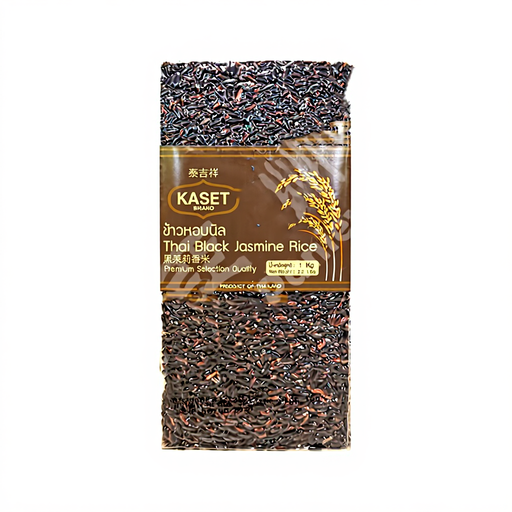
What Makes This Product Stand Out This black jasmine rice is a visually and tastefully unique variety. The deep purple colour that develops during cooking makes it an eye-catcher on any plate. It has a soft, slightly sticky consistency and a nutty aroma that distinguishes it from white jasmine rice.
The selection presented here already covers a broad spectrum. However, if you are looking for other brands, special varieties, or different pack sizes, you can find more products in our comprehensive category.
? Discover our entire range of Thai Jasmine Rice here
1. What is the difference between jasmine rice and basmati rice? Although both are considered long-grain aromatic rices, they come from different regions and have distinct characteristics. Jasmine rice primarily comes from Thailand and has a floral aroma and a slightly sticky, soft texture after cooking. Basmati rice is mainly grown in India and Pakistan, has a nuttier aroma, and cooks up into longer, drier, and more separate grains.
2. How do you cook Thai jasmine rice correctly? For a fluffy consistency, it is recommended to rinse the rice once or twice briefly before cooking to remove excess starch. The usual ratio of rice to water is 1:1.25 (i.e., 1 cup of rice to 1.25 cups of water). Place the rice and water in a pot, bring to a boil, reduce the heat to the lowest setting, cover with a lid, and let it steam for about 15–20 minutes until all the water is absorbed. Then, remove the pot from the heat and let the rice rest for another 5–10 minutes with the lid on.
3. Is Hom Mali rice the same as jasmine rice? Not all jasmine rice is Hom Mali rice. "Jasmine rice" is a general term for a rice variety with a floral aroma. "Thai Hom Mali," on the other hand, is a protected designation for a specific, high-quality variety of jasmine rice grown exclusively in Thailand and known for its particularly intense aroma. So, if you want to buy Thai jasmine rice and value the highest quality, the "Hom Mali" designation is a reliable indicator.