
Lieferung heute & morgen

Qualitätsgarantie

Willkommens-Angebote freischalten: KOSTENLOSE Lieferung | Bis zu 80 % RABATT | Kostenlose 30-Tage-JoyPlus-Testphase
App herunterladen
Jasmine rice is a practical staple for many households, restaurants and catering businesses, providing the perfect base for curries, stir-fries and side dishes. The choice ranges from small bags to bulk rice packs weighing 18 or 20 kg. However, not every pack is suitable for every purpose. If you focus only on terms such as “premium”, “AAA” or “aromatic”, it is easy to overlook important information about origin, grain type, packaging and storage.
“Fragrant rice”, “Thai Fragrant Rice” and “Jasmine Rice” often describe aromatic long-grain rice, but they are not automatically synonymous with Thai Hom Mali rice. When buying, you should therefore check the country of origin and the ingredients list. If it says “100 % Thai Jasmine Rice”, the composition is clear. With blends or unclear origin details, classification is more difficult.
A bag of 18 kg jasmine rice or 20 kg jasmine rice can make sense for a commercial kitchen, but at home it requires enough dry, sealable storage space. Once opened, rice should be protected from moisture, heat, direct sunlight and pests. For occasional meals, a 5 kg pack of jasmine rice is often easier to manage.
Water ratios and cooking times can vary depending on the rice variety, harvest, proportion of broken grains and cooking appliance. Some products specify a ratio of 1:1, while others recommend around 1:1.2 or 1:1.5. The instructions on the relevant packaging are the ones that matter. Too much water can result in a soft texture, while too little water can leave the grains hard.
Thai jasmine rice is often associated with a floral fragrance and a soft, slightly sticky texture. Vietnamese jasmine rice can also be aromatic; for example, Vietnam is specified as the country of origin for DOUBLE PANDA ST25. Cambodian jasmine rice is another option for shoppers who want to compare different origin profiles.
The designation “Thai Hom Mali” should only be regarded as a specific variety characteristic if it is clearly stated on the product. One example is Sunlee THM Jasmine Rice, whose ingredients are listed as 100% Thai Hom Mali jasmine rice.
Long, whole grains are often ideal as a visually appealing accompaniment to curry and Asian dishes. With “Broken Rice”, or broken rice, the grains are split during processing. This can help the rice cook more quickly and absorb liquid effectively. According to its product description, Green Dragon Thai Fragrant Double Broken 18kg is recommended for rice porridge and congee. For loose, well-separated grains, a long-grain product is generally the more suitable choice.
For the products selected here, the ingredients list generally consists of 100% jasmine rice or rice. Allergens are declared differently depending on the item. For example, “Gluten” is listed under allergy information in the product data for GN Cambodian Jasmine Rice, while other items specify no allergens. You should therefore check the information on the specific packaging before buying and consuming the product.
The nutritional values are similar for uncooked rice: the products listed contain around 349 to 365 kcal per 100 g and are predominantly made up of carbohydrates. These values refer to the respective manufacturer’s information, not to the finished cooked portion.
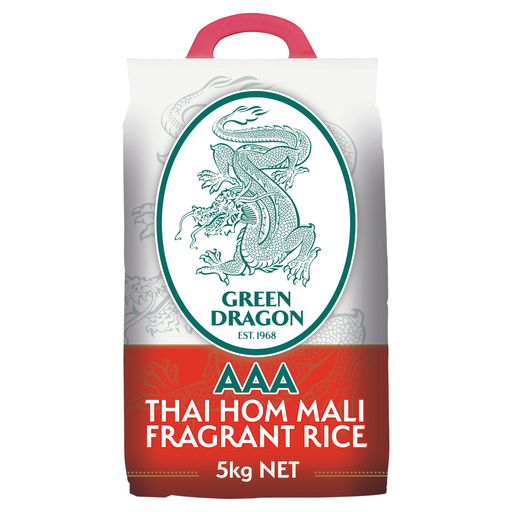
Why this product suits this profile: The 5 kg pack is suitable for households that regularly cook rice for curry and Asian dishes but do not want to store a large sack. According to the product information, it comes from Thailand and is described as Thai Hom Mali Fragrant Rice.
The moderate pack size reduces the risk of storing more rice than you actually need. Cooking and storage instructions are provided in the product description.
5 kg net weight; 100% Thai Hom Mali Fragrant Rice according to the ingredients list.
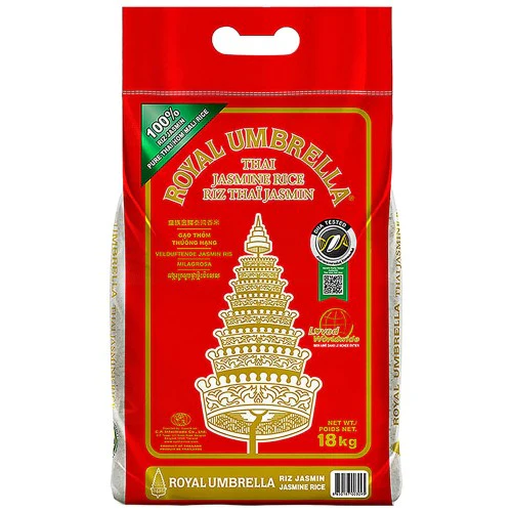
Why this product suits this profile: This pack is aimed at households and professional kitchens with regular consumption. Thailand is specified as the country of origin, and the ingredients list states 100% Thai Jasmine Rice.
Clear information about origin, ingredients and net weight makes it easier to compare this product with other Thai Hom Mali products.
18 kg net weight; instructions with a water ratio and an additional resting time after cooking.
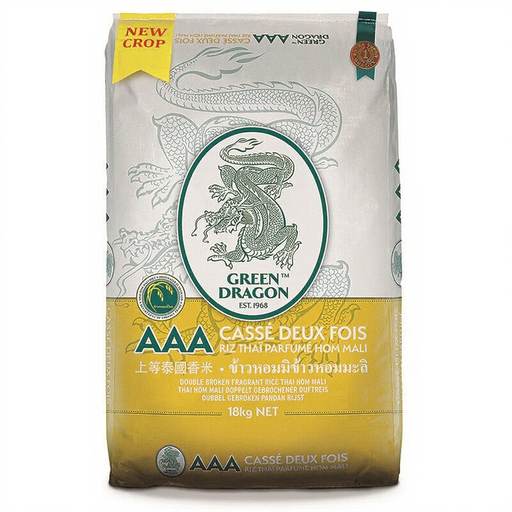
Why this product suits this profile: The stated double-broken content is suitable for congee, rice porridge and dishes where a softer texture is preferred. The 18 kg pack is a good fit for commercial kitchens and catering businesses.
The grain type is clearly stated. This helps you avoid buying broken rice for dishes that require visually long, separate grains.
18 kg net weight; according to the product data, 100% Thai Jasmine Rice, Double Broken.
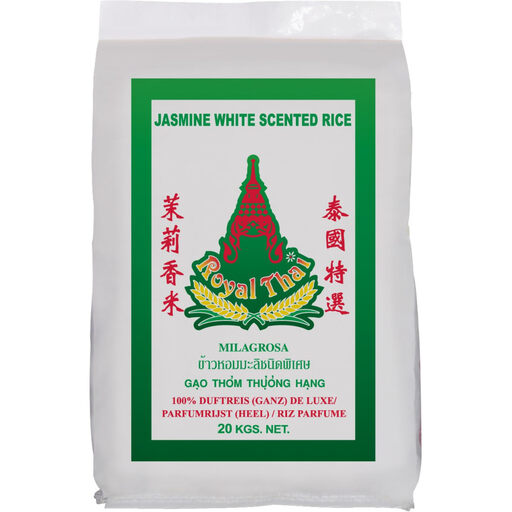
Why this product suits this profile: The 20 kg bulk rice pack is designed for high, predictable consumption. The product is listed as 100% Jasmine White Rice from Thailand and described as long grain.
The clearly stated quantity and cooking instructions help with portion planning and kitchen processes. Check your available storage space before ordering.
20 kg net weight; stated cooking time of approximately 12 to 15 minutes.
For consistent results, jasmine rice should first be rinsed according to the instructions on the packaging. Depending on the product, one to three rinses may be recommended. A suitable water ratio and a short resting time can then help achieve the desired consistency. A rice cooker makes it easier to prepare larger quantities, but it is not essential.
Opened sacks should be stored in an airtight container. Keep the container in a cool, dry place and not directly on the floor. With bulk packs, it is sensible to keep only part of the rice in the kitchen and store the rest sealed. The best-before date on the packaging remains the deciding factor.
Jasmine rice is generally an aromatic long-grain rice with a softer, slightly stickier texture. Basmati rice is often associated with longer, more separate grains. Jasmine rice is frequently chosen for Thai curries, Vietnamese dishes and many stir-fries because of its softer texture.
This depends on the product, harvest and preparation method. The product data gives ratios of around 1:1 to 1:1.5 for rice to water. The specific instructions on the packaging should take priority. After cooking, allowing the rice to rest for five to ten minutes can help distribute the remaining moisture.
Uncooked rice can be stored for a long time if kept in a dry, cool and protected place. The key factors are the best-before date, an airtight seal and protection from moisture and pests. For households, a 5 kg pack is often easier to use up completely; catering businesses can plan consumption from an 18 or 20 kg pack more effectively.