
Lieferung heute & morgen

Qualitätsgarantie

Willkommens-Angebote freischalten: KOSTENLOSE Lieferung | Bis zu 80 % RABATT | Kostenlose 30-Tage-JoyPlus-Testphase
App herunterladen
The selection of cream on the supermarket shelf can be overwhelming. For daily use, whether in coffee, for cooking, or in desserts, many consumers are looking for a practical and affordable solution. The "Jeden Tag" brand products are designed to meet this need. This guide introduces various types of Jeden Tag Cream and offers guidance to help you find the perfect product for your kitchen.
To make the right choice, it's helpful to understand a few basic properties of cream. These criteria will help you objectively evaluate a product's functionality and intended use.
Fat content is the key factor determining how cream can be used. The differences are significant and affect both texture and cooking performance:
For stocking your pantry, long-life cream, also known as UHT cream, is a convenient option. Through Ultra-High Temperature (UHT) processing, the cream is sterilised and can be stored unopened for months at room temperature. This makes it a flexible and often affordable cream alternative for the household, as it can be used as needed without spoiling quickly.
For individuals with lactose intolerance, special lactose-free cream is available. In these products, the enzyme lactase is added to break down the milk sugar (lactose) into its components, making the cream more digestible. In terms of fat content and functionality, these products are often on par with conventional cream.
Based on the diverse needs of everyday cooking, we have curated a selection of "Jeden Tag" cream products. Each product serves a specific purpose and is distinguished by its functional properties.
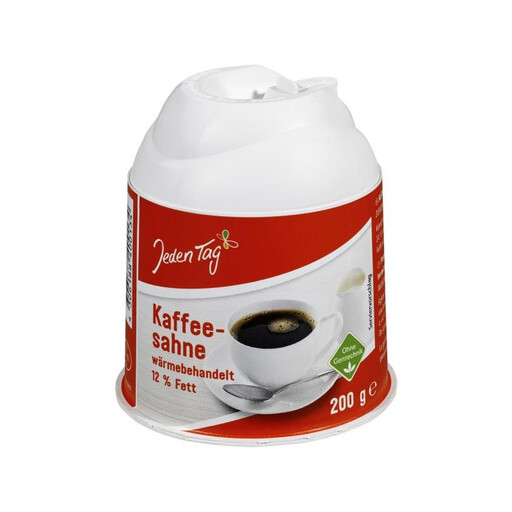
What Makes This Product Stand Out This coffee cream, with 12% fat, is specifically designed for use in hot beverages. As a UHT-treated product, it offers a long shelf life, making it ideal for pantry stocking. According to the manufacturer, it is produced without genetically modified ingredients.
Product Specifications
Who Is It For? This product is aimed at consumers who enjoy a splash of cream in their daily coffee or tea and are looking for a long-lasting, hassle-free solution for their pantry.
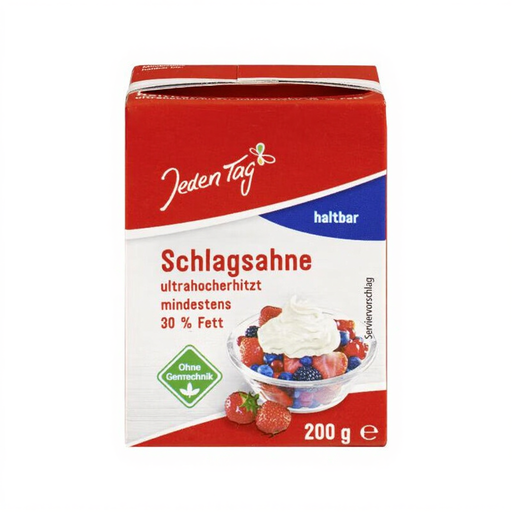
What Makes This Product Stand Out With a fat content of at least 30%, this cream meets the requirement to be used as whipping cream. It is also UHT-treated and therefore has a long shelf life. Its versatility makes it an all-rounder in the kitchen, suitable for desserts, cake fillings, and enriching hot dishes.
Product Specifications
Who Is It For? Ideal for home cooks and bakers who need a reliable, shelf-stable cream that is suitable for both whipping and as a cream for cooking.
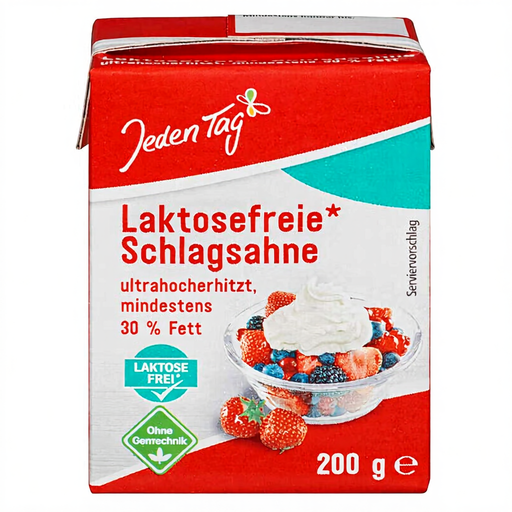
What Makes This Product Stand Out This lactose-free cream combines a high fat content of 30% with excellent digestibility for people with lactose intolerance. Thanks to the added lactase enzyme, it offers the full flavour of cream without the associated discomfort. As a UHT cream, it is also long-lasting and versatile.
Product Specifications
Who Is It For? This product is the perfect choice for individuals with lactose intolerance who don't want to miss out on the creamy texture and functionality of a high-fat cream for whipping and cooking.
The "Jeden Tag" brand offers a focused selection for everyday needs. If you are looking for different package sizes or other dairy products, you can find additional alternatives in our 200g Milk category.
1. Can you whip UHT cream? Yes, UHT cream can be whipped, provided it has a fat content of at least 30%. For best results, the cream should be thoroughly chilled in the refrigerator for several hours before whipping (ideally to 4–6 °C).
2. What is the difference between coffee cream and cooking cream? The main difference is the fat content. Coffee cream typically has 10–15% fat and is optimised for hot beverages. Cooking cream has a slightly higher fat content (approx. 15–25%) and is more heat-stable, making it suitable for thickening sauces. Neither variety is intended for whipping.
3. How long does opened Jeden Tag cream last? Once opened, any type of cream, including UHT cream, should be stored in the refrigerator. It will generally last for 3 to 4 days. Always refer to the manufacturer's specific instructions on the packaging.