
Lieferung heute & morgen

Qualitätsgarantie

Willkommens-Angebote freischalten: KOSTENLOSE Lieferung | Bis zu 80 % RABATT | Kostenlose 30-Tage-JoyPlus-Testphase
App herunterladen
Jelly, a classic dessert, is a popular choice for parties, kids' birthdays, or simply as a refreshing treat. However, its preparation can raise a few questions: should you make it traditionally from scratch with leaf gelatine, or opt for a convenient jelly powder? And what's the difference compared to an instant version that requires no cooking?
This article serves as your guide. We will introduce various product types and explain their applications to provide an objective basis for your decision—whether you're planning an elaborate cake or preparing a quick dessert for the family.
Selecting the right product depends on your preferred preparation method, the time you have, and the intended use. Here are the key differences you should know.
Those who want to make jelly from scratch typically use leaf gelatine. This method offers maximum control over all ingredients. You can determine the type and amount of liquid (e.g., fruit juice), the sugar content, and any additional flavourings yourself. This is ideal for custom recipes or when you need to be mindful of specific ingredients.
In contrast, there is the classic jelly powder. This dessert powder already contains the gelling agent and often flavourings and colourings as well. You simply need to boil it with water and sugar according to the instructions. The result is a reliable and flavour-consistent wobbly jelly.
For an especially time-saving preparation, there is instant jelly. These products are designed to create a no-cook jelly. The powder is simply dissolved in hot water and then only needs to set in the fridge. Sugar is usually already included in these mixes, which further simplifies the process.
Based on the different preparation methods, we have compiled a selection of products that cater to various needs.
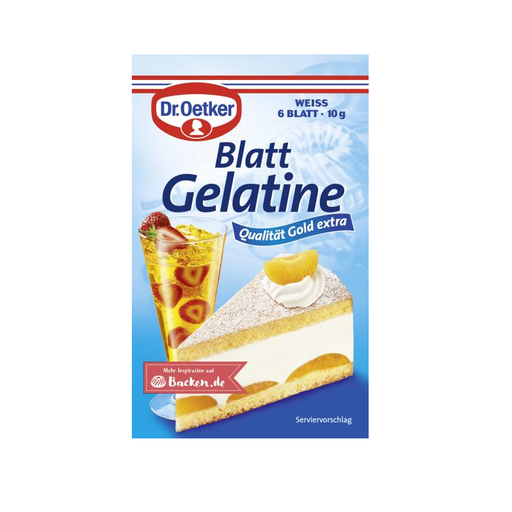
Why it stands out: This product is the foundation for the traditional preparation of desserts. It offers complete flexibility in creating jelly, cake fillings, or other gelled dishes.
Pros:
Who is it for?: For home bakers and cooks who enjoy preparing desserts from scratch and want to maintain full control over the ingredients.
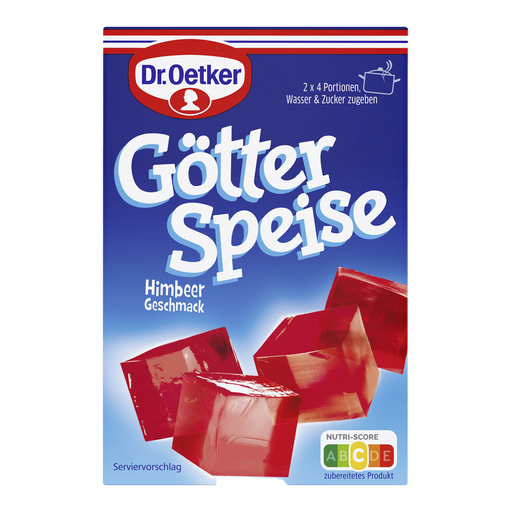
Why it stands out: This is the classic powder mix for a raspberry-flavoured jelly. It delivers a reliable and vibrantly coloured result that is a crowd-pleaser.
Pros:
Who is it for?: For families and anyone who wants to prepare the traditional jelly flavour with minimal effort.
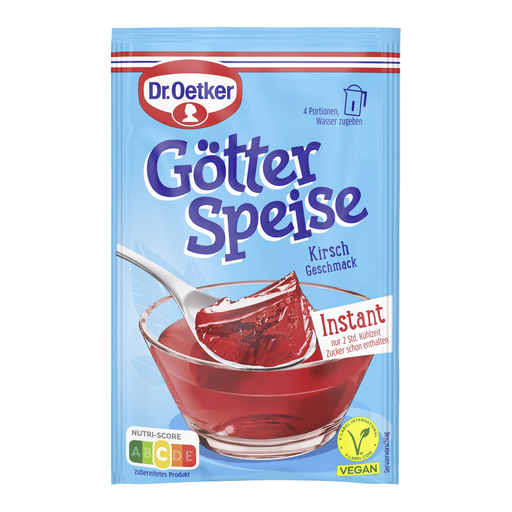
Why it stands out: The quickest option for a fruity jelly. Since no cooking is required, the active preparation time is reduced to a minimum.
Pros:
Who is it for?: Ideal for anyone looking for a very quick and straightforward dessert solution, for instance, for spontaneous occasions or as a simple everyday dessert.
Whether you are looking for special types of gelatine for elaborate cakes or more flavours for your jelly, you will find a wider selection in our category.
Discover our full range of Gelatine here.
In common usage, the terms are often used interchangeably. "Jelly" is the more colloquial term for the finished, wobbly dessert. "Gelatin dessert" is the more formal name and is often used as the product description for the powder from which the jelly is made.
The required amount depends on the desired firmness and the manufacturer's specifications. As a rule of thumb, 6 leaves of gelatine (equivalent to approx. 10 g) are used for 500 ml of liquid. It is always advisable to follow the instructions on the leaf gelatine packaging.
Yes, this is possible if you make the jelly yourself using pure leaf gelatine and unsweetened fruit juice or water. This gives you full control over the sweetness, allowing you to replace sugar with alternatives or omit it entirely. In contrast, ready-made jelly powders, especially instant varieties, usually already contain sugar.