
Lieferung heute & morgen

Qualitätsgarantie

Willkommens-Angebote freischalten: KOSTENLOSE Lieferung | Bis zu 80 % RABATT | Kostenlose 30-Tage-JoyPlus-Testphase
App herunterladen
Jigsaw and logic games for children and adults vary considerably in terms of age suitability, difficulty, materials and how they’re played. A colourful cube may suit beginners, while a 7x7 speed cube calls for plenty of solving strategies and patience. With 1,000-piece jigsaws, the design, piece quality and space available can determine whether you’ll keep coming back to it.
A game with small pieces isn’t automatically suitable for younger children. You should consider the manufacturer’s age recommendation, the size of the pieces and whether your child can handle materials like these safely. A children’s jigsaw for ages 4 and up usually has fewer, larger pieces than a 1,000-piece jigsaw for adults. Small elements in cube puzzles and IQ puzzles can also pose a choking risk.
Terms such as ‘Pro’, ‘Speed’ or ‘Brain Training’ don’t tell you much about how a game actually plays. Instead, check the specific details:
For example, a SmartGames logic game with 120 challenges gives you a clear idea of how many tasks are included. That’s more informative than a general claim about ‘endless challenges’.
A 1,000-piece jigsaw needs a flat surface and somewhere safe to store it. For a Harry Potter 1,000-piece jigsaw or a Ravensburger 1,000-piece jigsaw, it’s also worth checking that the finished picture and piece count suit the space you have available. For journeys, waiting times or the school run, compact games with a secure case are a better choice.
The recommended age is a useful starting point, but it doesn’t replace an assessment of your child’s individual abilities. For younger children, four designs with 26 or 48 pieces each can offer a varied introduction. Teenagers and adults can choose from different difficulty levels with 3x3 Rubik’s Cubes, IQ puzzles and 1,000-piece designs.
For more challenging games, look for a clear progression in difficulty. Challenges ranging from easy to difficult let you choose one that suits your current level, without having to start with something highly complex.
For cubes, smooth, even turns, a sturdy construction and colour panels that won’t wear away are practical features to look for. Stickerless surfaces are made from coloured plastic, so they don’t rely on stickers. For jigsaws, precision-cut pieces, a clear image and a matte finish are useful features, especially during longer sessions under artificial lighting.
A dry, soft cloth is usually all you need to clean plastic games. Jigsaws should be stored somewhere dry and as flat as possible. Keep the packaging and safety information in case you have questions later about the age recommendation or materials.
At home, you may have room for large picture jigsaws or complex cubes. A portable brain-teaser, on the other hand, should be compact and provide secure storage for all the pieces. Single-player games are ideal for a quiet activity, while several jigsaws or a Rubik’s Cube you can solve together can be enjoyed by the whole family.
Terms such as concentration game, educational game and brain training often describe the intended style of play. They shouldn’t be taken as medical or therapeutic claims, though. The challenges in each game engage logical thinking, spatial awareness and fine motor skills, but that doesn’t mean any particular outcome is guaranteed.
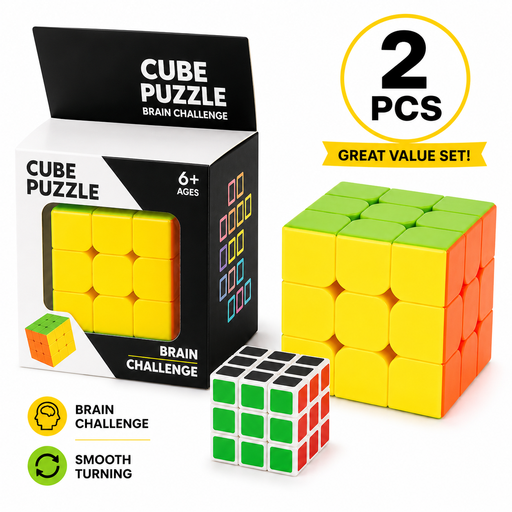
Why this product suits this profile: The set combines two cube sizes and is easy to fit into family time or indoor play. Its compact design is well suited to first attempts at turning and solving.
The product description specifies that the pack contains a 2-piece set and notes that the colour or design may be selected at random, where applicable.
Two cubes in one set; designed for family time and indoor play.
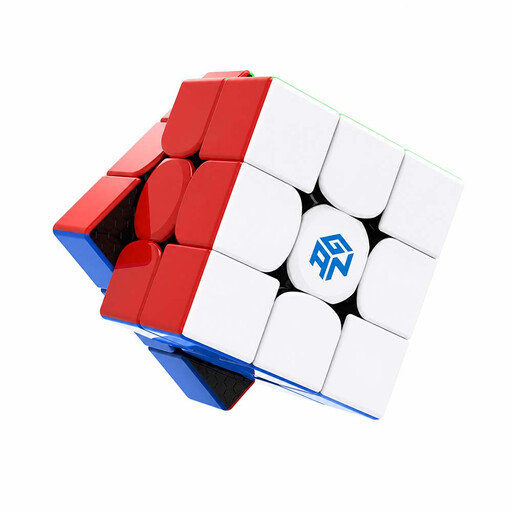
Why this product suits this profile: This 3x3 Rubik’s Cube is aimed at users looking for a model described as competition-ready, with a smooth turning action.
The choice is based on the specific model name, rather than on the general term ‘speed cube’ alone.
3x3 design; stickerless finish; suitable for twisty puzzles and speedcubing practice.
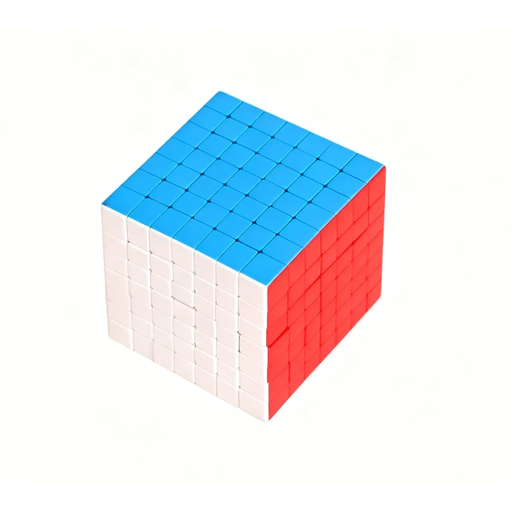
Why this product suits this profile: The 7x7 speed cube is designed for experienced users looking for a layered cube puzzle with a more complex structure.
The product details clearly state the material, dimensions, recommended age of 8 and up, and the small-parts warning.
7 layers; ABS plastic; stickerless surface; clean with a dry cloth.
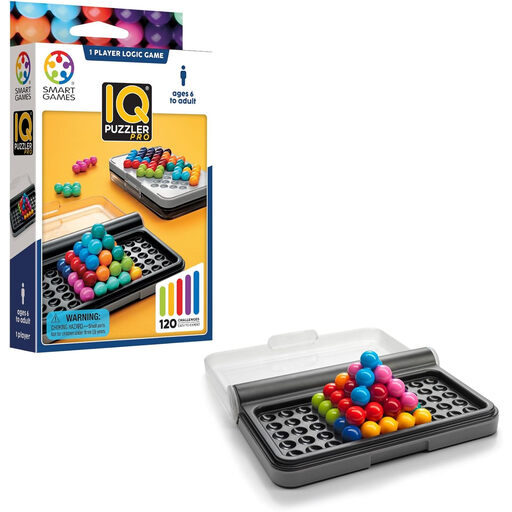
Why this product suits this profile: This portable brain-teaser is designed for one player aged 6 and up, and can be used at home or on the go.
The 120 challenges, three play modes and recommended age group are all clearly specified.
120 challenges; 2D and 3D modes; single-player format; no batteries required.
For younger children aged 4 and up, a vehicle-themed set with several smaller jigsaws can be a good choice. The Schmidt Spiele children’s jigsaw with 2 × 26 and 2 × 48 pieces comes in a metal case and includes posters with guide lines to help you get started.
For teenagers and adults, 1,000-piece picture jigsaws can provide a longer-lasting challenge. The Schmidt Spiele Harry Potter 1,000-piece jigsaw features Hogwarts Castle and is recommended for ages 12 and up. For a different landscape scene, try the Ravensburger Eilean Donan Castle 1,000-piece jigsaw, which is recommended for ages 14 and up.
We’ve put together a complete, regularly updated list of products that meet these strict selection criteria and fully comply with the safety regulations in force in the EU.
It depends on the size of the pieces, the challenges involved and the manufacturer’s recommendation. A children’s jigsaw for ages 4 and up will usually have larger pieces and straightforward designs. Games with small pieces should not be given to children under 3. Younger children may benefit from supervision.
How long it lasts depends on how often you use it, how you care for it and how it’s stored. Don’t throw a cube, submerge it in water or clean it with harsh products. If you use it frequently for speedcubing, smooth turns and dry storage are important.
They can be, as long as the design has clear areas of colour and easy-to-recognise details. Landscapes, dark areas and very similar shades can make a jigsaw more difficult. If you haven’t done many jigsaws before, you could start with a design that has fewer pieces and work your way up to 1,000.