
Lieferung heute & morgen

Qualitätsgarantie

Willkommens-Angebote freischalten: KOSTENLOSE Lieferung | Bis zu 80 % RABATT | Kostenlose 30-Tage-JoyPlus-Testphase
App herunterladen
Jigsaw puzzles and brain teasers are ideal for relaxing evenings, quality family time and entertainment on the go. However, having a wide choice does not automatically mean you will find the right product. A jigsaw puzzle may be too difficult despite its appealing design, a brain teaser may contain too many small components for younger children, or a compact travel game may need more table space than expected.
The following criteria will help you assess marketing claims objectively and choose jigsaw puzzles and brain teasers that suit the player’s age, experience and playing environment.
A 1000-piece jigsaw puzzle is often considered challenging. However, the actual difficulty also depends on the picture, colour distribution and similar-looking areas. A landscape with large areas of the same colour can be more difficult than a detailed scene with clearly defined outlines. For beginners, a manageable number of pieces and clearly recognisable sections of the image are therefore a sensible choice.
A jigsaw puzzle for ages 3+, a jigsaw puzzle for ages 4+ and a jigsaw puzzle for ages 12+ differ in more than just their design. Piece size, the number of components and the level of concentration required also play a role. Small pieces can pose a choking hazard to children under three. The age marking on the packaging and product page should therefore always take priority.
When choosing educational games for children, it is important to consider the activity they actually involve: matching, observing, combining, reading or solving puzzles together. A game featuring logic tasks may be interesting for one child but too challenging for another. The number of players is also crucial: a solo brain teaser is not suitable for a family that wants to play together.
For pre-school children, 15 to 48 pieces are often easier to handle than a large picture. A children’s jigsaw puzzle with a frame or picture guide makes it easier to find your way around. Adult jigsaw fans often choose a 1000-piece puzzle; however, designs with many similar-looking areas can make sorting the pieces considerably more time-consuming.
For brain teasers, you should consider the intended playing time as well as the number of tasks. A game with lots of short puzzles is suitable for family evenings or travelling, while a longer escape-room game for children requires more uninterrupted time.
For traditional jigsaw puzzles, precise cutting, sturdy card and a low-glare surface are practical criteria. According to the product description, a linen-textured finish can add texture to the image surface and reduce distracting reflections. For children, thicker pieces and tidy storage are helpful.
Metal cases or compact boxes protect the pieces when stored away. For travel games, the external dimensions, weight and the ability to pack all components away completely after playing are also important.
Check the following before buying:
For a game designed for children aged five to seven, adult supervision may be useful, particularly if the rules or app functions need to be explained. An age recommendation does not replace an individual assessment of a child’s abilities.
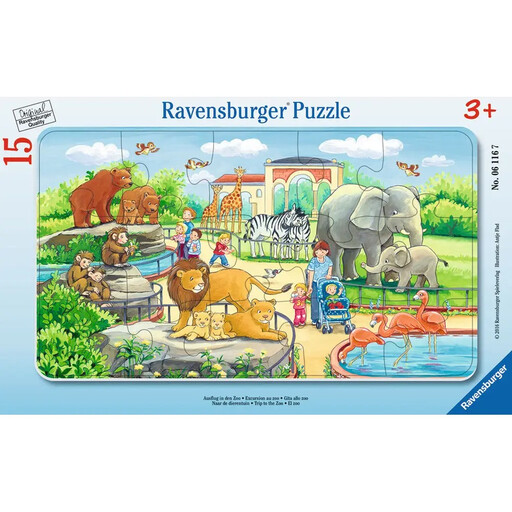
Why this product suits this profile: According to the product information, this puzzle is suitable for children aged 3 and over. With 15 pieces, it offers a manageable introduction to puzzling together.
The low piece count and frame with outline guides reduce the risk of a first attempt being abandoned because the picture is too overwhelming.
15 pieces, zoo design, framed puzzle and practical mat; according to the product information, no batteries required.
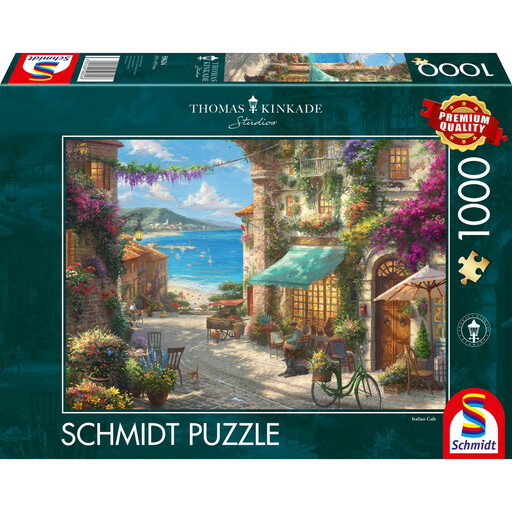
Why this product suits this profile: This 1000-piece puzzle for ages 12 and over combines a detailed landscape design with specific material information for longer puzzling sessions.
The piece count, age recommendation, surface finish and stated format are clearly specified. This makes it easier to assess the space required before buying.
Linen-textured finish, low-glare matt surface, precisely cut pieces and a design by Thomas Kinkade Studios.
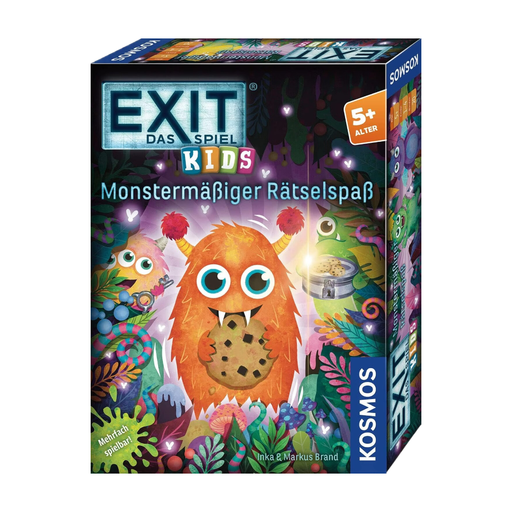
Why this product suits this profile: This escape-room game for children is designed for 1 to 4 players aged 5 and over, making it ideal for family afternoons or playdates.
The number of players, age range and optional use of the Kosmos app are specified. According to the product description, the game can also be played without the app.
Monster theme, simple rules, cooperative puzzle-solving and, according to the supplier, new playing experiences in every round.
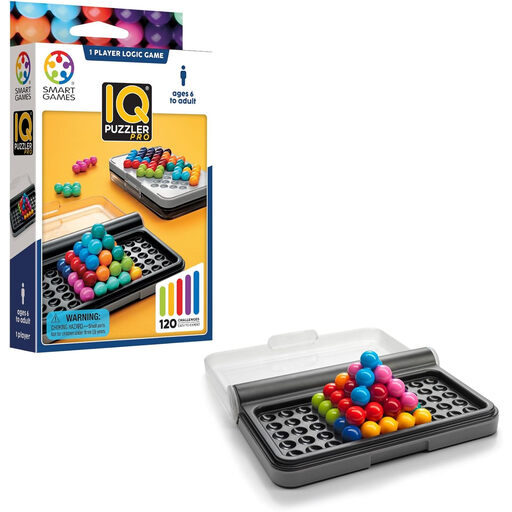
Why this product suits this profile: This compact brain teaser and travel game is designed for one player aged 6 and over and, according to the product information, does not require batteries.
The dimensions and focus on solo play are clearly described. This makes it clear before buying that it is not a traditional family board game.
120 challenges, three game modes and 2D and 3D challenges in a compact format.
Fans of licensed designs will find a wide selection of Disney jigsaw puzzles and Harry Potter jigsaw puzzles. These include Disney designs by Thomas Kinkade Studios as well as scenes from the Wizarding World. It is important to distinguish between interest in a particular theme and the desired level of difficulty: regardless of the theme, a 1000-piece jigsaw puzzle remains a substantial challenge.
Ravensburger jigsaw puzzles and Schmidt Spiele jigsaw puzzles also vary by range in terms of piece count, format, age recommendation and features. For children aged 4 and over, framed puzzles with search activities may be appealing. Older children may enjoy interactive adventure puzzles or logic games. If you are looking for a traditional jigsaw puzzle, you can also browse the selection of traditional jigsaw puzzles.
We have put together a complete, regularly updated list of products that fully meet these strict selection criteria and the safety regulations applicable in the EU.
It depends on the child’s age, experience and the design. For younger children, 15 to 24 pieces may be suitable. From around age 4, sets with 26 or 48 pieces may also be appropriate, depending on the product. The specific age rating, piece size and whether a picture guide or frame can be used are the key factors.
A flat puzzle mat, sorting box or sealable folder protects against lost pieces and dust. For larger puzzles, the mat should provide enough space for the completed format. Before putting the puzzle away, it is advisable to check it against the picture or piece count.
Travel games are particularly practical when they are compact, battery-free and made up of only a few components. For train journeys or holidays, solo logic games such as the IQ-Puzzler PRO are a good choice. For several players, compact card games or short puzzle games are often more suitable. Before buying, check the dimensions of the packaging and the recommended number of players.