
Lieferung heute & morgen

Qualitätsgarantie

Willkommens-Angebote freischalten: KOSTENLOSE Lieferung | Bis zu 80 % RABATT | Kostenlose 30-Tage-JoyPlus-Testphase
App herunterladen
A Jin Zai Chinese fish snack combines small anchovies or sea fish with spicy marinades, soy sauce and Asian spices. The products are ready to eat and suitable as a snack, side dish, lunchbox ingredient or accompaniment to drinks.
However, some product details can quickly lead to false expectations when shopping. For example, a high protein value does not automatically mean a low fat or salt content. Terms such as “Deep Sea”, “Spicy” or “marinated” also reveal little on their own about the ingredients list, portion size or actual level of heat.
A 240 g pack may consist of 20 individual sachets of 12 g each. This is practical for eating on the go, but the individual portion is considerably smaller than the total weight might suggest. In 58 g or 96 g packs, the contents may also be divided between several sachets.
Before buying, you should therefore check:
A spicy fish snack may contain chilli, pepper, Sichuan pepper, garlic or capsaicin. The perceived heat therefore depends on more than just the amount of chilli. A product containing chilli and Sichuan pepper may also have a tingling or numbing flavour.
If you prefer milder seasoning, choose products with a sauce or classic marinade and check the chilli, capsaicin and Sichuan pepper content carefully.
The product information for several Jin Zai varieties lists around 25.5 to 31.8 g of protein per 100 g. At the same time, depending on the variety, the snacks contain approximately 299 to 422 kcal per 100 g, as well as varying amounts of fat and salt. The nutritional values always apply per 100 g, not per individual sachet.
For a balanced assessment, bear in mind that a high-protein snack can be a practical addition, but does not replace a balanced meal. Portion size, salt content and ingredients should also be taken into account as part of your diet.
For dried anchovies and marinated anchovies, the declared fish content is a key point of comparison. In the Jin Zai products considered here, for example, it is 69%, 70% or 75.3%. Other varieties state a fish content of 78%.
A higher fish content describes the recipe, but is not in itself proof of quality. Other important factors include:
Typical ingredients in an Asian fish snack include chilli, sugar, salt, soy sauce, yeast extract and spices. Soy sauce often contains soya beans and wheat. Some products also contain sesame, mustard, celery, egg or sulphites.
If you have an allergy or intolerance, the labelling on the packaging supplied should be regarded as authoritative. Pay particular attention to:
Recipes and labelling may vary between varieties. You should therefore not assume that the information for one variety applies to all products.
Individually packaged snacks are suitable for work, school, travel and lunchboxes. Once opened, the individual sachet should generally be consumed immediately. Unopened packs should be stored in a cool, dry place, protected from direct sunlight, in accordance with the product instructions.
The best-before date can be found on the packaging. Do not consume the product after this date, or if the packaging is damaged, swollen or leaking.
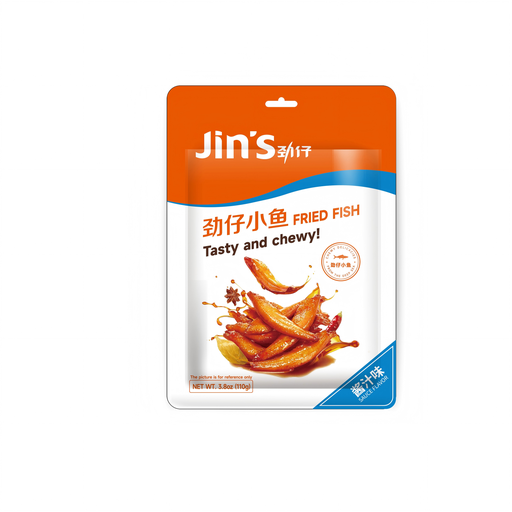
Why this product suits this profile: The sauce variety offers an accessible introduction to Chinese fish snacks. According to the product information, the 110 g pack contains 9 to 11 individual sachets and is ready to eat.
The individual portions make the total weight more transparent and prevent the opened pack from being left open repeatedly.
75.3% anchovies according to the product information; sauce flavour and 27 g of protein per 100 g according to the nutrition table.
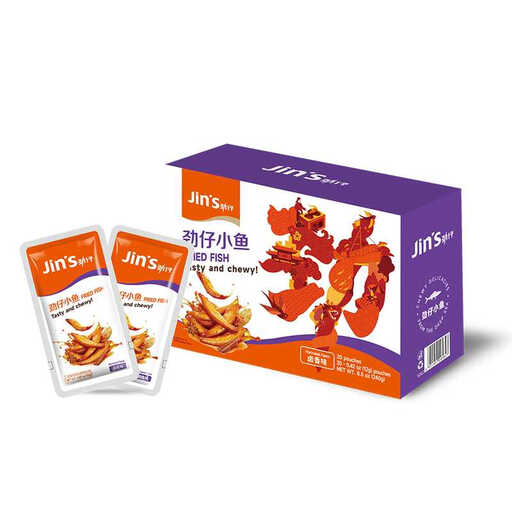
Why this product suits this profile: The recipe lists 69% anchovies, along with soy sauce, chilli and spices. With 20 sachets of 12 g each, the pack is ideal for regular portioning.
The ingredients and allergen declaration clearly show that the product contains fish and soya beans. This makes it easier to check whether it is suitable before buying.
31.8 g of protein per 100 g according to the product information; 240 g total with 20 individually packaged portions.
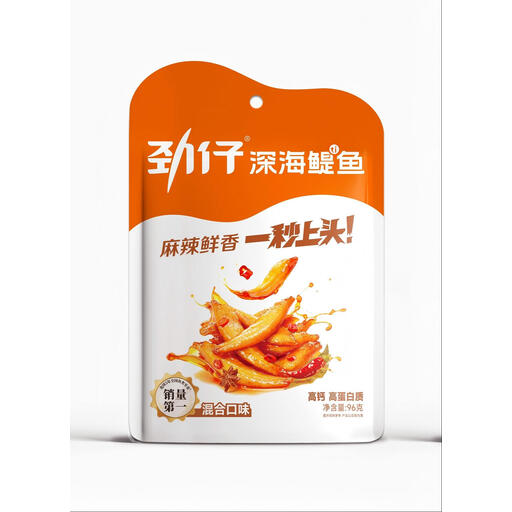
Why this product suits this profile: The pack contains three flavours: spicy, spicy with a numbing pepper note, and sauce. This makes it suitable for comparing different seasoning profiles.
The varieties are listed separately. This means you do not have to buy a large pack of one level of heat if you want to try different flavours.
12 individual sachets of 8 g each; the declared protein value ranges from 27.6 to 30.4 g per 100 g, depending on the flavour.
Jin Zai fish snacks can be eaten straight from the sachet. To make a meal, break them into small pieces and serve with rice, congee or noodles. The spicy varieties also make a savoury snack to enjoy with soft drinks or beer.
As the products are already marinated and seasoned, they normally require no additional preparation. When serving them to teenagers, pay attention to the level of heat, portion size and allergen labelling.
We have put together a complete, regularly updated list of products that fully meet these strict selection criteria and the safety regulations applicable in the EU.
Unopened packs should be stored in a cool, dry place and protected from direct sunlight. Once an individual sachet has been opened, its contents should be consumed immediately. The specific best-before date is printed on the packaging.
It depends on the variety. Products containing chilli, capsaicin or Sichuan pepper may have a noticeably stronger flavour. Sauce and marinated anchovy varieties are often a more suitable choice if you initially prefer a milder flavour. The ingredients list provides information about the seasonings used.
Depending on the product and flavour, approximately 25.5 to 31.8 g of protein per 100 g is stated. To calculate the actual amount per portion, you need to apply this value to the weight of the individual sachet. For a 12 g sachet, this works out to considerably less than the value per 100 g. The nutritional information on the packaging supplied should be regarded as authoritative.