
Lieferung heute & morgen

Qualitätsgarantie

Willkommens-Angebote freischalten: KOSTENLOSE Lieferung | Bis zu 80 % RABATT | Kostenlose 30-Tage-JoyPlus-Testphase
App herunterladen
Anyone looking for food supplements for joints, bones and muscles will find a wide range of powders, capsules and combination products. However, products can differ considerably in dosage, ingredients, format and warnings. Eye-catching packaging or a high active-ingredient value alone therefore says little about whether a product is right for your everyday routine.
The following criteria can help you assess marketing claims and avoid unsuitable purchases.
A product with particularly large numbers displayed on the front is not necessarily the right choice. What matters is which substance is included in which daily serving and whether the combination fits your individual diet. With calcium, for example, taking additional calcium-containing products could result in an unnecessarily high total intake.
Products such as an arnica bath oil are applied externally and are not food supplements. They may form part of a relaxing bathing ritual after physical exertion, but they do not replace targeted nutrient intake. If you want to support your joints and cartilage, you should therefore distinguish between oral intake and external application.
Glucosamine is often obtained from crustaceans. Sweeteners, milk ingredients and vitamin K may also be relevant for some people. The full ingredients list and safety information should therefore be read carefully before buying – particularly if you have allergies, take medication or have existing health conditions.
Do not just compare the number of capsules or sachets; compare the quantity per recommended daily serving. According to the product information, taxofit Glucosamine 1700 + MSM + Magnesium, for example, contains 1,700 mg of glucosamine and 100 mg of MSM in one serving of drink granules. The daily serving also provides vitamin C, vitamin D3 and magnesium.
There is no standard nutrient reference value for glucosamine MSM, unlike with vitamins and minerals. The quantities should therefore be stated transparently, with a clear distinction between the daily serving and the pack contents.
For calcium, vitamin D, vitamin K, magnesium and vitamin C, the authorised nutritional or health claims stated on the label can provide useful guidance. According to the product labelling, vitamin D and magnesium contribute to the maintenance of normal bones and normal muscle function respectively. Vitamin C contributes to normal collagen formation for the normal function of bones and cartilage.
This should be distinguished objectively from advertising claims such as “repairs joints” or “eliminates discomfort”. Food supplements are not a substitute for a balanced diet or medical advice.
Direct granules are convenient when you are out and about, while capsules allow flexible dosing. You should also check:
If you are unsure, it is advisable to speak to your doctor or pharmacist. This is particularly important for pregnant or breastfeeding women, people with existing health conditions and anyone who takes medication regularly.
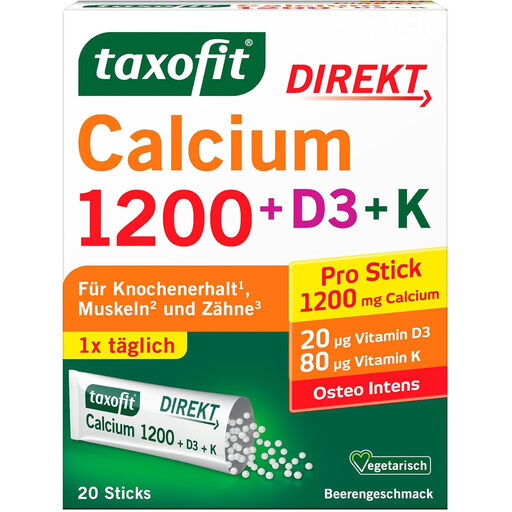
Why this product suits this profile: The direct granules are intended for adults who want to take calcium, vitamin D3 and vitamin K in individual portions without water.
The pack clearly states the daily serving of 1,200 mg of calcium along with the vitamins included. Additional calcium products should not be taken at the same time.
20 sachets, vegetarian, gluten-free and lactose-free; according to the product information, take once daily with a meal.
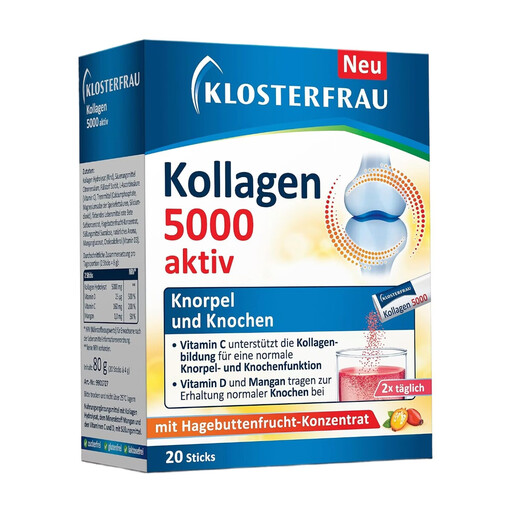
Why this product suits this profile: If you are looking for collagen for your joints in a ready-to-drink format, this product provides collagen hydrolysate with vitamin C, vitamin D, manganese and rosehip concentrate.
The ingredients list states 5,000 mg of collagen hydrolysate per serving and distinguishes this figure from the vitamin and mineral quantities.
20 sticks; according to the labelling, vitamin C contributes to normal collagen formation for the normal function of bones and cartilage.
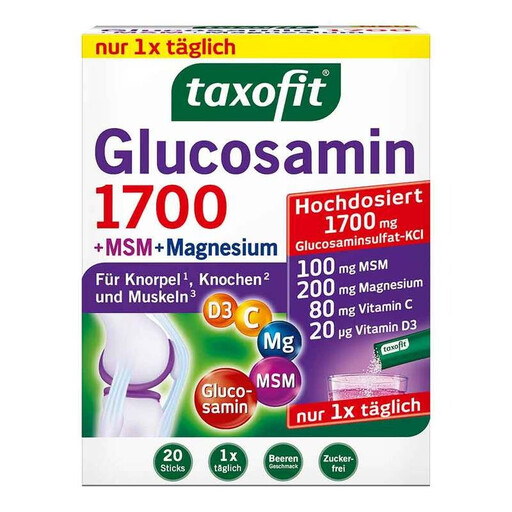
Why this product suits this profile: This product is aimed at adults who want to combine glucosamine MSM with magnesium, vitamin C and D3 in one daily drink granule.
The product information includes a warning about crustaceans. Anyone with a relevant allergy should not choose this product without careful consideration.
One stick per day; sugar-free, gluten-free and lactose-free according to the product information. Magnesium and vitamin D contribute to normal muscle function.
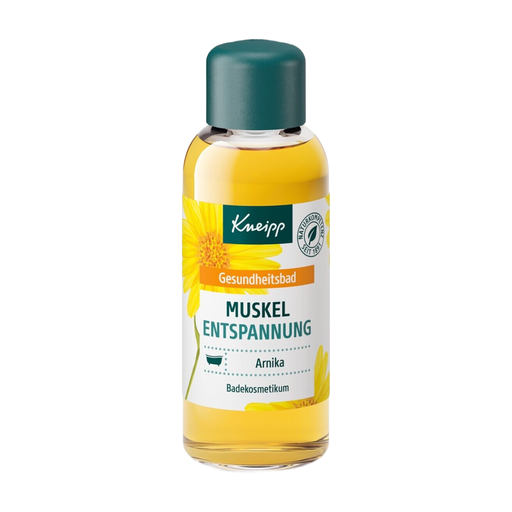
Why this product suits this profile: The arnica bath oil is suitable for anyone who would like to enjoy a warm bath as part of their personal care routine after physical activity.
External use is clearly distinguished from taking a food supplement. This prevents the mistaken expectation that a bath product could replace nutrient intake.
100 ml contents; with arnica extract and essential oils, without preservatives, mineral oils or microplastics according to the product description.
We have put together a complete, regularly updated list of products that fully meet these strict selection criteria and the safety regulations applicable in the EU.
For a food supplement for over-45s, clear dosage information and easy-to-understand warnings are particularly important. The same applies to women during and after the menopause who want to pay attention to their calcium and vitamin D intake. For active people, a product containing magnesium, vitamin D or collagen may be worth considering, provided the ingredients and individual tolerability are suitable.
Curcumin with vitamin D3 may be another option for people who prefer a product containing turmeric extract and vitamin D3. According to the product information, Doppelherz Curcuma 750 contains 750 mg of turmeric extract, 35 mg of curcuminoids, piperine and 25 µg of vitamin D3. Piperine and vitamin D3 may make interactions or specific precautions relevant. People taking medication or with existing health conditions should therefore seek medical advice before taking it.
There is no fixed recommended duration. The information on the packaging, the formulation and your individual needs are the key factors. Once the recommended period of use has ended, you should consider whether continuing to take the product is still appropriate. If you have symptoms or are unsure, seeking medical advice is preferable.
This combination is included in products designed for this purpose. However, it is important to consider your total intake from several preparations. Anyone taking coumarin-type anticoagulants or with impaired kidney function should seek medical advice before taking these nutrients.
Some formulations contain magnesium and vitamin D, which, according to authorised claims, contribute to normal muscle function. However, they are not a substitute for fluids, a balanced diet or recovery. If you experience severe, persistent or recurring symptoms, the underlying cause should be medically assessed.