If you’ll mainly be juicing oranges and other citrus fruits for your guests, a citrus press is a good fit. For making several glasses of different fruit and vegetable juices, a centrifugal juicer is an obvious choice. Consider a slow juicer if you also regularly process leafy greens or fibrous ingredients and would rather have quieter operation than speed – ETM TESTMAGAZIN describes this type of appliance as suitable for green juices and quieter juicing. Also compare the juice and pulp containers, the feed chute and how easy the appliance is to clean. The container capacity won’t tell you how much juice your ingredients will produce.
Which juicer is right for you?
Hosts short on time
If you need to make several glasses of fruit or vegetable juice quickly, consider the feed chute, juice and pulp containers, and how easy the appliance is to clean. Bosch lists a 1.5-l juice container and an 84-mm feed chute for the MES4010; these specifications apply to this model.
Hosts serving orange juice
If you mainly serve freshly squeezed citrus juice, a container with a spout can make pouring easier. Kenwood lists a 1-l container with a spout for its JE290A citrus press.
Regular vegetable juicers
If you also process leafy greens or fibrous ingredients outside breakfast gatherings, it’s important to choose an appliance suited to the ingredients you usually juice. ETM TESTMAGAZIN describes slow juicers as suitable for green juices and quieter operation.
What should you look for when buying?
First decide whether you’ll be juicing citrus fruits only or a wider range of ingredients. Then consider speed, cleaning and how the appliance will fit into your breakfast routine.
| Buying priority |
What to look for |
Who is it important to? |
| Making several glasses in time |
Check the juice and pulp containers separately; consider the feed chute and how much space the appliance needs. |
When several guests are having breakfast at once, I don’t want to keep topping up the machine or spend ages preparing. Around 33% of consumers prioritise making several glasses without long pauses. |
| Mainly juicing citrus fruits |
Look for the cone, collection container and spout; container capacity doesn’t tell you how much juice you’ll get. |
If I’m mainly serving orange or grapefruit juice to guests, I don’t necessarily need an appliance for lots of other ingredients. Around 27% of consumers are primarily concerned with juicing citrus fruits. |
| Cleaning up after breakfast |
Check the instructions for the specific model to see which parts are dishwasher-safe and whether a cleaning brush is included. |
After breakfast, I want to clean the sieve and removable parts without unnecessary effort. Around 20% of consumers put easy cleaning first. |
| Juicing other ingredients too |
Match the type of appliance and its juicing mechanism to the ingredients you plan to use, especially leafy greens and fibrous produce. |
If I’m juicing vegetables or greens as well as oranges, the appliance needs to suit those recipes. Around 13% of consumers primarily want to juice a variety of ingredients. |
| Noise at breakfast |
Compare noise measurements for specific models; the type of appliance alone won’t tell you how loud it will be. |
While guests are sitting at the table, I want juicing to cause as little disruption as possible. Around 7% of consumers prioritise quiet operation. |
Common buying mistakes
-
Confusing container capacity with juice yield
A 1-l container doesn’t tell you how much juice you’ll get from a particular quantity of oranges. Kenwood lists this container capacity for the JE290A.
Work out how many portions you’ll need based on your recipe and ingredients, not just the container capacity.
-
Choosing based only on wattage or marketing terms
Wattage or the term ‘cold press juicer’ alone doesn’t tell you which juicing mechanism is used or whether the appliance is suitable for your ingredients.
Compare the types of appliance and check whether the specific model suits your ingredients and the pace you want to work at.
-
Overlooking cleaning instructions for individual parts
Dishwasher suitability can vary from one component to another. For the nutribullet NBJ100G, the manufacturer advises checking the instructions for parts that are suitable for the dishwasher.
Before buying, check the instructions for the exact model and the guidance for each removable part.
Key brands at a glance
Kenwood
The JE290A is a citrus press for breakfasts where citrus juice is the main thing on the menu.
- Kenwood lists a 1-l container with a spout for the JE290A.
- As a citrus press, it isn’t designed for making apple or vegetable juice.
Bosch
The MES4010 centrifugal juicer is an option for a variety of ingredients and larger quantities of juice.
- Bosch lists an 84-mm feed chute, a 1.5-l juice container and dishwasher-safe parts for this model.
- These specifications don’t automatically apply to other Bosch models, nor do they prove a juice yield measured independently.
nutribullet
The NBJ100G is a juicer with a stainless steel sieve, two speed settings and an 800-ml juice jug.
- The manufacturer also lists a 7.6-cm feed chute and a cleaning brush.
- Check the model’s instructions to find out which parts are dishwasher-safe. The term ‘cold press juicer’ alone doesn’t prove that it uses a slow-juicer mechanism.
Hurom
The H320N is a slow juicer to consider if you regularly process leafy greens or fibrous ingredients.
- Hurom lists a speed of 50 rpm for the H320N’s auger.
- Speed alone doesn’t prove a particular juice yield or an advantage for every recipe; accessories may vary by country.
Braun
The range includes citrus presses such as the CJ3050 and centrifugal juicers such as the J 500.
- Braun lists a direct juice spout for the CJ3050.
- COMPUTER BILD praised the J 500’s juice container, but criticised its drip stop for not being entirely reliable and noted that it takes up space. This assessment relates to the J 500.
Juicers at Joybuy
The following products at Joybuy include centrifugal juicers for fruit and vegetables, as well as electric appliances for citrus and orange juice. Before choosing, check which type of appliance suits your breakfast recipes.
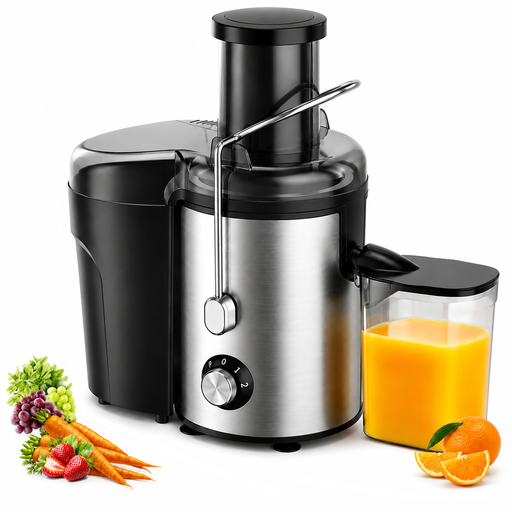 No image available
600 W centrifugal juicer with a 75-mm feed chute
A good option if you’d like to make fruit and vegetable juices for your guests.
600 W; 75-mm feed chute.
View at Joybuy
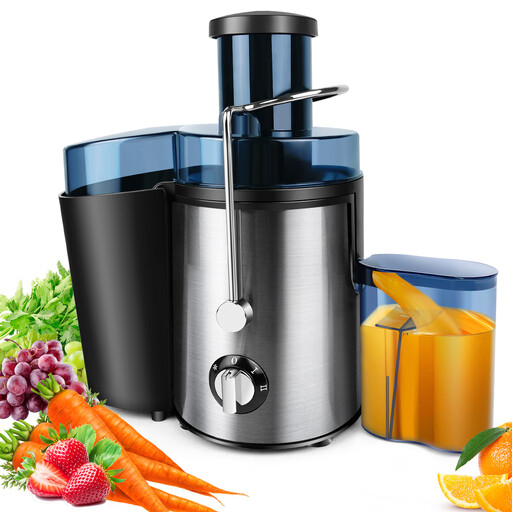 No image available
DayPlus centrifugal juicer, 1000 W, 65 mm
For a variety of ingredients at breakfast; check that the container capacity is right for the portions you need.
1000 W; 65-mm feed chute; 500-ml juice container; two speed settings.
View at Joybuy
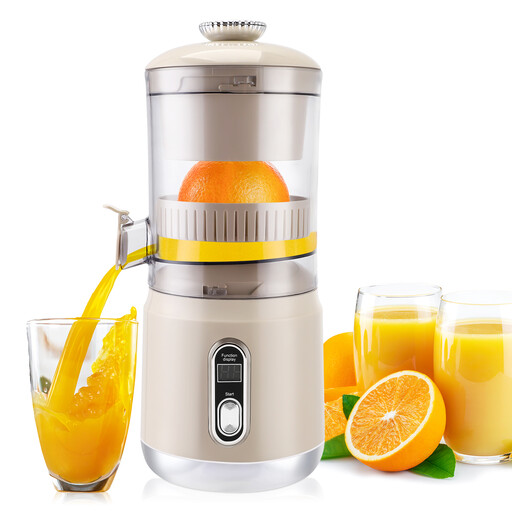 No image available
Electric citrus juicer for oranges and lemons
For breakfasts when you’d like to serve your guests freshly squeezed citrus juice.
The product title mentions oranges, lemons and pulp separation.
View at Joybuy
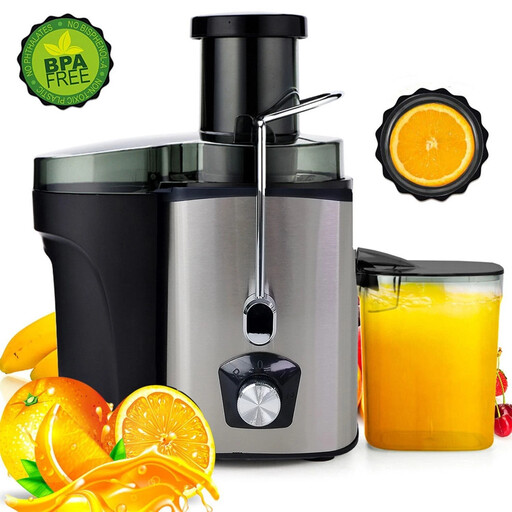 No image available
600 W centrifugal juicer with a 75-mm feed chute
An option for fruit and vegetable juices if a wide feed chute suits your preparation routine.
600 W; 75-mm feed chute.
View at Joybuy
 No image available
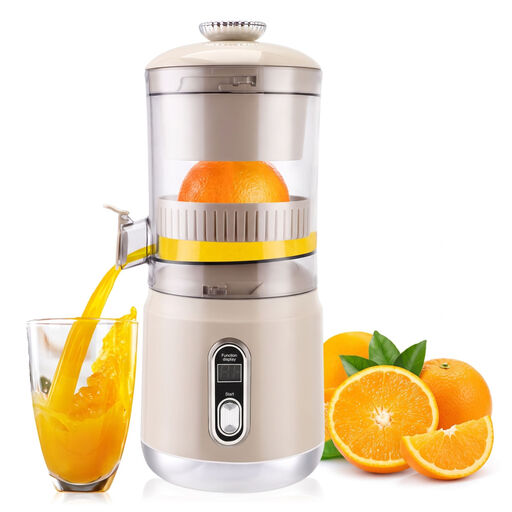
Cordless orange juicer, beige, 3 speed settings
For juicing oranges at home or on the go, if a cordless appliance suits the way you’ll use it.
110-mm feed chute; USB charging; three speed settings.
View at Joybuy
Frequently asked questions
What can I prepare the night before for several guests?
You can prepare the ingredients and set up the appliance. For breakfast, juice them as fresh as possible, and make sure the ingredients and appliance are clean. The Verbraucherzentrale recommends washing citrus fruits in lukewarm water and drying them before juicing.
Which parts can I put in the dishwasher?
It depends on the model and the individual component. For dishwasher-safe parts of the nutribullet NBJ100G, the manufacturer refers users to the instructions. Check the guidance there before cleaning them.
Who should I contact if the appliance is faulty?
The seller is generally responsible for the statutory warranty. According to the Verbraucherzentrale, the retailer is liable for defects present at the time of delivery for two years; a voluntary manufacturer’s guarantee has its own terms and conditions.
Where should I take an old electric juicer?
In Germany, electrical appliances must not be put in household rubbish. The Federal Ministry for the Environment lists local collection points and authorised manufacturers or retailers as return options; certain conditions apply to retailer take-back schemes.
Does the General Product Safety Regulation also apply to online purchases?
Yes. Since 13 December 2024, the EU’s General Product Safety Regulation has also applied to consumer products offered online. The Federal Ministry for the Environment points this out; it doesn’t mean that a particular juicer has been confirmed as compliant.


