
Lieferung heute & morgen

Qualitätsgarantie

Willkommens-Angebote freischalten: KOSTENLOSE Lieferung | Bis zu 80 % RABATT | Kostenlose 30-Tage-JoyPlus-Testphase
App herunterladen
Buying a juicer is often the first step towards a healthier lifestyle with fresh, vitamin-rich juices. But the market is crowded and full of marketing promises that often obscure more than they clarify. Many well-intentioned purchases end up as dust collectors in the kitchen cabinet because the appliance is impractical for daily use. As your Joybuy Product Recommendation Officer, I'll help you recognise the common pitfalls and make an informed decision that fits your needs.
Before you invest, you should know the three most common mistakes that lead to disappointment:
To avoid a bad purchase, you should focus on objective criteria rather than marketing slogans. Two technical aspects are fundamental to selecting the right appliance.
The appliance's operating principle significantly determines the juice quality, range of applications, and ease of use. There are two main types:
Centrifugal Juicers: These machines shred fruits and vegetables with a fast-spinning cutting disc (several thousand RPM) and fling the juice outwards through a fine sieve.
Slow Juicers (Cold Press Juicers): These models use a slowly rotating auger (typically 40–100 RPM) that crushes the produce and gently presses the juice through a sieve.
A special subcategory is the electric juicer for fruits and vegetables, which is often designed as a citrus press and is exclusively intended for juicing citrus fruits like oranges, lemons, or grapefruits.
A practical juicer is characterised by its straightforward daily use. Look for the following features:
Based on these objective criteria, we have curated a selection of appliances suited for different user profiles and their specific requirements.
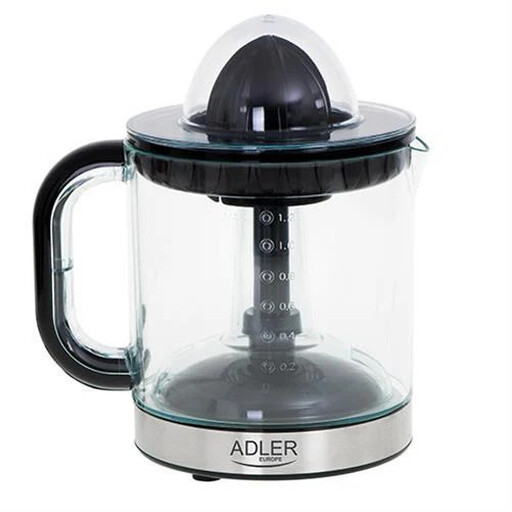
Why This Fits Their Persona: Ideal for users who want to make fresh citrus juice for breakfast or as a quick refreshment, simply and affordably. The device focuses on a single task and performs it reliably.
This device is a specialised citrus press and doesn't try to be an all-in-one machine (avoids Trap 3). Its few, removable parts are dishwasher-safe according to the manufacturer, which simplifies cleaning (avoids Trap 1).
Two press cones for different fruit sizes; automatic start/stop function; large 1.2-litre capacity.
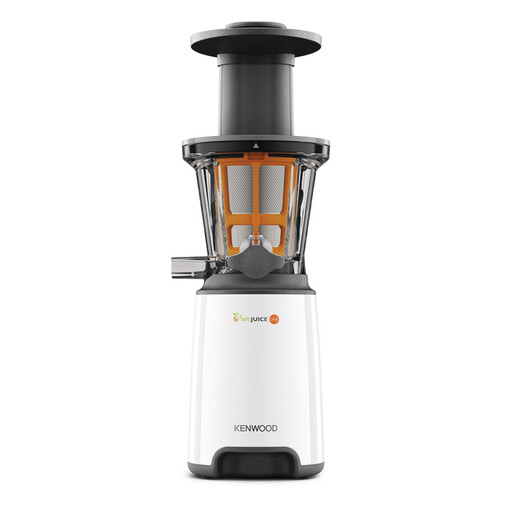
Why This Fits Their Persona: Perfect for families who value nutrient-rich juices from a variety of ingredients, including leafy greens. The gentle extraction process and easy cleaning are designed for regular use.
As a cold press juicer, it focuses on gentle processing at low speeds rather than high wattage (avoids Trap 2). The rinsing function directly addresses the high cleaning effort required by many models (avoids Trap 1).
Gentle press technology at 55 RPM; practical rinsing function and included cleaning brush; anti-drip stopper prevents spills.
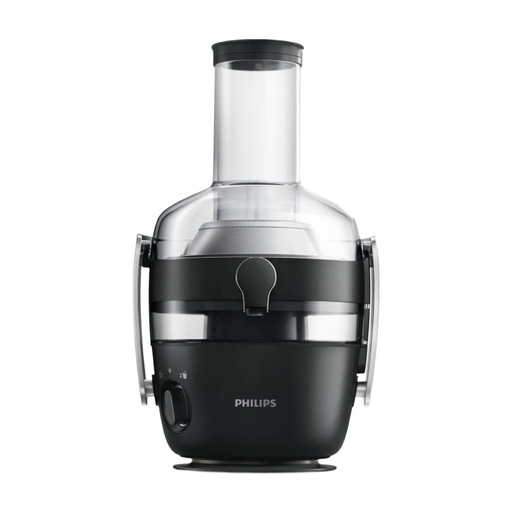
Why This Fits Their Persona: For users who want to quickly make fresh juice from hard fruits and vegetables in the morning with minimal prep. Speed and minimal effort are the top priorities here.
The very large 80 mm feed chute minimises chopping. The manufacturer's advertised QuickClean technology with a polished sieve is designed specifically to reduce cleaning effort (avoids Trap 1).
Powerful 1000W motor for hard ingredients; FiberBoost technology for choosing between clear or fibre-rich juice; integrated drip-stop.
We've curated a complete, up-to-date list of products that meet our strict selection criteria and all applicable safety standards.
1. Which juicer is best for green leafy vegetables like spinach or kale? For leafy greens, herbs, and wheatgrass, a slow juicer (also known as a cold press juicer) is generally the more efficient choice. Its slow extraction process achieves a higher juice yield than a centrifugal juicer, which often processes light produce inadequately and ejects it into the pulp container.
2. How often should you clean a juicer? It is recommended to clean the juicer immediately after each use. Dried-on fruit and vegetable residues, especially in fine sieves, are much harder to remove. Most removable parts can simply be rinsed under running water. For stubborn fibres in the sieve, the included cleaning brush is very helpful.
3. Can I reuse the pulp (the leftover fruit and vegetable matter)? Yes, the pulp is a valuable source of fibre and should not be discarded. It can be used in many ways in the kitchen, for example, as an ingredient in vegetable patties, soups, stews, bread, or muffins. This way, you reduce waste and make full use of the produce.