
Lieferung heute & morgen

Qualitätsgarantie

Willkommens-Angebote freischalten: KOSTENLOSE Lieferung | Bis zu 80 % RABATT | Kostenlose 30-Tage-JoyPlus-Testphase
App herunterladen
The desire for a glass of fresh, homemade juice is often what starts the search for the right juicer. However, the market is filled with marketing promises that don't always hold up to reality. Many appliances that promise quick and easy operation turn out to be impractical in daily use, ultimately ending up unused in a cupboard. Before you make a decision, it's crucial to understand the typical pitfalls that can lead to a bad buy.
As your Joybuy Product Recommendation Officer, I'm here to help you define objective criteria for your choice. This guide focuses on the three most common problems: exaggerated claims of easy cleaning, unrealistic juice yield figures, and impractically small feed chutes.
To avoid these traps, you should focus on three core technical features. These are the primary determinants of your appliance's performance, convenience, and longevity.
The most fundamental decision is between two different technologies, each suited for different applications and priorities.
Centrifugal Juicers: These machines shred fruit and vegetables with a rapidly rotating cutting disc (often at several thousand RPM) and force the juice out through a fine sieve.
Slow Juicers (Cold Press Juicers): These devices, also known as a juice press, work with a slowly rotating auger (typically 40-80 RPM). The produce is slowly crushed, and the juice is pressed through a sieve.
Truly easy cleaning depends on objective factors. Look for the following features:
The size of the feed chute determines the amount of prep work. A diameter of 75 mm or more is considered a large feed chute and allows you to process whole apples or large pieces of carrot without pre-cutting.
The motor power, specified in watts, is also relevant. Centrifugal juicers require more power for hard vegetables (e.g., 600–1000 W), while slow juicers, due to their mechanics, get by with less power (e.g., 130–200 W) but deliver high torque.
Here are some recommendations tailored to different needs and usage habits.

Why This Fits Their Persona: Ideal for users who want to quickly and easily juice hard fruits and vegetables like apples or carrots. The high speed of the centrifugal juicer delivers results in seconds.
The 3-inch feed chute (approx. 7.6 cm) is a large feed chute that eliminates the tedious pre-cutting of many fruits, thus avoiding the 'small feed chute' pitfall.
The 600-watt motor provides solid performance for rapid processing. The design is geared towards straightforward handling for daily use.
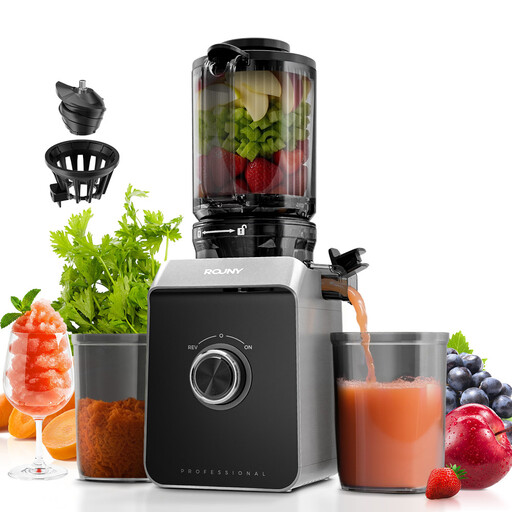
Why This Fits Their Persona: For families who regularly make large quantities of juice from a wide variety of fruits and vegetables. The slow-juice technology is ideal for high nutrient density and processing leafy greens.
Solves two problems at once: The exceptionally large feed chute of 130 mm drastically minimises preparation time. The filter-free design directly addresses the pitfall of laborious cleaning.
The combination of a filter-free construction for easy cleaning and the huge feed chute offers superior convenience. The ability to make ice cream from frozen fruits is a practical added benefit.
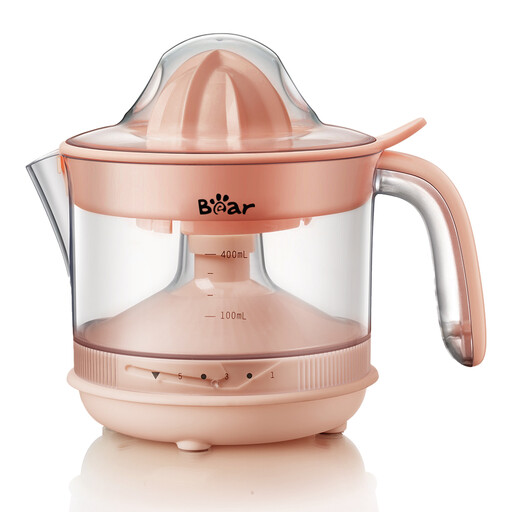
Why This Fits Their Persona: Perfect for anyone who primarily wants to enjoy fresh orange, lemon, or grapefruit juice. This specialised electric citrus juicer is optimised for precisely this purpose.
As a specialised device, it bypasses the complexity of all-in-one juicers. Cleaning is incredibly simple, as there are only a few parts designed for citrus fruits, making the 'myth of easy cleaning' a reality here.
Offers 5 adjustable levels to control the amount of pulp. The design without exposed blades makes it particularly safe to handle, even in a family setting.
We have compiled a complete, up-to-date list of products that fully meet these strict selection criteria and rigorous quality standards.
1. How long does freshly pressed juice last? Freshly pressed juice should ideally be consumed immediately to retain its full nutritional content. Stored in an airtight container in the refrigerator, juice from a centrifugal juicer can last up to 24 hours. Juice from a slow juicer can often maintain its quality for up to 48 hours due to lower oxidation.
2. Which juicer is suitable for green leafy vegetables like spinach or kale? For leafy greens, slow juicers (cold press juicers) are generally the more efficient choice. Their auger-based technology can better break down the fibres of spinach, kale, or herbs, achieving a higher juice yield than most centrifugal models.
3. Is cleaning a juicer really that much work? The effort depends heavily on the model. Easy cleaning is facilitated by features like dishwasher-safe parts, a low number of components, and filter-free designs. A crucial tip for daily use: rinse all parts under running water immediately after use. This prevents fibre residue from drying on and makes the final cleanup much easier.