
Lieferung heute & morgen

Qualitätsgarantie

Willkommens-Angebote freischalten: KOSTENLOSE Lieferung | Bis zu 80 % RABATT | Kostenlose 30-Tage-JoyPlus-Testphase
App herunterladen
By Joybuy, your Product Recommendation Officer | Published on 07/09/2026
Deciding to incorporate fresh juices into your daily routine is a positive step towards a healthier lifestyle. However, the search for the right appliance can quickly become overwhelming. The selection of juicers is vast, and the differences between technologies—from slow juicers to centrifugal juicers—are significant. This guide is designed to help you understand the features relevant to your needs and presents a selection of models for various applications.
Before making a decision, it's helpful to evaluate a few key criteria. These factors will determine how well a juicer fits into your daily life and whether it meets your expectations for juice quality and usability.
The most fundamental decision concerns the juicing technology. The two main types are slow juicers and centrifugal juicers.
For regular use, two aspects are crucial: preparation effort and cleaning.
Consider which ingredients you plan to juice most often. If you want to process a wide variety of produce, including soft fruits and leafy greens, a slow juicer is often the more versatile choice. For those who primarily want to make quick juices from hard fruits and vegetables, a centrifugal juicer is an efficient solution. A high juice yield is not just a mark of quality; it also pays off in the long run through lower grocery costs.
Based on the criteria above, we have compiled a selection of appliances that cater to different needs.
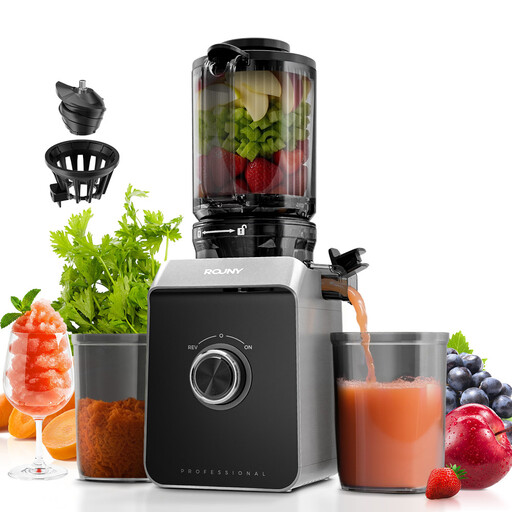
Why this model stands out: The ROUNY FF Pro Max combines the benefits of a cold press juicer with exceptional ease of use. Its standout feature is the 130 mm wide feed chute, which allows for processing whole apples without any pre-cutting. The filter-free design makes cleaning significantly easier.
Pros:
Who is it for? For health-conscious families and individuals who want to juice regularly and seek maximum convenience in both preparation and cleaning. Ideal for users who appreciate the nutritional benefits of a slow juicer but don't have time for complex processes.

Why this model stands out: This centrifugal juicer from Braun is designed for speed and efficiency. With its powerful 900-watt motor, it delivers fresh juice in seconds, making it a practical solution for a quick morning juice.
Pros:
Who is it for? For users whose priority is speed. If you want to quickly prepare an apple-carrot juice in the morning and mainly process hard fruits and vegetables, this is a fitting and powerful appliance.
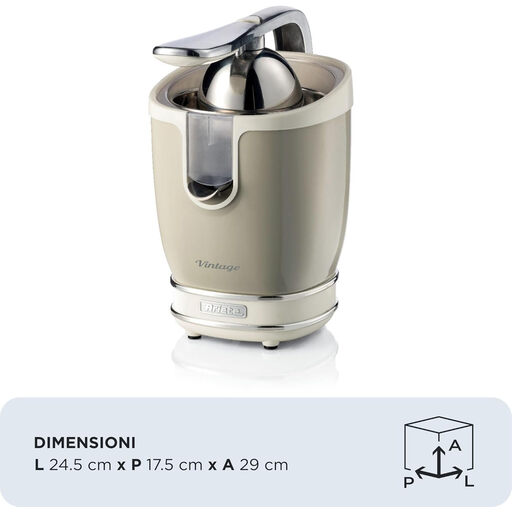
Why this model stands out: The Ariete Vintage citrus press is a specialist with style. It focuses on a single task—perfectly juicing citrus fruits—and combines it with an appealing retro design that makes a statement in any kitchen.
Pros:
Who is it for? For design enthusiasts and anyone who mainly enjoys fresh orange juice for breakfast. If you're looking for a simple, efficient, and stylish solution exclusively for citrus fruits, this model is an excellent choice.
The models featured here cover common user needs. However, if you want to compare more appliances or are looking for specific features not listed here, it's worth exploring our wider selection.
Discover more models and find the perfect juicer for your kitchen in our household juicers category.
A slow juicer (or cold press juicer) slowly and gently extracts juice using an auger, which results in higher nutrient density and juice yield. It is particularly well-suited for leafy greens. A centrifugal juicer operates at high speed, shredding the ingredients and spinning out the juice. It's faster, but the heat and oxidation generated can slightly reduce the nutrient content.
Very important. An appliance that is complicated and time-consuming to clean will be used less often in daily life. Therefore, easy cleaning is a crucial criterion for long-term satisfaction. Look for features like dishwasher-safe parts, a small number of components, or special filter-free technologies to minimise the effort.
Technically, yes, but the efficiency varies greatly. Slow juicers are significantly better for processing leafy greens like spinach, kale, or wheatgrass. They achieve a much higher juice yield than centrifugal juicers, where a large portion of the greens can end up unused in the pulp container. If you plan to make green juices regularly, a slow juicer is the recommended choice.