Choosing the right juicer depends on your specific requirements for juice quality, speed, and ease of cleaning. Appliances on the market use various technologies, each offering distinct results for processing fruits and vegetables. This guide breaks down the technical specifications and functions of popular juicer types to help you make an informed choice.
Buying Guide: Technical Criteria for Selecting a Juicer
Your choice of model should be based on an analysis of its technical specifications and their relevance to your intended use. The following parameters are of central importance.
Juicer Types: A Technical Overview
The appliance's operating principle significantly determines the juice consistency, nutrient density, and suitability for different ingredients.
- Centrifugal Juicers: These devices shred fruit and vegetables with a fast-spinning cutting disc (several thousand revolutions per minute). Centrifugal force then separates the juice from the pulp by forcing it through a fine-mesh sieve. This process is very fast, but the high speed and associated heat build-up lead to greater oxidation of the juice. They are particularly well-suited for hard fruits and vegetables.
- Slow Juicers (Cold Press Juicers): This juice press operates with a slowly rotating auger (typically under 100 revolutions per minute) that crushes and presses ingredients against a screen. The low speed generates minimal heat, which reduces oxidation and can help preserve vitamins and enzymes. Slow juicers are often more efficient at processing leafy greens, herbs, and soft fruits, delivering a higher juice yield.
- Citrus Juicers: As a specialised electric juicer, this appliance is designed exclusively for extracting juice from citrus fruits like oranges, lemons, or grapefruits. A rotating reamer extracts the juice from the fruit halves. Handling is straightforward, and cleaning is typically simple.
Other Technical Selection Criteria
- Motor Power: The power, specified in watts (W), is an indicator of the motor's strength. For centrifugal juicers, a high wattage (e.g., 800–1200 W) is necessary to process hard produce. Slow juicers, due to their high-torque operating principle, require significantly less power (e.g., 130–250 W).
- Feed Chute Size: A wide feed chute (e.g., 75 mm or more) reduces preparation effort, as fruits like apples or pears can be inserted whole or roughly chopped. This saves time during preparation.
- Materials and Build Quality: Components that come into contact with food should be made from food-safe materials like BPA-free plastic (e.g., SAN resin, Tritan) or stainless steel. Stainless steel housings offer high durability and a stable base.
- Cleaning: Easy cleaning is a crucial factor for regular use. Features like dishwasher-safe parts, special pre-clean functions ('QuickClean'), or a simple design with few components significantly minimise the cleaning effort.
Our Top Juicer Picks for 2026
The following selection presents models with different technological approaches and for various user profiles. The analysis focuses on technical specifications and practical benefits.
Ariete Vintage 413 Citrus Press
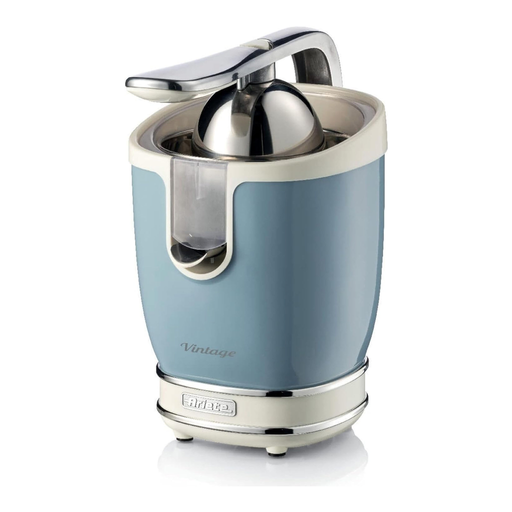
- Why we're featuring this product: The Ariete Vintage 413 is a specialised citrus press that combines a dedicated function with a distinctive retro design. Its lever mechanism allows for efficient juice extraction with minimal effort.
- Advantages: The 85-watt motor operates relatively quietly. With two different-sized reamers, the appliance is suitable for both small limes and large grapefruits. The drip-free spout ensures clean handling.
- Best for: Users who primarily juice citrus fruits and value simple operation and a unique kitchen aesthetic.
Philips Avance Collection Juicer HR1919/70
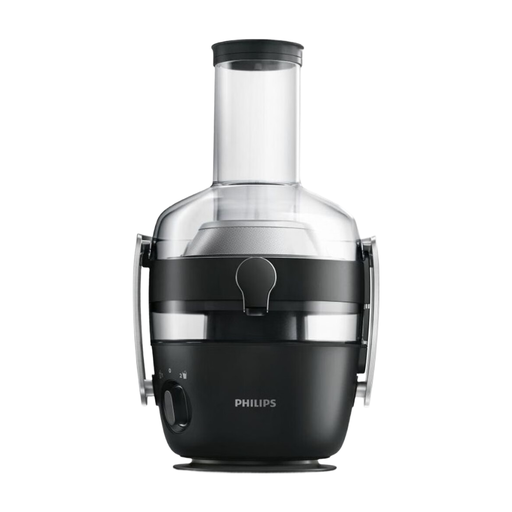
- Why we're featuring this product: This model is a powerful centrifugal juicer designed for speed and ease of use. The FiberBoost technology offers a unique feature for this type of device, allowing you to control the pulp content.
- Advantages: The 1000-watt motor processes even hard fruits and vegetables quickly. The 80 mm wide feed chute reduces preparation time. The QuickClean technology and dishwasher-safe parts allow for easy cleaning. With the FiberBoost function, you can choose between clear and pulpier juice at the touch of a button.
- Best for: Users who prefer fast, efficient juicing for a variety of ingredients and appreciate straightforward cleaning.
Bear 80mm Wide-Mouth Slow Juicer YZJ-F01D6
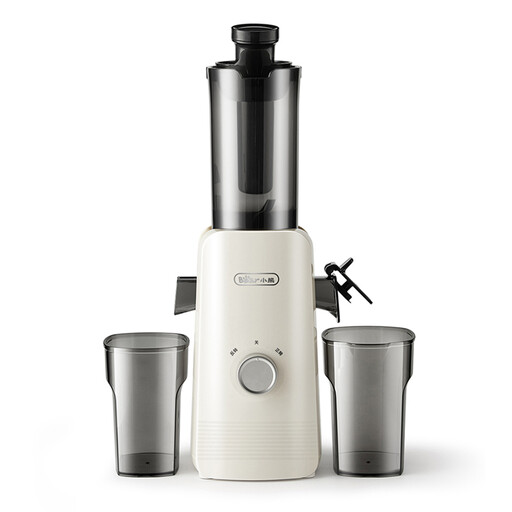
- Why we're featuring this product: This slow juicer combines the benefits of cold pressing with practical design features. It is designed for high juice yield and simple assembly.
- Advantages: The cold press technology, with a 130-watt motor, operates quietly and aims for high nutrient retention. According to the manufacturer, it achieves a juice yield of up to 99.5%. The 80 mm feed chute allows for processing whole fruits. The appliance consists of just three main components, which simplifies assembly and cleaning.
- Best for: Health-conscious users who want to achieve maximum juice and nutrient yield and also regularly process leafy greens or soft fruits.
Discover More Models
While the selection presented covers various use cases, the market offers a multitude of other specialised appliances. Especially for users who exclusively press citrus fruits, a dedicated device can be the most practical solution. You can find a wider selection of models in our Electric Citrus Juicers category.
Frequently Asked Questions (FAQ)
1. What is the fundamental difference between a slow juicer and a centrifugal juicer? The main difference lies in the technology and speed. A centrifugal juicer uses high rotational speed (several thousand RPM) for rapid juice extraction, which can lead to more oxidation. A slow juicer (cold press juicer) uses a slow-turning auger (under 100 RPM), which is gentler, minimises oxidation, and often achieves a higher juice yield, especially from leafy greens.
2. Which juicer is best for celery and green leafy vegetables? For fibrous ingredients like celery, kale, or spinach, a slow juicer is generally the more suitable choice. Its auger can efficiently break down the cellular structures of these plants to extract the juice, whereas centrifugal juicers often produce a lower yield with such ingredients.
3. How important is a wide feed chute on a juicer? A wide feed chute (e.g., 75 mm or more) is a significant convenience factor. It allows you to process many fruits and vegetables, such as apples, carrots, or beetroot, either whole or roughly chopped. This significantly reduces the preparation time before juicing.
Written by: Joybuy Product Recommendation Officer

