
Lieferung heute & morgen

Qualitätsgarantie

Willkommens-Angebote freischalten: KOSTENLOSE Lieferung | Bis zu 80 % RABATT | Kostenlose 30-Tage-JoyPlus-Testphase
App herunterladen
A juicer can conveniently prepare fresh fruit and vegetable juices at home. However, citrus presses, slow juicers and centrifugal juicers differ significantly in terms of ingredients, cleaning, noise and operating speed. If you focus only on wattage or big marketing claims, you may end up buying a machine that does not suit your everyday needs.
Motor power is only one part of a machine’s overall design. An electric juicer with a high wattage can work quickly, but depending on the model it may require more space and produce more noise. With a slow juicer, the auger design, speed and feed chute also play a role.
The key is therefore the combination of power, processing method and suitable ingredients. A 30 W machine may be sufficient for oranges and lemons, while a juicer for fruit and vegetables generally requires a different design.
A wide opening means less cutting, but it does not eliminate preparation altogether. Hard stones, very fibrous ingredients or particularly tough fruit can put strain on the strainer, auger or blades. Always check the operating instructions and the permitted foods.
A juicer with a wide feed chute is particularly practical for apples, cucumbers or larger pieces of fruit. Even so, ingredients should be washed, stoned where necessary and prepared in accordance with the machine’s instructions.
“Quick Clean” or “easy to clean” does not mean the same amount of effort for every product. Check how many parts need to be removed, whether there is a strainer and whether the accessories are dishwasher-safe. Residue should ideally be removed immediately after use, as fruit pulp can dry on later.
A citrus press, or electric juicer, works with a pressing cone. It is suitable for oranges, lemons, mandarins, limes and similar citrus fruit. Models without blades reduce contact with sharp components, but hands must still be kept away from the pressing area during operation.
A slow juicer or cold-press juicer crushes and presses fruit and vegetables at a low speed. This method is appealing to users who want to process a variety of ingredients and value quiet, continuous operation. Preparation may take longer, and fibrous ingredients often require suitable preparation.
A centrifugal juicer grates the ingredients and separates the juice through rapid rotation. This design is suitable for larger quantities and speedy preparation. It often features a wide feed chute, but requires a strainer that should be cleaned immediately after juicing.
For a one-person household, 400 ml to 1 litre may be sufficient. Families or users who prepare several glasses one after another should consider the juice container and pulp container together. A large container reduces interruptions, but also takes up more storage space.
Also check for possible operating time limits. According to the product description, the Bear Juicer YZJ-F01D6 can be used for a maximum of 15 minutes per operation. This information is relevant if you regularly prepare larger quantities.
A BPA-free juicer may appeal to buyers who pay attention to the material specifications of parts that come into contact with the product. Check whether the BPA-free specification expressly applies to all relevant accessories or only to certain components.
Electrical appliances should be placed on a stable, dry surface. With the machines featured here, the motor housing must not be immersed in water. Unplug the appliance before dismantling and cleaning it. Particular care is required with models featuring blades or sharp strainers.
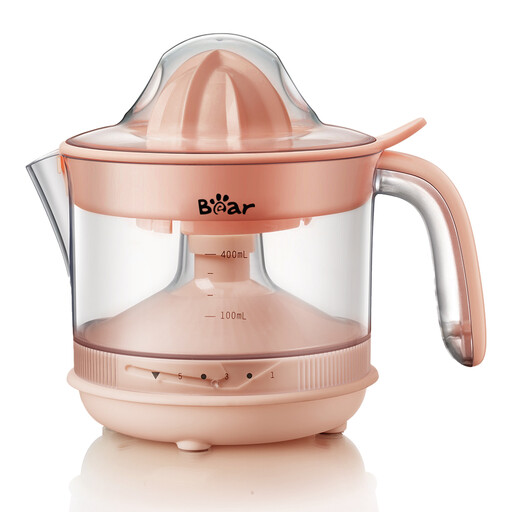
Why this product suits this profile: The 400 ml capacity and pressing-cone operation are well suited to preparing individual glasses of orange or lemon juice at home.
The design is limited to citrus fruit, making its areas of use clear. It has no blade and is listed as BPA-free in the product specifications.
30 W of power, five adjustable pressing settings, a non-slip base and removable parts.
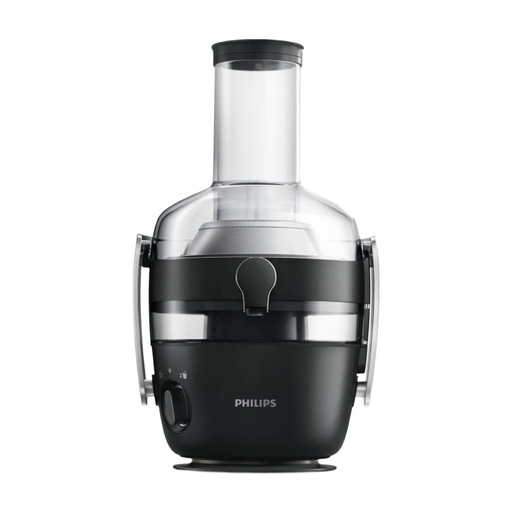
Why this product suits this profile: Its features are designed for users who process larger quantities of fruit and vegetables and want to choose between different consistencies.
The 8 cm feed chute is clearly specified. The product data also lists the QuickClean Plus function, drip stop and removable dishwasher-safe parts.
1000 W according to the product name, a 1-litre juice container, a 2.1-litre pulp container and two speed settings.
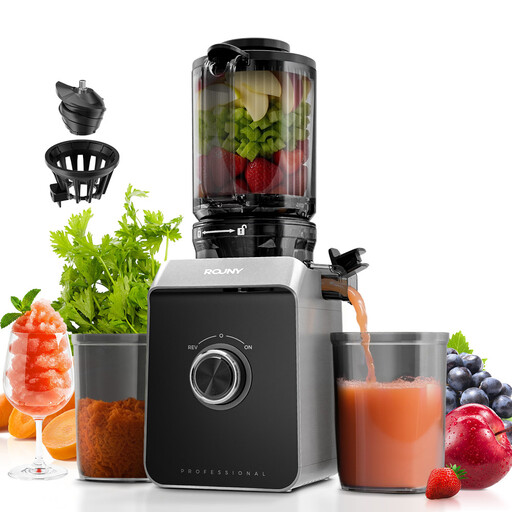
Why this product suits this profile: The 1.8-litre capacity is aimed at households that regularly prepare fruit and vegetable juices as well as recipes made with frozen fruit.
The product data specifies a filter-free design and water cleaning for the removable parts. The 130 mm opening reduces preparation time, but does not replace the need to follow the ingredient guidance.
50 rpm, 150 W, reverse function to free stuck ingredients and BPA-free material specification.
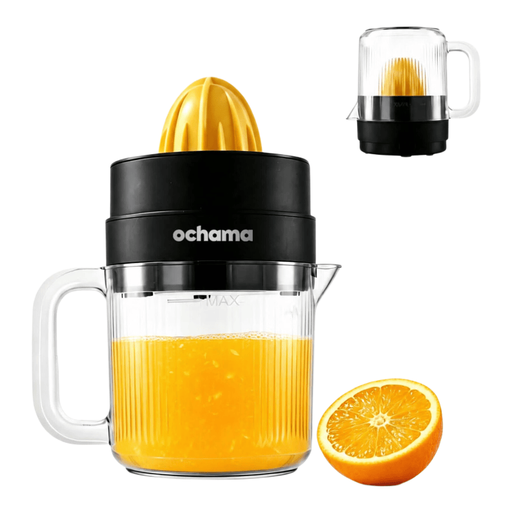
Why this product suits this profile: The electric pressing function and 1.4-litre container are suitable for preparing several portions of orange, lemon or mandarin juice.
Its use for citrus fruit is clearly specified. The machine works without blades and has removable accessories for cleaning.
30 W of power, 1.4-litre capacity, automatic pressing function and separation of pulp from juice.
The ongoing costs of a juicer mainly consist of electricity, water and, where necessary, replacement parts. With short operating times, electricity consumption usually has less impact than the quantity of fruit used. A machine with a large capacity may be useful for several portions, while a compact citrus press requires less storage space for occasional use.
Clean the strainer, pressing cone, auger and containers immediately after use. Simply wipe the motor unit with a suitable cloth. With a machine featuring sharp blades or strainer parts, use a brush and do not reach into hard-to-access areas with your fingers.
We have put together a complete, regularly updated list of products that fully meet these strict selection criteria and the safety regulations applicable in the EU.
For citrus fruit alone, a citrus press is usually sufficient. It processes halved fruit directly and often separates the pulp from the juice. If you also want to juice apples, carrots or cucumbers, choose a slow juicer or centrifugal juicer.
Its lifespan depends on how often it is used, cleaning, choosing the right ingredients and observing the operating time. Overloading, hard stones and unsuitable foods can place additional strain on the components. Proper cleaning after every use helps maintain hygienic operation over the long term, but does not guarantee a specific lifespan.
Place the machine on a stable, dry work surface, assemble all parts according to the instructions and check the mains voltage. Wash and cut the ingredients to suit the feed chute. Always unplug the appliance before cleaning, dismantling or moving it.